
Why Hind Feet, Traction, and Purchase Matter More Than Most Owners Realize
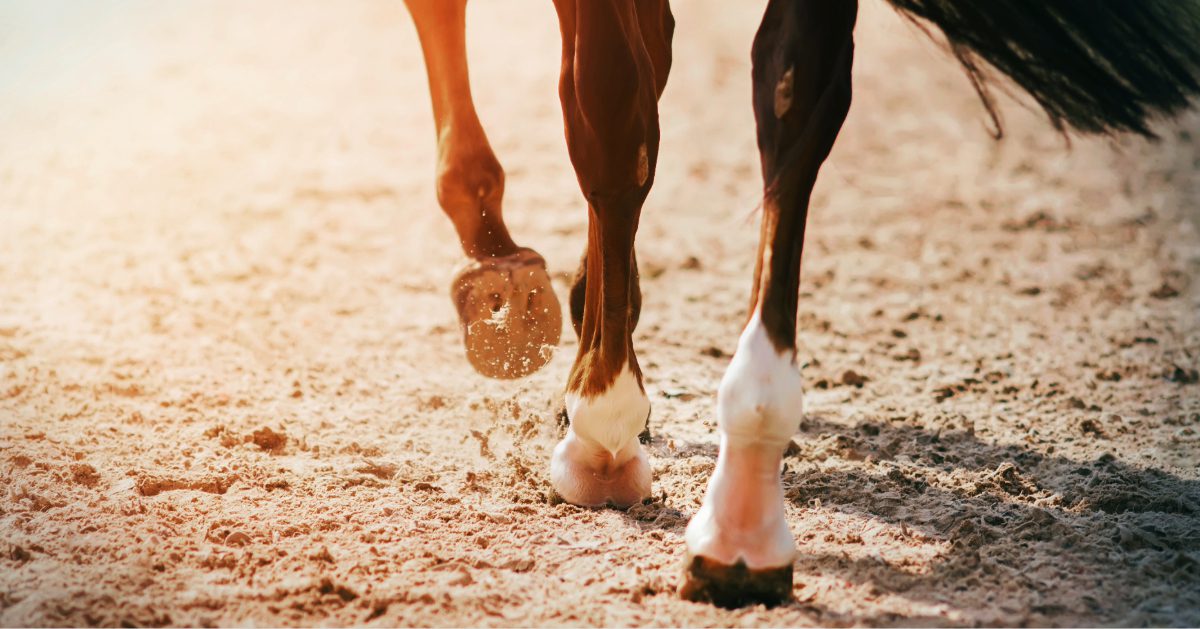
Because the hind end is the engine and when a horse can’t grab the ground behind, the front end pays the price.
Many front-end soreness issues don’t start in the front feet at all. They begin with slipping, instability, and lack of purchase in the hind feet.
In Episode 20 of the Equine Vet Connect Podcast, Dr. Dan Carter and farrier Kyle Schmidt explain why traction behind is foundational to sound movement.
The Hind End’s Job: Push, Drive, and Stabilize
Kyle makes it clear that hind feet are not passive.
“A horse needs purchase. They’ve got to have a grip back there.” — Kyle Schmidt
Hind feet are responsible for:
- Propulsion
- Stability
- Confidence in movement
- Protecting the front end from overload
When that grip is missing, horses compensate and compensation always shows up somewhere else.
What Happens When Hind Feet Slip
When hind feet can’t engage the ground:
- Horses pull with the front end
- Landing patterns change
- Wear patterns appear at the front toe
- Soft tissues take abnormal strain
Dr. Carter sees this pattern regularly in practice.
“They’re not really designed to pull with their front feet like that.” — Dr. Dan Carter
Front feet are meant to guide and absorb, not drag the horse forward like anchors.
Purchase Isn’t About Aggression — It’s About Confidence
One misconception is that more traction creates risk. Kyle sees the opposite.
“I don’t think that exists.” — Kyle Schmidt
(in reference to ‘too much traction’ behind)
When horses feel secure behind:
- They move more freely
- They push evenly
- They stop slipping mid-stride
- They reduce sudden overloads
A confident hind end allows the front end to “get out of the way” instead of doing extra work.
Concave Shoes and Why Traction Needs to Stay Clean
Kyle explains that traction isn’t just about grip — it’s about consistent grip.
“[Concave shoes] evacuate the dirt every stride.” — Kyle Schmidt
Concave shoe designs allow footing to clear out with each step, so the horse isn’t landing on packed debris. That fresh contact with the ground improves purchase without forcing extremes.
The result is controlled engagement, not jerky traction.
Why Front-End Problems Often Start Behind
Dr. Carter connects the dots clinically.
“If they’re not loading that foot properly… something’s going to get overloaded.” — Dr. Dan Carter
When hind feet don’t engage evenly:
- Load shifts forward
- Medial/lateral imbalance increases
- Soft tissue injury risk rises
- Collateral ligaments and suspensories suffer
Many “mystery” front-end issues improve once hind-end mechanics are corrected.
What Owners Should Watch For
Signs hind-end traction may be an issue:
- Slipping or rooster-tailing behind
- Forging or tripping up front
- Excessive toe wear on front shoes
- Camped-under posture
- Reluctance to jump or extend
These aren’t training problems, they’re often mechanical ones.
The Takeaway: The Engine Comes First
Soundness doesn’t start at the front feet.
It starts with a hind end that can grab, push, and stabilize the horse.
When hind feet are:
- Balanced
- Properly shaped
- Given the right traction
The entire horse moves better, and stays sound longer.
FAQs
Why are hind feet important for soundness?
Hind feet provide propulsion and stability. Poor traction behind increases strain on the front end.
Can hind-foot issues cause front-leg injuries?
Yes. Slipping or poor loading behind can overload front joints and soft tissues.
Is there such a thing as too much traction behind?
In most sport horses, lack of traction is a bigger issue than excess traction.
Why do concave shoes help with traction?
They allow footing to clear each stride, providing consistent grip instead of packed debris.
Published by Dr. Dan Carter
Recent Posts
About Us
For over 30 years, Countryside Equine Hospital has been a trusted partner for horse owners across Covington, GA. Founded by Dr. Carter, our practice began as a small operation in a garage and has grown into a state-of-the-art equine and small animal veterinary facility. Today, we combine our legacy of Southern hospitality with advanced equine medicine, offering services tailored to meet the unique needs of every horse, from top-performing athletes to beloved pasture companions.