
No Hoof, No Horse: What Great Farriers Protect First (and Why It Matters More Than You Think)
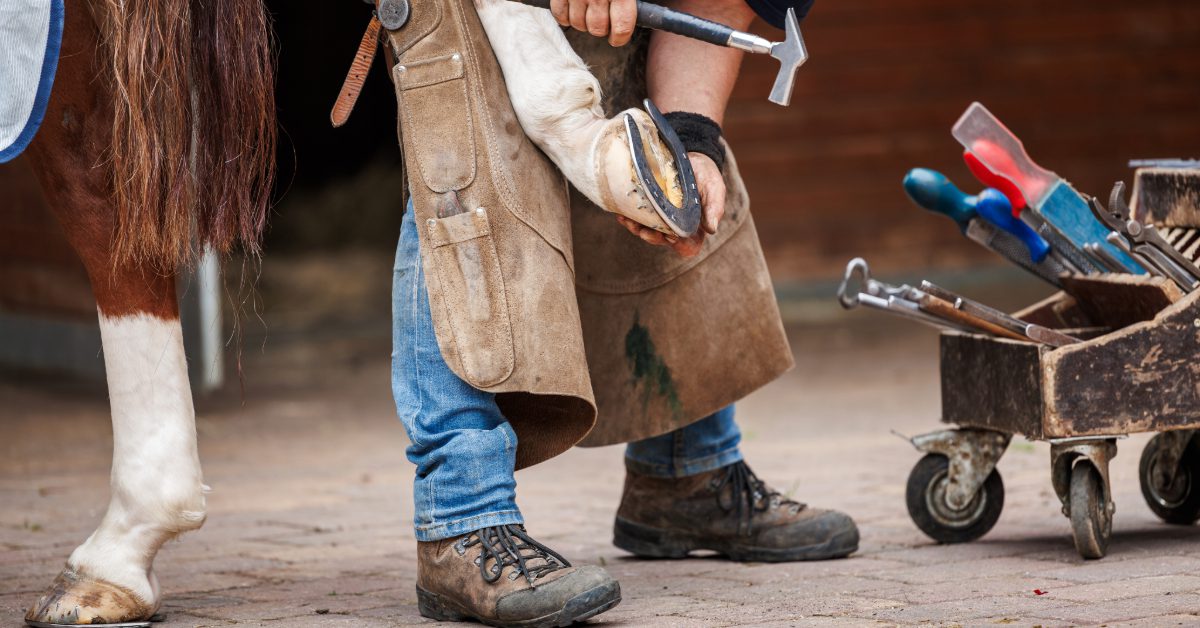
Horse owners hear the phrase “no hoof, no horse” all the time, but most people don’t understand what that really means in the day-to-day decisions that keep an athlete sound.
In Episode 20 of The Equine Vet Connect Podcast, Dr. Dan Carter sits down with local farrier Kyle Schmidt to break down what matters most when you pick up a foot: depth, balance, and protecting the structures that keep a horse moving.
This conversation isn’t about flashy shoeing trends. It’s about fundamentals that prevent soreness, reduce injury risk, and help horses perform longer.
The First Priority: Protect the Coffin Bone
Kyle explains that his starting point as a farrier isn’t cosmetic. It’s protective.
“I think first off, vertical depth is, is your first thing, you know, you’ve got to protect P3.” — Kyle Schmidt
Vertical depth (often confused with toe length) is the “taller” aspect of the hoof capsule, or how much structure exists between the coffin bone and the ground. It’s one of the biggest drivers of comfort and long-term soundness.
Dr. Carter’s simplification is powerful, and it’s something owners can remember:
“There’s nothing magic about the equine foot. It exists to protect the coffin bone from planet Earth.” — Dr. Dan Carter
If you take too much sole, or the foot wears down faster than it can grow, the horse loses protection. And once a foot is “bottomed out,” recovery can take time.
“Bottomed Out” Feet: Why You Can’t Trim Your Way Out of It
One of the most important points in the episode is that you can’t create depth with a knife.
“You cannot trim one into depth, no.” — Kyle Schmidt
Depth has to be grown, which means your job becomes protecting what exists, encouraging healthy circulation, and giving the hoof capsule time to rebuild.
This is where good farriery is often misunderstood. To an untrained eye, leaving “a little more” can look like the horse is “long.” But what Kyle is describing is not sloppy trimming, it’s intentional protection.
A Major Lesson for Owners: You’re Paying for What’s Left
Dr. Carter reinforces a message every horse owner needs to hear. When you hire a good farrier, you’re not paying for how much they remove, you’re paying for how wisely they preserve healthy structure.
“You’re not paid for what you take off the foot, you’re paid for what you leave.” — Dr. Dan Carter
That one line explains a lot of why some horses stay sound year after year… and why others seem to continue to have foot related soundness problems.
What Great Farriers Do Before They Even Pick Up the Foot
Kyle describes a process that owners should appreciate, because it shows farriery isn’t “just shoeing.” It’s evaluating the whole horse:
- Posture and resting patterns
- Conformation and limb alignment
- Hoof balance as it sits on the ground
- Watching the horse move when possible
- Understanding the job the horse is being asked to do
A horse isn’t shod to stand still. It’s shod to perform.
Foot Mapping, Frog Landmarks, and Why Balance Is a “Happy Median”
They dive into mapping the hoof: trimming the frog first, finding landmarks, and shaping the hoof so the capsule works with the limb, not against it.
Dr. Carter also makes a key mindset point that applies to both trimming and shoeing:
Balance is not an extreme. It’s not “as short as possible” or “as long as possible.” It’s a stable middle that allows the hoof to grow correctly, land evenly, and support the tissues above it.
The Result of Good Hoof Work: Growth, Options, and Fewer Problems
When the hoof is truly balanced and protected, something changes: the foot starts growing faster and healthier. And that matters because hoof growth creates options.
With growth:
- You can adjust shape gradually
- You can correct distortions safely
- You can support a rehab plan
- You can reduce repeated soreness cycles
Without growth:
- You get stuck
- You’re forced into band-aids
- Every mistake costs more
Owner Takeaway: Don’t Chase “Short Feet”
If there’s one mindset shift that will help owners immediately, it’s this: don’t pressure your farrier into “short.” Short can look neat, but depth is what keeps horses comfortable.
As Kyle explains later in the episode, if your farrier is talking about building depth, letting them do their job pays off long-term.
FAQs: No Hoof No Horse
What is vertical depth in a horse’s hoof?
Vertical depth is the amount of hoof structure between the coffin bone and the ground — a protective “height” of the hoof capsule, not toe length.
Why is trimming too short a problem?
A short foot reduces protection, can slow hoof growth, and increases risk of soreness and bruising.
What does “bottomed out” mean?
It means the hoof has lost too much depth, leaving inadequate protection under the coffin bone and causing compression of the blood vessels under the sole, therefore inhibiting growth.
Why does hoof balance matter for injury prevention?
If the hoof doesn’t land evenly and load correctly, it can increase strain through joints and soft tissues up the limb.
Published by Dr. Dan Carter
Recent Posts
About Us
For over 30 years, Countryside Equine Hospital has been a trusted partner for horse owners across Covington, GA. Founded by Dr. Carter, our practice began as a small operation in a garage and has grown into a state-of-the-art equine and small animal veterinary facility. Today, we combine our legacy of Southern hospitality with advanced equine medicine, offering services tailored to meet the unique needs of every horse, from top-performing athletes to beloved pasture companions.