Ep. 1 – The Pilot Podcast
In this episode
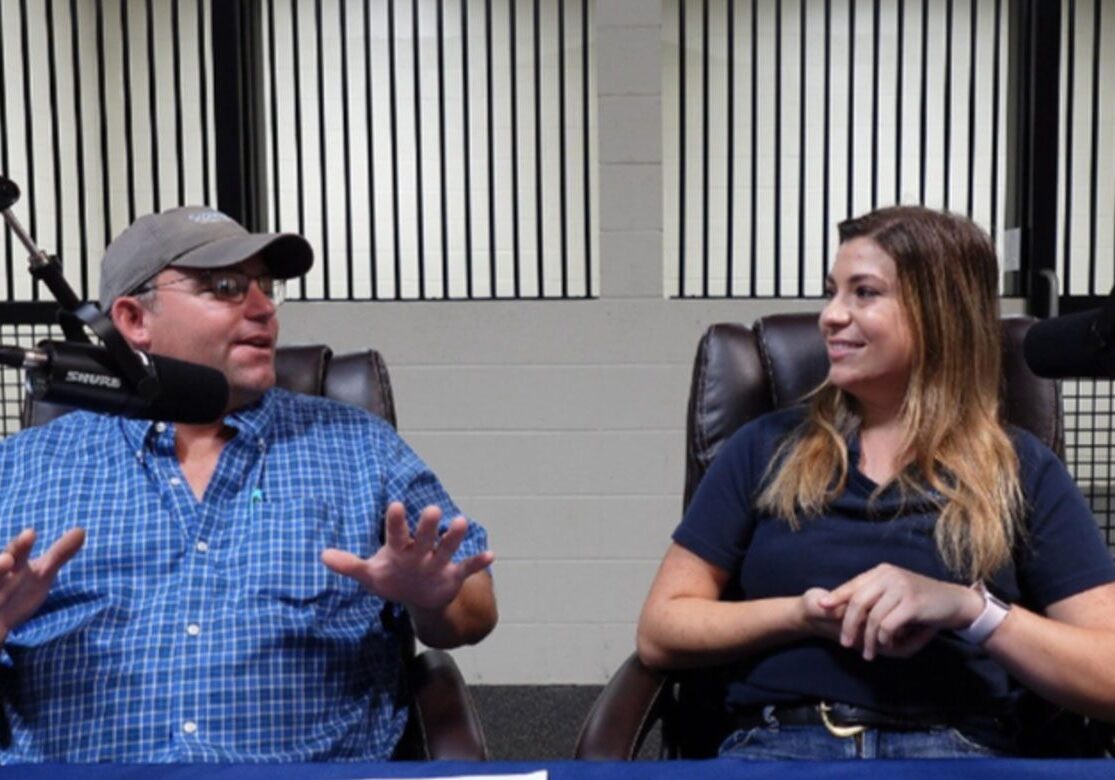
In the debut episode of Equine Vet Connect, Dr. Carter and Dr. Caroline Brown from Countryside Equine Hospital share their personal journeys into the field and celebrate what they call “vet dopamine”—the unpredictable thrill of emergency field calls and the profound relationships built with clients and their horses.
The doctors directly address the high rates of burnout in the industry, reflecting on the negativity many students face in vet school. They explain how a team-oriented practice structure helps combat this issue by allowing vets to share the on-call load, collaborate on complex cases, and maintain a healthy work-life balance.
Ultimately, the episode serves as an inspiring call to action for the next generation of practitioners. Dr. Carter and Dr. Brown emphasize the importance of strong mentorship, checking your ego at the door, and ignoring the haters. They encourage aspiring vets to ditch the word “no” and embrace the unexpected, rewarding adventures that come with saying “yes” to equine medicine.
Episode Transcript
Dr. Carter: Hey everybody, welcome to the Equine Vet Connect! We are a brand new podcast, and this is our first episode. I think we call that the pilot. This is going to be a podcast about everything equine, and everything equine medicine.
If you’ve got questions, please drop us a line and let us know. We want to answer your questions, help dispel a lot of the myths out there, and talk about what’s going on in the equine industry and equine medicine. There is a lot of stuff out there, but we want to help you navigate your way through it.
With that, let’s roll in and get started. Today’s a really cool topic. I’ve got Dr. Caroline Brown, one of the other vets here at Countryside Equine Hospital. We’re going to talk about how we got here, how we became vets, and the recent trend in equine medicine where people don’t want to go into the field—which, for the life of us, we really don’t understand why.
So with that, Dr. Brown, how did you get here?
Dr. Brown: Well, I’ve been riding horses almost my whole life. It’s kind of been the thing that I always knew, and I had known for a long time that I wanted to be a vet. Watching my own horses go through injuries, colic surgery, and all those things just reinforced that.
I grew up outside of Chicago, and I don’t know if you’ve ever been to Chicago in the winter, but it is not fun. So for vet school, I decided to go to Florida. Go Gators!
Dr. Carter: Let me question that. So you want to be a real vet, and you choose to go to the University of Florida? Did you have to slow down for them to throw the degree into your car, or did you actually have to pause and stop?
Dr. Brown: We had a good time there, it was nice! No, so I did my four years at Florida, and then after that, I did an internship in South Carolina for a year. I met Dan through that, we hit it off, and I’ve been here for the last two years now, I think.
My interests have stretched everywhere. I really enjoy the reproductive work; that’s kind of my vet dopamine, if you want to say it that way. The thing that gets me excited is doing my little scan, seeing that little black dot, and thinking, “Got one! I made that baby!” So that’s kind of my thing.
But I really enjoy emergency work, too. I love when I wake up in the morning and I don’t really know what my day is going to look like. Almost every day this week, my schedule at the beginning of the day did not look like what it looked like at the end of the day. It’s just been busy with everything. I think it’s a full moon this week, too, so that always seems to throw a little wrench in things. But I enjoy it. We’ve had some very interesting cases this week, and that’s kind of what I live for. I don’t want to do the boring, repetitive stuff. I like the little surprises where you have to think on your feet and get creative.
You get to do that in medicine a lot, but I feel like in equine medicine, you just take that to the next level because sometimes it’s just you in a truck, and you just have to go out there and figure it out.
Finding the “Vet Dopamine”
Dr. Carter: I love that choice of words: “vet dopamine.” Because if I had to describe equine vets, it’s like we just don’t want a real job, right? We get to be outside every day, travel around, hang out with horses, and hang out with people.
That vet dopamine is real because you hear people talk about having to be on call, and they say, “Oh, you’ve got to be on call, it’s so tough.” Well, yeah, but when that phone rings, you have no idea what is on the other end. I’m the same way. A lot of people dread being on call, but to me, those have been some of my most fun times because you don’t know what’s coming. You get there, you get to help people, and you get to help horses. The dopamine is real—it’s pure happiness. It’s fantastic. I think that’s why we do it.
Dr. Brown: Yeah, and I’ve met some fantastic clients from some of my on-call experiences. Maybe it wasn’t our best time because we were really going through it, but I think that genuinely strengthens the relationship and builds good connections. I’ve learned a lot, and it’s a great time to teach clients, educate them, and learn things yourself.
I’ve even met young kids who watch what I’m doing while I’m suturing up a laceration. Then they go tell their fourth-grade class about it, and the parent gets a call from the principal’s office!
Combating Negativity in Vet School
Dr. Carter: I think that’s interesting, and it ties into an alarming trend right now where people aren’t wanting to go into equine medicine. It’s crazy because a lot of times, we are actually discouraged from going into equine medicine when we get to vet school. You’ve got professors saying, “You’re not going to want to do that.” One of the main things they bring up is having to be on call. Yet, I find so much enjoyment and satisfaction out of going to help people and handling those emergencies, and it sounds like you do the same thing. Did you have similar experiences where professors were telling you not to go into equine medicine?
Dr. Brown: Oh, absolutely. It started as soon as my first year of vet school. I went into vet school knowing I wanted to be an equine vet—that was the only option. I think I went through one dark week where I thought, “I could do small animal,” but those thoughts went away. It was just a bad week!
But they were telling me from week one that I was going to be behind the eight ball when it came to making money, that I was going to burn out, and that I’d be working eighty hours a week with no break, by myself, with mean clients.
A direct quote from a clinician of mine during a small animal rotation was: “You’re going to be burning out anyway, so you might as well be paying attention.” It’s really discouraging when you’re only two years into vet school. I hadn’t even started my career yet, and they were already telling me I was going to fail. How is that supposed to make you feel?
I’m of the mindset where I say, “Well, I’m going to prove you wrong.” But I know if you’re hearing that constantly from clinicians, it can be deeply discouraging. At UF, we actually had a lot of people who started out wanting to do equine, and statistically, we had more people stick with it and get into the field than some other schools.
But even talking to my classmates who are in it now—we’re all in the first three years of our careers—we are in very different positions and have very mixed feelings about practice. Some people love it and can’t imagine doing anything else, but others are already getting burned out. I think a lot of it depends on where they are and what their practice structure looks like. We have a very unique practice structure here that supports us and allows us to sustain a healthy equine practice, but a lot of places don’t have that yet.
As an industry, we really need to figure out how to support people and keep young vets in practice. I saw some stats from the AAEP showing that the industry loses fifty percent of equine vets within their first five years. That is crazy to me because I’m here thinking I can’t imagine doing anything else right now.
Dr. Carter: I was in a similar situation. I was a farrier before I went to vet school. I actually went to vet school because I was constantly talking to vets, and it was a constant struggle to get things done, so I figured going to vet school would just make my life easier. I was told I couldn’t do it, but obviously, I made it.
When I was in vet school, it was the exact same thing. I was there to be an equine veterinarian. In fact, when people ask me what I do, I never just say I’m a veterinarian; I say I’m an equine veterinarian. I take a lot of pride in that. I just finished my fifteenth year as an equine vet, and I truly could not think of anything else I’d rather do. I’m just as excited today as I was when I first started.
We were in here last night working on an emergency together, and I was just as excited last night as I was when I first got out of school. I don’t understand why we don’t express that excitement more as an industry.
How it all starts is so important. When you hear that negativity in vet school, and then you get out and maybe have a bad initial experience, it sets a negative tone for your entire career. It has to start with dispelling that negativity. When you’re in vet school, you’re hearing from professors, and half of them—most of them—haven’t even been in private equine practice. If they were out in the field, it was decades ago, and things have changed quite a bit since then, for better and for worse.
That’s why it’s so important for students to get out in the field with actual equine vets. I know there’s not a ton of time in vet school, but you really need to use your externships and vacations to get out there. We are here, we have a lot to teach, and a lot of us genuinely enjoy having students because we remember what it was like. Hearing that discouragement is a lot, but I loved when I got to get in the truck with actual vets who were out in the field doing it.
The Power of Mentorship and Teamwork
Dr. Carter: It’s interesting because we talk a lot about mentorship. I did an internship up in Kentucky at Rood and Riddle, and you did one at Southern Equine over in Aiken. Interestingly enough, the person you interned with, Jamie, is a very close friend of mine, and I think he does a fantastic job of mentoring vets. Finding the right mentorship program to help bring you along as a veterinarian is huge because you simply cannot learn it all in vet school.
Jamie has been practicing for around twenty-five years now. I spoke with him the other day, and he was still just as excited about equine medicine twenty-five years later as he was when he first started. I’ve known him for twenty years, ever since I was a farrier, and he’s become a close friend. I have several other close friends in equine medicine who are exactly the same way—just as excited now as they were fifteen or twenty years ago. A lot of that goes back to mentorship. How do you feel that mentorship affected you during your first year?
Dr. Brown: I think it’s incredibly important, at least for developing those foundational skills. At UF, we spent a lot of time in the large animal hospital, but most of the cases referred there are the weirdest of the weird. You’re getting the colics that the doctors in the field can’t figure out, or horses that are so sick they need surgery and intensive care. You don’t really see your run-of-the-mill colic where a horse just needs a tube passed, some fluids, and they’re good. You don’t get to see that as much, and you don’t get as much hands-on experience doing a regular nerve block, lancing a foot abscess, or managing standard cases. You’re seeing the absolute craziness of medicine.
When you get out of school, you have all these crazy ideas about the “zebras” they tell you to look for, but you haven’t seen a regular, everyday backyard horse yet. Having a mentor who can expose you to standard cases and walk you through a routine wellness appointment is invaluable. There is so much to learn in just a wellness appointment—talking to the owner about the horse’s daily life, their exercise, and their diet. You learn so much just by having those conversations, and you need that experience to be a better vet. I don’t know if you necessarily get that when you’re a student.
A mentor walks you through that process, teaches you, exposes you to things, and finally lets you start doing things on your own. In vet school, if you can’t put the catheter in on your first shot, they often just step in, the technician takes over, pops it in, and it’s over. But a good mentor will let you keep trying until you figure it out. They will give you the resources you need and take the time to actually teach you. Schools are supposed to do that, but they don’t always have the time. That was just my experience, but I think it’s crucial for equine students getting out to find those mentors now. Ride with different vets and get their perspectives because we all have something to teach. You can learn a lot from different veterinarians; we’ve all been out here, seen different things, and we all have a story to tell and lessons we’ve learned along the way. Every single one of us can look back and say, “Man, I wish I had known this as a student; it would have helped me five years ago.”
Dr. Carter: That’s one of the things I really love about the practice here. We have so many people from different backgrounds who have done internships in different places and had different experiences. That’s one of the things we’ve always tried to cultivate here at Countryside. If everyone looks like me and thinks like me, or looks and thinks like you, that’s only one perspective duplicated four or five times. I would much rather have five different perspectives and different ideas about things.
One of my favorite things is when we get a new vet in who is a recent grad or someone who just finished an internship, and we work on a case together. It’s almost like the whole practice gets continuing education. I’ve been out of school for fifteen years, and things change. Continuing education is very important to us here; we read constantly, but there will always be some new technique or piece of information fresh out of the vet schools. We have grads from Georgia—go Dogs!—Auburn, and Florida.
Those different knowledge bases pooling together when we’re working on a case as a team allows for significantly better care for the horse. You are dead on about how mentorship and collaboration add value. Sort of like Dunkin’—you know, this podcast runs on Dunkin’, so if Dunkin’ wants to sponsor us and jump in, please let us know!
The structure of a practice is incredibly important. We’re seeing a trend where larger practices are coming together, which I think is a good thing because it helps with quality of life. I’ve never met an equine vet who doesn’t want to work, and I’ve never met one who doesn’t love what they do, but isolation is a big deal in this profession.
We get to meet every Monday morning at seven o’clock for topic rounds and case reviews, constantly working together as a team. Just like mentorship, that team approach keeps people excited and keeps them in equine medicine. Coming together is a positive trend for the industry.
Dr. Brown: It takes a lot of the load off, too. Even if you can just share the on-call schedule so you aren’t having to be on call for five or seven days in a row. I’m seeing single practitioners team up within their areas to collaborate and share emergency coverage so they can keep servicing their clients without burning out.
We keep hearing about this phrase “work-life balance.” We all love to work, but we also want to be able to have our own lives. A lot of equine vets have horses of their own that they want to go ride. Especially with the veterinary industry as a whole becoming more female-dominated, there is a lot of pressure if you have children or a family of your own. How do you balance spending time with them while continuing your business and serving your clients? It’s a lot, and getting pulled in all different directions can get stressful. I think that is what unfortunately adds to the burnout we’re seeing. If we can come together as a team, we can help each other out.
When I was looking for a practice, that team dynamic was exactly what I was looking for. I had always thought it might be fun to have my own practice, make my own rules, and do all of that. But the idea of being solely on my own without someone right there to bounce ideas off of, or to help me out if I needed coverage after hours, was stressful—especially as a new grad. It has been so nice to be part of a team that works together really well. Like you said, we have a lot of different ideas and we practice differently.
I hear that from our technicians all the time. Our structure is a little different because we don’t have a strict one-to-one technician-to-doctor pairing; we all share the load. I think that’s good for the techs, too, because they get to learn a lot. They’ll comment, “Oh, you do this differently than Dr. Zoe or Dr. Caitlyn.” It allows them to learn that there isn’t just one single way to approach a problem. If they’re trying to master a skill of their own, they get to see a couple of different techniques until they figure out what works best for them.
Specialization and Networking
Dr. Carter: That’s another thing I really love. I’m mainly a sport horse guy, so most of what I do is sports medicine. A lot of people think sports medicine is strictly lameness, but that’s not the case. It flows into a lot of different things like airway issues, muscle issues, and gastric ulcers. Stomach ulcers are a massive issue—we’ll get to that topic later, that’s a whole multi-series podcast right there because you can go off in the weeds quickly.
Because I’ve become heavily focused on sports medicine, probably eighty to eighty-five percent of my caseload is some type of lameness or orthopedics. What I love about having a team is that if we are dealing with a mare that seems to be having cyclicity issues, I can turn to someone like Dr. Brown. Yes, I could go out and scan the mare, and yes, I could do the reproductive workup, but I might only do two or three of those a year. You did one yesterday!
That’s the beauty of the team. When I encounter an issue like that, I can come to you and say, “Hey, I need you to go look at this horse because you’ve got more expertise in this specific area than I do.” I might look at the horse holistically to keep him performing at his peak, but being able to grab a colleague and say, “Can you take a look and tell me what you think?” is something I really love.
Dr. Brown: Absolutely. It’s wonderful that we’re all right here and can do that. Because we all came from different backgrounds and universities, our extended network is massive. If one of the four people in this building doesn’t know the answer, we have a contact list full of people on our phones that we can reach out to. The possibilities are endless. We are usually only one or two phone calls away from an industry expert. You don’t have to know everything; you just have to know the person who does.
Dr. Carter: Exactly. If we don’t know it, one of us knows someone who does, or someone who can at least point us in the right direction. That’s the other part about having good mentors: they teach you to leave your ego at the door. A good mentor will tell you, “Look, leave your ego at the door. If you’re unsure, don’t be afraid to make that phone call.” I have stood in front of many clients and told them straight up, “I don’t know the answer right now, but I know the person who does. I’m going to make a phone call, or I need to go do some digging. We’re going to fix this, we’re going to get it solved, and we’re going to figure it out. Give me a day.” I have never had a client take issue with that. Being honest and showing that humility is something clients truly appreciate. We’re all human, we aren’t perfect, and we don’t know everything. Admitting that you need a little help and putting in the extra effort shows them that we are truly here for them.
That brings us back to the vet dopamine. We meet every Monday morning at seven, review papers, and go over cases. Countless times at the end of the day, we all meet back at the hospital and say, “Hey, I’ve got this case, can you look at these images? What do you think is going on?” It’s not just the fact that we do it; it goes back to that foundation of mentorship where you learn not to be afraid to ask questions or admit when you don’t know something. Not knowing isn’t the problem; doing nothing about not knowing is the real issue. When you don’t know the answer and you spend the time to find it—whether that’s making a phone call, digging through current literature, or asking someone in the practice—that stems from good mentorship.
As new vets come out, it is vital to check your ego at the door. That is a massive rule here at our practice: we don’t do egos. No egos here. Half of us go by our first names. What matters is helping the horse. That’s what we ask ourselves every day: is what we’re doing what is right for the horse?
The other thing that’s important for new grads to understand is that we are diagnostically driven. That phrase comes up on a daily basis. Go find the answer. Don’t just throw random treatments at a symptom and hope something works. Do the diagnostics, find out what the core problem is, get a targeted approach, and know exactly what you’re dealing with. Again, that approach comes from good mentorship. My internship at Rood and Riddle was incredibly diagnostically driven, and Southern Equine is the exact same way. Go find the answer.
Dr. Brown: It’s also important for new grads to understand that you are going to make mistakes. You’re going to pick the wrong diagnosis, go down a massive rabbit hole, and end up at a dead end. Or you’re going to start a treatment and it won’t work, and you’ll have to go back to the drawing board and figure it out all over again. You are going to screw up sometimes, and unfortunately, that is just part of it. You have to learn to accept that. Is it frustrating in the moment? Absolutely. Is it occasionally devastating? Yes. But what’s important is that you take that experience, learn from it, remember what happened, and keep moving forward.
I think that’s why it’s called practicing medicine. We aren’t just “doing” medicine; we are practicing it because each case is a little rehearsal for the next case down the road.
Dr. Carter: I’ve always wondered why they call it that. Doctors practice medicine, lawyers practice law, veterinarians practice medicine. We call it a medical practice, a veterinary practice, a law practice. Once you’re in it, you fully understand why it’s a practice. You can do everything perfectly, think you have the absolute textbook answer, go down the exact right treatment route that should work, and then comes the curveball—it doesn’t. You have to back up.
By having an approach that eliminates egos and relies on teamwork, you can come back to the clinic and say, “Hey, I did everything right, but it didn’t work.” And almost always, there’s a colleague who says, “Oh yeah, I had one just like that, and here is what it turned out to be.” Lo and behold, there’s your answer.
Dr. Brown: Exactly. School teaches you the textbook answer. It gives you the PowerPoint slide showing exactly what a disease looks like and how it presents. Then you get out into the field and realize it doesn’t look like that at all.
I was laying in the dirt a couple of days ago suturing up a laceration on a hillside, thinking, “None of this was in the brochure.” That wasn’t in the textbook! They don’t show you that in the brochure for vet school, and they certainly don’t show that on the new grad promotional photos where all the smiling new practitioners are clean and pristine. I’m laying in the dirt thinking, “You know what? This is equine practice, and this is what makes it great.” Here at our clinic, we have great facilities, great people, and everything we need. If a horse has a bone chip that needs to come out, we go into a controlled operating room. But a month and a half ago, me and Riley, one of our techs, were down in the Cayman Islands. We had to take a chip out of a fetlock joint. Our operating room was a tent with a mosquito screen around it, and our operating floor was a tarp we laid down on the ground. There we were, on our hands and knees, making it work. Definitely not in the brochure! But I’ll tell you, it was a fantastic time. All the clinicians up in their ivory towers would probably lose their minds, but it was incredible.
The Power of Saying “Yes”
Dr. Carter: One of the things I tell people all the time is that they talk a lot about boundaries in vet school. They tell you that you’ve got to learn to say no, learn to set strict boundaries, and learn to protect your time. But when I look back, my greatest experiences, my greatest times, and some of my absolute best opportunities came from saying yes. I feel like the harder we teach students to say no and set rigid boundaries, the less happy people become.
You had that experience laying in the dirt with someone holding a leg up, and it was a fantastic time, but you only got that experience because you said yes.
Dr. Brown: I said yes! I could have easily said, “Sorry, I’m not doing this today under these conditions,” and we could have said no. There were plenty of compounding scenarios going into it—it was already the end of the day, I was running low on drugs, and things could have gone in a lot of different directions. But it all worked out in the end. It came together, and I learned a ton from that experience. I know my tech did too. We had a long drive back, and we thoroughly debriefed and talked about it. I think we’re both going to be better practitioners because of it. Was it the ideal, perfect situation? Not at all. But I learned a lot, and it’s an experience I’ll always remember.
Dr. Carter: You helped the horse, and you helped an owner who was in a terrible situation. Their day was rocking along just fine, and all of a sudden they were having a horrible day. You said yes, and you gave the horse and the owner a better day. In turn, we had a great day.
When I talk to vet students, I remind them of this because they are constantly hearing, “Set boundaries, say no, set boundaries, say no.” You’re learning that advice from unhappy people! We are called to serve. Let’s go serve!
I remember getting a call back around 2013 or 2014 asking, “Hey, do you have a passport? Would you come to Grand Cayman and look at some horses?” I just said yes. I had no idea what I was getting into. I’ve been going there for over ten years now, and I’ve done some of the coolest things on that island. I’ve gotten to jump on airplanes and fly down hanging out in the back of a 757 with horses, all because I said yes.
If I could give new grads any advice whatsoever, it would be to get rid of the word “no,” because you’re going to have an unbelievable time saying yes. You’re out there in less-than-ideal situations, sure, but think about the alternative. You could be working in a cubicle, and when someone asks what you did today, you say, “Uh, I typed on my computer, did some TPS reports, and went over to the water cooler for a little while.” You’re an equine vet—you’re basically the life of the party! You get the best stories.
Dr. Brown: I definitely have some cool stories when I go to family events. I went to a Christmas party with my husband, and it was a room full of neurologists. I was showing them pictures of massive abscesses I had lanced. Some of them thought it was the coolest thing ever, and some of them were judging me incredibly hard, but I was sitting there thinking, “You know what? I have the coolest job in this room by far.”
Final Advice for Future Equine Vets
Dr. Carter: You dang right! So, what advice do you have for students who want to go into this field? I know it seems a bit odd to talk to vet students on a podcast designed to reach horse owners, but we want to cover everybody. What would you tell them?
Dr. Brown: My advice for students is to get out into the field. Get out of the teaching hospital and go ride around with veterinarians who are out there doing it every single day. We have four vets here, and we all love teaching. You can email us—we’ll put our contact information down in the description or the links for the podcast. Find the link, email us, and come ride around with us, even if it’s just for a couple of days. We all have things to share. With our practice structure, we spend a lot of time in the truck, which means there’s plenty of time to talk about cases. You’ll get the opportunity to see how real cases are managed, how things are worked up, and what real interactions with clients look like. That is step one while you’re in school.
While you’re meeting all these different vets, find a mentor—someone you really vibe with and who has something substantial to offer you. Talk to them. That will be incredibly important for when you graduate. If you decide to go directly into practice, a lot of vets out here might be looking to take on an associate, or even just looking for someone to help with relief work, which could be a massive opportunity for you. Even if they don’t have an opening, they might be able to connect you with someone they know and respect who can offer you that mentorship.
The same thing goes for internships. Look at all these different practices because they all have something unique to offer. I did probably six or seven different externships when I was in school. Obviously, I didn’t end up working at most of those practices, but I learned something valuable at every single one of them. You get to work very closely with the associates and the interns, and you experience some incredible things. I kept a journal and a photo album of all the cases I worked up and the cool things I saw over the summers—what they looked like, how they were treated, and what the diagnostics were—so I still have all of that to look back on. I also still have the contact information for a lot of those vets, and I’ve reached out to them occasionally over the years when I’m seeing something unusual and my contacts here aren’t quite sure what it is. Having that extended network of vets to talk to has been incredibly helpful.
When I was a student, I had this fear that I would be bothering them, but you aren’t going to bother them, I promise. We love to help people. I love when colleagues reach out to me—even small animal colleagues who don’t see horses regularly—and say, “Hey, I’ve got this horse situation and I need some help.” I love being able to help them. It’s just part of it; we’re all out here helping each other.
My last little piece of advice, which I wrote down on my paper here, is to ignore the haters. All of those senior clinicians, technicians, or whoever is telling you that you’re going to burn out—ignore them. I live by the philosophy that if you constantly think you’re going to burn out, you will. Henry Ford famously said, “Whether you think you can, or you think you can’t—you’re right.” If you truly believe you’re going to burn out, then you probably will. If you are deeply passionate about being an equine vet, you need to work on changing your mindset. I know it’s easier said than done, but drill it into your brain that you can do this and that there is a light at the end of the tunnel. Vet school is hard, internships are harder, but you can find a practice that makes it completely enjoyable. You just have to put in the effort to find the right fit, but it can be an amazing life, I promise.
Lifelong Relationships and the Joy of the Job
Dr. Carter: I completely agree. We talk about all these operational things, but there is truly no relationship quite like the ones built in equine medicine. I don’t know of another field that builds relationships the way we do. The number of weddings I get invited to is incredible. Now that I’ve hit fifteen years, I’m starting to become the old guy!
I look at the number of people I’ve watched grow up. Going back to my ten years as a farrier, I’ve been an equine professional for twenty-five years now, and it’s amazing to see the generations I’ve worked for. I have one family where I literally started out working for the mother, taking care of her horses and her daughter’s horse. Now, the granddaughter has a pony! This is my third generation with them. I was there for the wedding, and it’s beautiful to watch people grow up alongside horses over the years.
Something that still makes me smile, and something you always need to remember, is watching how lives are positively changed because of a horse. One of my favorite things is that while I get to work on some really cool elite athletes, I still love watching the first time a little girl gets on a pony for her first riding lesson. I’ll be out there watching another horse train in the arena, and all of a sudden I’ll see this massive smile on her face, and I think, “Yep, there’s an addict for the rest of their life. That person is never leaving the horse world.” You watch the pure joy it brings, and I don’t know of any other field that does that. I really don’t.
I couldn’t agree with Caroline more: don’t listen to the haters. If you want to be an equine vet, go do it and enjoy every single moment of it, even the hard times.
Just remember, I had a traditional job once. I’ll never forget it. I had an office, and I actually wore a coat and tie to work.
Dr. Brown: What?! Yes? You wore a coat and tie?
Dr. Carter: I wore a coat and tie to work sometimes! Oh my god, I got out of college and did what you’re supposed to do. I got a stable job as an animal nutritionist. I went to an office, did my work, and my parents were so proud of me because I had this professional job. And I absolutely hated it.
I remember sitting there one day, looking around, and realizing this wasn’t what I wanted to do. I had always loved shoeing horses, watching horses get shod, and watching farriers work. So, with zero fallback plan whatsoever, I quit my job, convinced a local farrier to let me apprentice with him, became a farrier, and eventually went to vet school. I can tell you there is nowhere in the world and not enough money on this planet that could ever get me back into a traditional office job. If you tried to drag me out of this job, you’d have to drag me out kicking and screaming. It is truly a fantastic career.
Wrapping Up
Dr. Carter: If I were to summarize the main takeaways for anyone getting into equine medicine, it would be:
- Find a great mentor. Get out into the field and see how it’s actually done, because there is a very distinct divide between what they tell you is going on when you’re in school versus what is actually happening in the real world. Get in a truck and ride along for a couple of days; your perspective will change drastically.
- Block the word “no” out of your mind. Learn to say yes. It is going to take you to some incredibly cool places.
- Don’t pay attention to the people who say you can’t. If you think about it, I have yet to meet a top athlete or a truly successful person in any field who wasn’t told at some point that they couldn’t make it. People are always going to tell you that it’s impossible. Don’t listen. Come hang out with the people who tell you that you can.
This is going to be an inspirational podcast, and I think we just set the tone for the future. I think we did! I know this is probably a little different than what most people expected to hear when they tuned into Equine Vet Connect, but we’re going to be bringing you some more episodes shortly. We’ve been putting together some great topics, and if you have things you’d like us to cover, we’re going to cover them with the exact same passion we brought today.
Now, I’m not the most technologically advanced person. How do they send us questions, Caroline?
Dr. Brown: You can DM us on any of our social media platforms. We’ve got Facebook, Instagram, and we even have a TikTok now. You can DM us, drop a comment on any of our posts, or email us at equineinfo@countrysidevets.com. You can also give the clinic a call. If you’ve got a horse or two and you’re looking for a vet, hit us up! We’ve got four vets here who absolutely love what we do, and we are ready to take on some more clients. Just get in touch with us! You can even just pull up and walk right in.
Dr. Carter: I think the next clinic meeting we have is going to be on “What is a DM?”, but we’ll figure that out! Send us a message and get in touch with us. We’d love to talk to you about the topics we’re passionate about. We want you to have the right answers, the facts, and the best information.
We look forward to seeing y’all soon!
Have a Topic in Mind?
We love hearing from our listeners! If there's a topic you're curious about—whether it's equine health, training, industry trends, or beyond—let us know. Your suggestion might just inspire our next episode!
Watch Us on YouTube!
Catch full episodes and exclusive content on our YouTube channel, @countrysidevets2216. Click below to explore our latest videos.