

Ep. 3 – Colic Chronicles: Understanding the Causes Podcast
In this episode
In this episode, Dr. Dan Carter and Dr. Caitlin McCauley break down colic as an umbrella term for abdominal pain, comparing the horse’s complex 175-foot digestive tract to a delicate plumbing system. When a horse is “Ain’t Doin’ Right” (ADR)—showing signs like pawing, flank-watching, or refusing food—the absolute golden rule is early veterinary intervention. The hosts bust common myths by advising that it is perfectly safe to let a colicking horse lay down to rest, and they strongly caution against giving Banamine before the vet arrives, as masking the horse’s true pain and vital signs can dangerously delay a critical diagnosis.
On-scene veterinary care relies on advanced diagnostics like rectal palpation, ultrasound, and truck-side lactate tests to quickly determine if a horse can be managed medically or requires immediate surgery. The cornerstone of successful treatment is aggressive hydration via IV or oral fluids mixed with Epsom salts to break up blockages, moving away from outdated practices like mineral oil. Ultimately, the hosts emphasize that modern colic surgery has excellent success rates, and they encourage owners to establish an emergency plan early so that life-saving decisions can be made long before a crisis occurs.
Episode Transcript
Dr. Dan Carter: Welcome to the Equine Vet Connect Podcast. I’m your host, Dan Carter. I’m a veterinarian and a farrier. The goal of this podcast is to educate horse people, break things down, bust myths, and keep it real.
Speaking of breaking things down, here’s my legal disclaimer to keep my attorney and insurance company happy: While I am a vet, I may not be your vet. Contact your own veterinarian before trying anything you hear on this podcast. Remember, just because you watched it on YouTube or heard it on a podcast does not mean you can do it. Please use common sense.
Studio Welcome & College Football Rivalries
Dr. Dan Carter: Right, welcome back to the Equine Vet Connect Podcast. We’re here in the studio, also known as Treatment Room One. I’m Dan Carter, I’m your host. I have with me Dr. Caitlin McCauley. Good morning!
Dr. Caitlin McCauley: Good morning! How are you today?
Dr. Dan Carter: Good, how are you?
Dr. Caitlin McCauley: Good.
Dr. Dan Carter: Good. It’s a beautiful day outside, fall’s in the air, football season has started.
Dr. Caitlin McCauley: Oh yeah.
Dr. Dan Carter: Dr. Caitlin is an Auburn grad, so… “War Eagle.”
Dr. Caitlin McCauley: Yeah! Go Dogs.
Dr. Dan Carter: That’s okay, I don’t pull for Auburn’s football team anyway.
Dr. Caitlin McCauley: It’s all right, I don’t blame you. Don’t tell me you’re Ohio State?
Dr. Dan Carter: Sure am! Buckeye through and through.
Dr. Caitlin McCauley: Wow. So you’re all about being overrated and underperforming, then?
Dr. Dan Carter: I mean, I don’t know about underperforming, but…
Dr. Caitlin McCauley: Well, I mean, the toughest game you play is like, Dayton. Like, nobody even knows where Dayton is! But all right, before we get too distracted, let’s roll into it.
What is Colic? (The Plumber’s Perspective)
Dr. Dan Carter: We got a great topic today. I think if you’re a horse owner, you have probably dealt with this. We’re going to talk about colic. We’re going to dig into what colic is, what can cause it, what can be done, and things to watch for. I think it’s going to be a really great episode. So, Dr. Caitlin, let’s dive into it. Colic.
Dr. Caitlin McCauley: So colic is basically a broad term, or an umbrella term, I like to say, for abdominal pain. I don’t know how they teach you on this side of the Chattahoochee, but I was always taught to break it down from there into three main categories.
You’ve got your stomach and small intestine—which is kind of how I group them because they’re close neighbors and they work well together. Then you’ve got the large intestine. And then you’ve got kind of your “red herring” issues—things where the horse presents and you think it’s abdominal pain, you start digging around, and it’s something completely unrelated to the intestinal tract. There are lots of issues that can come around in each of those categories, so we can kind of go through and think about those different diagnoses.
Dr. Dan Carter: I agree. I mean, that’s the way I look at it. I look at colic as—this is where we get to be plumbers, right?
Dr. Caitlin McCauley: Yep.
Dr. Dan Carter: You know, we’re dealing with the flow. It starts with the mouth, runs from the mouth to the esophagus, esophagus to the stomach, stomach to the small intestine, heading into the large intestine, and out the back end. Something along there is not working like it should.
Dr. Caitlin McCauley: Correct.
Dr. Dan Carter: And we have to go figure out where that is.
Dr. Caitlin McCauley: Right, exactly. Yeah, I think horse owners hear about colic and they kind of live in fear of it. For me, it’s one of those things that’s like a big puzzle. I like internal medicine, and it’s a big puzzle where you have to put all the pieces together to make that diagnosis and figure out where along that 175 feet of gastrointestinal tract things are not working like they should.
Dr. Dan Carter: You brought that up—we are dealing with 175 feet of pipe.
Dr. Caitlin McCauley: Yep.
Dr. Dan Carter: The crazy part is all that intestine is wound up in there, and we’ve got what, three points of attachment?
Dr. Caitlin McCauley: Yeah, that’s it. Yeah.
Dr. Dan Carter: It is truly… if you’re an engineer, this is not what you would design.
Dr. Caitlin McCauley: No.
Category 1: The Stomach (Ulcers & Phyto-Bezoars)
Dr. Dan Carter: So we say that with colic, we talk about abdominal pain—they’re hurting, they just don’t feel good. Let’s talk a little bit about how we can get there and the things that occur. Let’s start with the stomach.
Dr. Caitlin McCauley: All right, common reasons for colic in the stomach. Things that I see a lot on the mild end would be gastric ulcers. That is one that we think about if you’ve got a horse that’s having mild, recurrent episodes of colic. These guys typically will eat a little bit of their grain meal, then they kind of go off and get a little uncomfortable, and then they’ll come back and take another mouthful, things like that. We talk a lot about performance issues with gastric ulcers and mild signs there that we can pick up on, but that’s one I think about for sure.
Gastric impactions—I saw a lot of them when I was in South Carolina. I think we had like six in the hospital at one time. I was just tubing everybody all the time. But yeah, I’ve seen a couple since I’ve been here, some big ones actually.
Dr. Dan Carter: No, we definitely do see those. It’s interesting, typically when I see those is late fall, early spring. The grass is dying down, horses are kind of eating at the roots, and they’re getting balled up in there. One of my favorite words comes from this, and that is the phytobezoar. I don’t know why I love that word. Phytobezoar. It’s just a big ball of plant material that has gotten compacted in the stomach, and it just can’t get through the pylorus and can’t leave.
Dr. Caitlin McCauley: Yep.
Dr. Dan Carter: So yes, definitely look for those phytobezoars. Stomach ulcers—I relate this to a lot of people like, if you’ve ever had a little acid reflux after you’ve eaten and you’re reaching for the Tums, you’re probably experiencing some degree of gastritis or gastric ulcers. We’re going to do a whole podcast just on that.
Dr. Caitlin McCauley: Yeah, that’s a whole topic. That’s probably a three-part series.
Dr. Dan Carter: Yeah, absolutely. Outflow obstructions in the stomach—those are definitely something we need to look out for. Delayed gastric emptying is a problem.
Category 2: The Large Intestine (Gas & Impactions)
Dr. Dan Carter: And you know, I hate to skip around a little bit, but let’s talk about one of the more common things. We’re going to jump over the small intestine real quick and jump into that large intestine, because I feel like that’s where the majority of the cases we see are going to be—in that large colon and the cecum.
Dr. Caitlin McCauley: Yeah. Gas colics.
Dr. Dan Carter: Yeah, good old spasmodic colics.
Dr. Caitlin McCauley: Like we said, there’s 175 feet of intestine, and it’s all jam-packed into basically a 55-gallon drum. You can kind of imagine that, and there’s not a lot of extra space for things to happen. We get uncomfortable when we get a little gassy, we get a little bloated, and things are not super comfortable. Horses are the exact same way. They’ve got big gas bubbles that move through, and as they move through that intestine and fight with all that tight space, they get very uncomfortable. They can be pretty dramatic about it. I’ve seen some where you get there and you’re like, “Oh my gosh,” because the client is telling you they’re throwing themselves on the ground, pawing, and just really unhappy. And then we get there, and everything’s not really super exciting.
Dr. Dan Carter: You get there, you run your exam, you do the rectal where you feel that gas-distended colon, and you’re like, “Oh, he’s got a gas colic.” And the client’s like, “Oh, so you mean to tell me my horse just needs to fart?” I’m like, “Yeah, yeah.”
But you know, it happens a lot because horses are colonic fermenters. What that means is the way they’re able to digest hay and grass is it passes through the small intestine, gets into that cecum and colon, and there are actually a billion bacteria per milliliter of fluid in that colon and cecum. These bacteria’s job is to take that cellulose—the fiber portion of the hay or grass—and break that down into VFAs (volatile fatty acids), usable substrates that the horse can actually use for energy. It’s why they can eat grass and hay and we can’t.
Dr. Caitlin McCauley: Nope, we don’t have that.
Dr. Dan Carter: One of the byproducts of fermentation is gas. So that has to move through, and when it doesn’t, we get those old spasmodic and gas colics. What is another issue that we commonly see in that area too? Impactions, right?
Dr. Caitlin McCauley: Yes, all the time. Large colon impactions. Typically, I see them a lot when we have drastic changes in weather, or the horse has gone out and done a big trail ride, or they’ve had some change in feed, or they’ve gotten behind on their drinking. For whatever reason, that ingesta is not moving through that large colon like it should. The colon’s job is to remove water from the feedstuffs to start making manure balls and dehydrating them. The longer it sits there, the drier it gets, and the harder it is to move it through. Large colon impactions are, I would say, just as common, if not more common, than your gas colics.
Dr. Dan Carter: I agree with this quite a bit, especially with those weather changes. And one specific area—there’s not just the large colon, right? We’ve got different parts of it. As that ascending colon comes around, over on the left side of the horse is that dreaded pelvic flexure.
Dr. Caitlin McCauley: Oh, yes.
Dr. Dan Carter: Not only are we squeezing this ingesta uphill, but we’re going to narrow it going through the pelvic flexure, right?
Dr. Caitlin McCauley: Yeah, and we’re going to make it do a really tight turn—make it do an uphill U-turn. I mean, it’s a fantastic design, right?
Dr. Dan Carter: No. And so that’s a common place we see things, right there—that narrowing of the large colon called the pelvic flexure. Those horses will get some ingesta stuck right there, and it’s similar to a plumbing system in your house, right? As soon as you get that blockage or obstruction somewhere, everything just starts backing up upstream. Kind of like if you get a plug in the toilet, it just keeps backing up, right?
Dr. Caitlin McCauley: Yep. So yeah, they are pretty common, but they’re kind of easy to deal with for the most part, as long as you don’t have anything else compounding the issue. But early intervention…
Dr. Dan Carter: Oh yes, early intervention. Yes.
Dr. Caitlin McCauley: Yeah, I always say colics and eyeballs do not wait. Just go.
Dr. Dan Carter: Do not wait and see. No, definitely not.
Dr. Caitlin McCauley: The cecum is very similar. We’ve got this big blind pouch—the inlet goes in the top, but the outlet also comes back out the top.
Dr. Dan Carter: Yeah, and it’s the size of what, like a four-year-old human in there? Huge.
Dr. Caitlin McCauley: It’s huge. I remember taking them out of surgery, and you’re in there with two hands lifting this thing out of the belly. They are heavy. It’s a pretty massive structure, and it can also get impacted. That’s always a more difficult one. Cecal impactions are some of the ones that I feel have the propensity to just sit there and smolder, right? Because a lot of times, it’s set very far in where we can’t feel it getting impacted, and then that ingesta is just slowly building up inside. A lot of times, by the time we can really feel that cecum, this has been cooking for a while.
Dr. Caitlin McCauley: Yeah, and it’s full, full, full. I live in fear of a cecal impaction with a hospitalized case. You’ve got to get those guys out and moving.
Dr. Dan Carter: Get them moving, get them drinking. We’ll talk about that shortly. Yep.
Category 3: The Small Intestine (Eteritis, Impactions, Lipomas)
Dr. Dan Carter: Another place is the small intestine, so we’ll bounce back up. In front of that large intestine—between the stomach and the large colon/cecum—we’ve got about 70-something feet of small intestine. 72, 75, somewhere in there. We break it up into three parts, right? We’ve got the duodenum, right where it comes out of the stomach. The bulk of it lies in what we call the jejunum. Then, right before we get to that cecum, is the good old ileum. We’ll talk about that ileum in particular, but what are some things we see with these small intestines?
Dr. Caitlin McCauley: Yeah, so the small intestine can do a lot of things that it shouldn’t. Big ones that we see pretty often are what we call proximal enteritis—inflammation in that small intestine. It secretes a lot of fluid into the intestine, and then everything backs up as it fills up with fluid. Another thing we can see is ileal impactions. They are typically associated with Coastal Bermuda grass hay. For whatever reason, the fiber length or the stem length of that hay just balls up in that ileum. That ileum is very thick; it feels kind of like a garden hose. That hay gets stuck in there, blocks the pipe, and then all 70 feet before that get full. Those guys can be pretty painful. I’ve dealt with a lot of ileal impactions. I will say that it’s associated with the Coastal hay, but just because you feed Coastal doesn’t mean that it’s going to happen. It’s not a 100% guarantee. A lot of clients feed Coastal; I feed Coastal. So it is a risk, but…
Dr. Dan Carter: Well, and I’ll tell you, I have gone in on these ileal impactions before and I’ve seen them with alfalfa, I’ve seen them with Timothy, I’ve seen them with orchard grass, rye… I mean, I’ve seen them with every type of hay. So it’s not just Coastal hay. Coastal hay does tend to have a propensity for it, and again, we think it has to do more with that fiber size, like you were saying—that longer, stringier, firmer, stemmier part of that Bermuda hay with less leaf on it. That tends to predispose them to it. But like I said, we’ve opened up an ileum before and it’s packed full of alfalfa.
Dr. Caitlin McCauley: Yeah, so it can happen with any hay, but the Coastal does tend to be the culprit more often. It’s kind of a red flag for me—it just ticks off a little thing in my brain if somebody’s feeding Coastal and the horse has small intestinal issues. I’m going down my list and I’m like, “Oh yeah, that bumps it up a little bit on my differential list.” But like I said, it’s not a shoe-in. Just because you feed it doesn’t mean you’re going to have an ileal impaction at the end of the day.
Dr. Dan Carter: No, agreed. Some of the other causes we’ve got in older horses: strangulating lipomas.
Dr. Caitlin McCauley: Oh, yeah. That’s a tough one for me because they just come out of nowhere. The horse is totally fine, and then all of a sudden, they’re incredibly painful. Those lipomas are like these fatty tumors that come off the mesentery. The mesentery is sort of the sheet that holds all the small intestine together. They get these fatty tumors coming off of that sheet. They equate it to if you were to take a gym sock, put a tennis ball in it, and it can just swing around in there.
Dr. Dan Carter: Yeah.
Dr. Caitlin McCauley: Eventually, it just loops over the small intestine. It’s almost like a lasso; it just loops over and ties itself in a knot. I think the hardest part is that we can’t find those unless we go to surgery.
Dr. Dan Carter: Exactly. It’s not like we can look at these horses like, “Oh, you’ve got lipomas.” I always say that’s the one we definitely can do nothing to really prevent. They’re going to develop these lipomas, and they may float around in there forever and not cause an issue, and then one day it decides to loop over the small intestine. Now we’ve got a strangulating obstruction.
Dr. Caitlin McCauley: Yeah. I like the gym sock analogy. I always tell people a yo-yo, but the gym sock is good.
Dr. Dan Carter: Yo-yo is good. I just think gym sock because they’re white when you get in there and look at them in surgery. So I always think about a gym sock and a tennis ball.
Dr. Caitlin McCauley: True, true.
Dr. Dan Carter: Other things a small intestine can do that are kind of funny: they can have epiploic foramen entrapments. They get stuck in this little hole around or going into the liver. It doesn’t belong there, it gets stuck, fills up, gets heavy, and then gravity just pulls more small intestine in. I’ve only ever diagnosed one of those.
Dr. Caitlin McCauley: I think I’ve seen a few that we found at surgery, but they’re definitely not the first thing I think of when I go out there. They’re pretty uncommon.
Dr. Dan Carter: No, it would take a while to cross that one off your bingo card, I think.
Dr. Caitlin McCauley: I think so, yeah. And then mesenteric rents.
Dr. Dan Carter: Yeah, that’s where I was going to go next.
Dr. Caitlin McCauley: A mesenteric rent is basically, like Dan was saying, your mesentery is like a big sheet that’s got all your blood vessels, lymphatic vessels, lymph nodes, and everything that holds or fans the small intestine. Sometimes they can get a little tear in it, and then that small intestine just weasels its way on through the tear. Same thing—it just gets pulled in and ends up being strangulating. That trapped section of small intestine loses its blood supply and can’t participate in the normal plumbing system. Those mesenteric rents, again, you have no idea they’re there. They’re kind of like a little sleeper. Thankfully, they’re a little less common.
Dr. Dan Carter: Thankfully, yes. You know, speaking of things that are thankfully uncommon—I’ve got a lab at home, I love my lab, I have two actually. But labs eat everything, and they colic about as much as horses do from the stuff they eat. Thankfully, we don’t have to worry about that as much in horses, but occasionally you will get a foreign body in the small intestine. We had a lead rope once. A horse ate his lead rope—the whole thing, a good chunk of it. We probably pulled out three to four feet if we put it all together. The horse literally ate its lead rope. This was a horse that was well-conditioned, had plenty of hay, grass, feed, everything. It wasn’t like, “I’m so hungry I’m going to eat my lead rope.” For whatever reason, I guess the lead rope tasted good. He ate his lead rope, and we actually found it in the small intestine.
Dr. Caitlin McCauley: I’ve pulled some hay string out of a rectum before, that was fun.
Dr. Dan Carter: Well, that’s the way we actually identified this one—some of it made it through. We were doing a rectal—I think it was Dr. Brown actually doing the rectal on this horse—and she’s like, “What is this?” It was part of a lead rope, and we’re like, “Oh great, hopefully it’s passed.” It didn’t. The horse ended up having to go for surgery, and sure enough, inside the small intestine, there was a lead rope. Only one of those I’ve had. Thankfully, like I said, they’re not labs; foreign bodies are not as common.
Displacements, Twists, and Red Herrings
Dr. Dan Carter: We kind of talked a little bit about the different causes. Oh, and the other one—this is what everybody always thinks, right? The twist.
Dr. Caitlin McCauley: Oh, yes.
Dr. Dan Carter: You can have displacements of that colon, you can have volvulus where it twists on itself. Thankfully, those aren’t terribly common, but they do happen. I know everybody’s always worried like, “Oh, if he lays down and rolls, he’s going to twist it.” We’re going to talk about that later, that’s not the case. But you can get displacements where that colon—especially that pelvic flexure—moves. It starts on the right side, the ascending colon starts on the right side of the horse, goes all the way up to the diaphragm, curves around, and ends up all the way back again at the pelvis. Nothing holds it there except magic and imagination. It is free to roam about the cabin, and every once in a while, it decides it’s going to go on a road trip. It gets a left-door displacement, heads up towards the diaphragm, sometimes it floats up and hits that nephrosplenic space…
Dr. Caitlin McCauley: There you go.
Dr. Dan Carter: And we get that good old nephrosplenic entrapment.
Dr. Caitlin McCauley: Yep, yep, it does get to move around. And then like I was saying, we’ve got some ones that may be present and we think it’s abdominal pain or associated with the GI tract, but it’s not. You can have chokes, you can have pneumonias, you can have really painful ovarian cysts and follicles, UTIs, cystitis…
Dr. Dan Carter: Tying up. Muscle disorders can look a lot like colic.
Dr. Caitlin McCauley: Yep. Anhidrosis—I’ve had some that look a little colicky and it’s like, “Oh, they’re just not sweating and they’re hot.”
Dr. Dan Carter: I had one of these—it was actually a biliary colic, a biliary obstruction. Horses don’t have a gallbladder like we do, but they do still secrete bile from the liver directly into the duodenum, and they can get little stones in there, similar to what would be a gallstone. Having personally been a survivor of biliary colic from a gallstone, I can tell you it is quite possibly the most miserable thing I’ve ever experienced.
We had that horse in surgery, and it’s interesting because by the time the surgeon gets to go into the abdomen and feel this biliary stone, usually that’s what breaks it up—just everyone going in and touching it, and it starts crumbling. We clear it, bile starts flowing again, everybody’s happy.
Dr. Caitlin McCauley: Did y’all have a scope in while you were in surgery so you could see it, or did you just feel it?
Dr. Dan Carter: No, we’re in there running the small intestine, you trace up to the duodenum, and we just kind of went over and lo and behold, right at the outflow of the liver, here is that stone.
Dr. Caitlin McCauley: Cool!
Dr. Dan Carter: We had some clue we may be looking for that because, obviously, the liver enzymes were off the charts from the obstruction. Then on ultrasound, when we looked at the liver, you could definitely see dilated bile ducts inside the liver. So yeah, we had a suspicion because of what we saw on blood work, but it was still pretty cool. I was a student at the time. It was actually one of the horses I shod while I was in vet school, and I happened to be the student on call that night when the horse came in. I was like, “Oh crap, it’s this horse.” It was kind of cool to be involved in that.
Dr. Caitlin McCauley: Yeah, absolutely. That’s definitely one that would take a long time to cross off your bingo card.
Clinical Signs: What Owners Should Watch For (ADR)
Dr. Dan Carter: Let’s talk a little bit—we’ve kind of done a deep dive into what causes colic, but let’s get into really what’s important. You walk outside, and your horse is “ADR.” I remember when I got to vet school, that was my favorite term: ADR.
Dr. Caitlin McCauley: Right.
Dr. Dan Carter: Here I am, a freshman, walking through the clinic and there was something going on. I bounce over and look at one of the techs like, “What’s going on?” He says, “He’s ADR.” I was like, “That’s not good. What does it mean? What is ADR?” And he goes, “Ain’t Doin’ Right.”
You’re like, “That’s a real thing? I can put that in my medical record?” Shortly after writing a check for tuition, I find out that the term I’m going to learn is “Ain’t Doin’ Right,” and I’m trying to figure out what I just paid for! But turns out ADR is used everywhere. I’ve been in the human ER before and you look up at their board and they have ADR. I was like, “This is in human med too, everybody’s just ‘Ain’t Doin’ Right.'”
So you go out, you look at your horse, he’s not doing right. There are a lot of signs we can see, right? What are some things owners need to watch for?
Dr. Caitlin McCauley: Yeah, so big ones for me: most horses are very willing to eat their dinner or eat their breakfast when you go to feed them. If they’re not interested in eating, or they are kind of standing off by themselves, that’s a big one that shows they’re just kind of not being themselves.
Other ones are pawing, looking at their bellies, kicking at their bellies, up and down, up and down. Even if they’re not rolling—rolling is a big one that we always tell people to look for—but if they’re just up and then they’re laying down, and then they’re up again within five minutes, they just look uncomfortable. And then, like I said, rolling is definitely a big one. I always tell people, if they roll and they don’t shake when they get up, that’s a problem.
Dr. Dan Carter: I say the same thing. Yeah, if they roll and they get up and shake and they go on about their day, okay, just breathe.
Dr. Caitlin McCauley: Yeah. Flank watching—looking at their bellies—is a big one. And just because they’re laying down doesn’t mean they’re colicking.
Dr. Dan Carter: No, my wife used to call me all the time when we first got horses back to our house, and she’s like, “Dan, Levi’s down! I think he’s colicking!” I was like, “Well, it’s 70 degrees and sunny, he’s just taking a nap.”
Dr. Caitlin McCauley: Yeah, so just because they’re laying down does not mean they’re colicking. But if they’re kind of down and flank watching… Breathing heavy is a big one. These horses are hurting, and they breathe heavy. Or if they’re kind of stretched out—especially in geldings—looking like they’re posturing to urinate, trying to pee and nothing’s happening. That’s one as well. They’re trying to stretch themselves out, get comfortable, and find a way to relieve whatever abdominal discomfort is going on in there. Those are big things that we tell people to look for.
I definitely pay attention when clients are giving me history. I’m picking up on things: How long has it been going on? Did they eat 12 hours ago? What did they eat? What have they been doing since then? History is a big part of it. When were they last dewormed? Have you changed their feed? Have you gotten a new shipment of hay, even if it’s from the same supplier that you normally use? All of those things definitely play a big role when I’m assimilating my history, so we start there for sure.
Dr. Dan Carter: And one of the big things that we talk about here: a lot of times we get those calls and the owner is saying, “He’s just not himself, he’s not acting right.” To me, when they say that—even though we may look at him and think it doesn’t seem that bad—nobody knows that horse like you do. You know your horse. You are the expert on your horse. If you say he doesn’t do that, I take that seriously. Like, okay, something’s not right.
The Golden Rule: Call the Vet Early
Dr. Dan Carter: So you start to see these things happening, your horse isn’t right, he’s down, flank watching… As an owner, what’s the most important thing they can do?
Dr. Caitlin McCauley: Call us. Call us, absolutely. Yeah, just pick up the phone, dial your vet, talk them through it, tell them what’s going on. We are well-versed in all the colic things, and if that comes to mind, we’re coming to see them.
Dr. Dan Carter: Absolutely. I can’t stress that enough. Early intervention is the key because our whole goal is to avoid certain things that we’ll talk about later—mainly surgery. Early intervention, early intervention, cannot stress that enough. Colics are not “wait and see” moments. Pick up the phone and call.
Dr. Caitlin McCauley: Definitely not.
Dr. Dan Carter: A lot of times with our busy schedules, people have horses at their home, and when they get home, they may notice these horses are colicking and they’re unsure of how long it’s been going on. That’s why I really push: yes, you’ve only seen it for a few minutes and you’re thinking “wait and see,” well, this could have started at noon and just nobody noticed. Early intervention, pick up that phone, call the vet. That’s what we’re here for. We’re going to talk to you, and if we go through things and feel it needs to be seen, we’re going to tell you that. We want to get out there, want an early intervention, and get these horses on the right track. Absolutely.
The Vet Arrives: The Physical Exam & The Heart Rate
Dr. Dan Carter: So they’ve done the most important thing—the owners picked up the phone, they’ve called the vet, we’ve determined like, “Yep, we need to see this horse.” We’re driving out there. You arrive on scene, what are you going to do, Dr. Caitlin?
Dr. Caitlin McCauley: Every time I see a horse, I start with a physical exam. For colics, I take my history into account, get a general look at the horse and my perspective on what they’re doing, and then I take a heart rate. Heart rate is always, always, always the first thing. Normal heart rate for horses is 20 to 40 beats per minute. Depending on what that heart rate is kind of determines where I go next in my diagnosis. TPR: temperature, pulse, respiration, gut sounds, mucous membranes—all of those things are my most important things for my physical exam first. If things are pretty stable, then I will do a complete head-to-toe and kind of go from there. But yeah, definitely going to get my heart rate first.
Dr. Dan Carter: That heart rate is critical because as pain increases, so does heart rate. Absolutely. And some of these things we were talking about earlier with the different types of colic can result in different levels of pain. That pain response is very important to us on our physical exam. How high is that heart rate? How painful are we? Because if I’m sitting there with a horse that’s got 90 to 120 beats per minute, red flags are going off. Absolutely. If I’ve got one just sitting there coasting around 50, then that’s a whole different scenario to me. But like I said, you get those 90 to 120s, we may abbreviate this physical exam and we may be getting that tube in right away, ASAP.
Dr. Caitlin McCauley: Yeah, yeah. It definitely rearranges your whole differential list, which is why it is so important.
Rectal Palpation vs. Passing the Tube
Dr. Dan Carter: We’ve done our physical exam. I’m a head-to-toe guy, but I like passing the tube first.
Dr. Caitlin McCauley: See, I’m a rectal person first.
Dr. Dan Carter: Are you?
Dr. Caitlin McCauley: Well, it depends. If my heart rate’s 80, I’m passing the tube before I rectal, but most of the time I’m a transrectal palpation first.
Dr. Dan Carter: See, I have little short T-Rex arms built for shoeing horses, not rectaling. We’re going to do the rectal, but a lot of times, we’re going to give some medications, and one of the ones we’re going to give is Buscopan. Buscopan helps relax—it’s an antispasmodic for the intestine—but it also helps relax that rectum. When you have larger arms, get your Popeye arm in there… you want to make it as comfortable for them and as comfortable for me as possible. So I need a little time for that Buscopan to kick in before I do that rectal. That’s why I go to the tube first.
Dr. Caitlin McCauley: Totally fair. That’s totally fair. But either way, we’re going to do a transrectal palpation, get an arm in there, and feel what’s going on. We can only reach about 30% of the abdominal cavity, and less if it’s a small horse—or for me, because I’m not a super large human. If it’s a big horse, I can’t reach in there super far. But we get some good information from there. What are some of the things you’re feeling for while you’re in there?
Dr. Caitlin McCauley: First and foremost is just kind of like the overall character of the abdomen. Do we feel normal? Do we feel like there’s not a lot of space in there? Is it really tight? Is there gas? Is everything in the right place?
I should go in there and be able to feel the aorta at the top. I should feel the left kidney and spleen right up against the body wall. I should be able to go down and feel the colon, feel the bladder, feel the uterus and some ovaries if it’s a mare. Come over and feel the colon on the right side, and maybe I can reach the right kidney—not usually, but I usually can on the left.
Dr. Dan Carter: I struggle on the left. I got short T-Rex arms.
Dr. Caitlin McCauley: Things I don’t want to feel are really tight colonic bands, displacements, a lot of gas, or distended small intestine. You never ever want to feel small intestine. I tell everybody that small intestine—you put your hand in there and it feels like you’ve just grabbed a link of sausage. It’s obvious when you’ve got that.
Dr. Dan Carter: It is. Also, that thickened ileum—when you sweep over to the right, you’re feeling next to that cecum over there. All of a sudden, because normally you can’t feel the ileum, but when it’s distended and you feel that big thick ileum, it’s like, “Yeah, that’s when that history comes in, right?” Like, “Hey, what are we eating?” “Oh, we’re on Coastal hay.” Thick ileum… ding ding ding, I think we have a winner here.
Dr. Caitlin McCauley: Yeah, yeah. We get a lot of information from there. I’ve palpated a few that have ruptured, that’s definitely a hard one. But yeah, we get a lot of good information from that pretty quickly. It doesn’t take very long to do a rectal.
Dr. Dan Carter: One of the things too, with these more intense colics, we’re rectaling them a lot because it can change. That’s why sometimes we’ll do a rectal exam on the farm and we’re like, “I don’t really feel much, but he’s not responding.” We decide to hospitalize, get him on IV fluids, we may check him four hours later and it’s like, “Oh wow, it’s changed. This has changed.” Colic is definitely a moving target.
Dr. Caitlin McCauley: Yeah, it’s a dynamic process for sure. After we’ve done our transrectal palpation—or before, in Dan’s case—we’re going to pass a tube on them: a nasogastric tube. Nasogastric means in the nose, down the esophagus, to the stomach. I think it’s one of the oldest treatments that we’ve done in horses, but it is still so, so helpful.
Dr. Dan Carter: It starts with the fact that—and I’m not saying horses can’t throw up, because I have seen them do it and it’s bad when they do—but horses don’t have the ability to throw up like we do or dogs do if they’re backing fluid up into their stomach. So passing that tube to relieve any kind of pressure building up is important.
Dr. Caitlin McCauley: Yeah, and especially if you are dealing with a proximal enteritis or something that is backing up all that fluid and dumping it into the stomach. You get there and the horse has a heart rate of 86 or 100, and you pass a tube on them, get all that fluid out, and their heart rate drops to 60 quickly. It’s like, okay, we just bought ourselves some more time.
Dr. Dan Carter: And it gives us an idea. If we’ve got distended small intestine—or let’s say we don’t feel distended small intestine on our rectal exam, but we pass this tube and get a lot of reflux back—it gives us an idea of where we could be looking for this blockage. It could be very early on in the duodenum, or we could be dealing with the dreaded stomach impaction where we just don’t have the outflow. Those things, they’re not just treatments. A lot of people think we’re going to pass this tube and we’re just going to dump mineral oil in—we’re going to talk about that in a minute—but it’s not just about that. It’s also helping us figure out what’s going on in this process.
Dr. Caitlin McCauley: I think clients think we’re crazy when we put that tube to our mouth and make a siphon to get it out of there, but I get a lot of information from that. What does it feel like in the stomach? What does it smell like? What’s the character of that fluid or that gastric contents? I get a lot of valuable information from that. And then, yeah, if we’re able to, we can put some fluid in via the tube and get some treatment going as well. It’s helpful not only in diagnosis but also in treatment.
Bloodwork & Diagnostics: Lactate, CBC, Chemistry, and SAA
Dr. Dan Carter: Some other things that we often do as well—that’s obviously the physical part of our exam, and then we’ve got the numbers part of our exam. We’re going to get into some blood work. What are some things that we want to do?
Dr. Caitlin McCauley: On the farm, I will always run a peripheral lactate. It’s a quick blood draw. I usually draw my blood right after I’ve given my sedation, banamine, and Buscopan. I try to poke them as few times as possible. But it’s just a couple drops of blood, and I have my answer within 30 seconds.
The way I explain lactate to people in general is: your cells make energy either with oxygen or without oxygen. When you work out and really overexert yourself, your muscles get really sore; that’s from lactic acid buildup. What’s happening is eventually your cells run out of oxygen, and they switch over to making energy in a way that produces lactic acid as a byproduct. In a horse that’s got colic, if they have a strangulating lesion or a section of their intestine that’s not getting blood supply, those cells are now not getting oxygen. So they’ve got to switch over to the other energy form that makes lactic acid, which drives your lactate up at the end of the day. It’s kind of an indirect measurement of the health of the GI tract or how much perfusion is going on in the body.
Dr. Dan Carter: It’s a great explanation, I’m actually going to use that. It’s super helpful, it’s fast, it’s easy, and we can get a lot of information from it. Basically, it tells us: Is the GI tract healthy? Are we getting good blood flow, or do we have a strangulating lesion and we need to kind of get things going a little faster?
When I first started in practice, lactate was only available at big referral hospitals; they had these huge machines that took time to run a lactate. Now that we’ve got these on our truck—again, we talked earlier about that early intervention, right?—well, I see that peripheral lactate sky-high, like it starts pushing up there to 5, 7, even 10. Two or less is normal.
Dr. Caitlin McCauley: Yes, two or less is normal.
Dr. Dan Carter: But I see that lactate going up and I’m like, “Okay, if we’re going to do surgery, we’ve got to go now. Now’s the time to do it.” Because the healthier that GI tract is going in… God forbid you need surgery, which, I tell everybody, it used to be that colic surgery was a scary thing. Now I feel like I have a lot of horses that get it and go on to live normal lives. We’re just better at it now than we used to be. I encourage people: don’t be scared of surgery. But if you are going to do surgery, my goal as the vet in the field is to make sure I deliver the most systemically healthy patient I can as soon as possible to that surgeon. Lactate gives me that ability. I see that lactate going up, I’m worried about that strangulating lesion, that’s most likely going to result in needing surgery. If I can send that surgeon a horse with a peripheral lactate of 4, they’ve got a much better opportunity of doing a good job than when it’s 11. So yeah, again, I’m like you—lactate on every horse. So thankful we’ve got those in the trucks now, it really helps out the decision-making process.
Dr. Caitlin McCauley: Absolutely, yeah. Absolutely. I remember when I was in my internship, we didn’t have them on the trucks, we had them at the clinic. I had a horse that was really, really sick and just spontaneously refluxing, and I never got to run a lactate on him. I wanted to know what it was because I know that it was high. Other tests that we can run: basic blood work, so CBC and chemistry. CBC tells me red blood cells, white blood cells, platelets. It tells me are we losing blood somewhere, are we very dehydrated, do we have inflammation, infection, things like that. Your chemistry does electrolytes, kidneys, liver, muscle enzymes.
Dr. Dan Carter: That chemistry, that’s that “red herring” one. You’ve got that horse that’s colicky, he’s ADR. You do all your physical exam, you can’t really find anything. We get back here to the office, we run that blood work, the chemistry comes back and I got an AST and a CK that’s off the charts. Found out we had a big ride earlier that day—good old rhabdomyolysis. It’s like, we’ve got rhabdomyolysis, this looks just like a colic. But you see those muscle enzymes elevated, you’re like, “Oh, this is that red herring, right? Everybody thought this was a colic, but not a colic, just kidding.” We’re going down a whole different road then.
Dr. Caitlin McCauley: And then basic things that we use to monitor would be packed cell volume (PCV) and total solids. That tells me a lot about hydration status, are we losing proteins, can we tolerate more IV fluids, kind of where are we at. Then I recheck those serially while I have a hospitalized patient.
Dr. Dan Carter: I’d probably say that PCV/total solids is one of the cheapest tests you can run. It’s probably the oldest test that we’ve run—been around forever—but still, there is no replacement for that test. It gives a ton of information because I know the hydration status and I’m monitoring it over time. Are we losing protein somewhere? We start running IV fluids, and I’m like, my packed cell volume is going up and my protein’s going down… we’ve got a problem. Again, those two things moving that way, we’re talking about surgery.
Incredibly simple test to run, but just incredibly valuable. You talked about the CBC earlier—that white count. Again, you go out, you’ve got that horse that’s refluxing, it’s colicky, but it’s not the classic colic, right? It’s not a mechanical issue. That CBC’s through the roof, or it’s really, really low. Like, I’m always looking—if my white cell count is dropping, it’s like, “Oh, we need to get a tail bag and get ready for an influx of diarrhea.” And I’ll be honest, I think I’d rather have a surgical colic than a nasty colitis. Really, I just feel like these nasty colitises—you get those really nasty Salmonellas…
Dr. Caitlin McCauley: Well, yes. I mean, now our risk of laminitis just went through the roof. But I like internal medicine, so it comes in and I’m like, “Woo! I get to do all the things now!”
Dr. Dan Carter: True. If I could, I’d probably be a surgeon. I know, I know.
Ultrasound & Belly Taps
Dr. Dan Carter: But the other thing that we kind of forgot to mention when we were going through our physical portion of the exam would be our ultrasound.
Dr. Caitlin McCauley: Oh, yes! Yeah, transabdominal ultrasound. I kind of pair it with my rectal. Because I can only, like I said, feel about 30%, the ultrasound lets me see a little bit into the abdomen but also kind of further than I can feel, essentially. I’m looking for small intestinal distension and how motile is it? Is it settled out, or is it still trying to move in there and just not really getting where it’s supposed to go? Are my colonic vessels where they’re supposed to be, or are they flipped over? How thick is that intestine?
You get a strangulating lesion, we’ve got fluid backing up in the small intestine, but we’ve also got fluid backing up in the wall of that small intestine because it can’t get out. We’ll often times see that—we’ll pop the probe on and you’ll see these big thick, nasty walls of small intestine. I mean, I’ve seen some of them a centimeter, a centimeter and a half thick, when they should be around 3 millimeters. You see that it’s non-motile, you’re like, “Mmm, this isn’t good.”
Dr. Dan Carter: Yeah, that’s not great. My favorite ultrasound finding, I think, is when you get that proximal enteritis and it looks like little lollipops up there. You pop this probe on there and you’re like, “Oh look, it’s the lollipops.” I guess it gives me a lot of comfort because I know right then I’m dealing with a proximal enteritis—there’s only one thing that causes this. I’ve got small intestine distension, I’ve got reflux, a little bit of a fever, my white cell count’s mildly elevated, I get an ultrasound probe on there… boom, I see lollipops, proximal enteritis. I sleep well knowing we know exactly what it is, getting that target, and knowing how to treat it. We know like, okay, he’s going to be painful, but we’re going to manage him through with some fluids, plus or minus a little antibiotic, and we’re going to get through this. That’s probably my favorite ultrasound finding.
Dr. Caitlin McCauley: We can find other things, like I found an intussusception once on ultrasound. Seen that once, yep. But then, you know, it also gives us a chance to look at the abdominal fluid itself—the fluid that bathes the whole intestinal tract. Is there an increased volume? Does it look normal? Kind of, is there a bunch of fiber in the abdomen, what does everything look like? It just gives us another really helpful bit of information to add to the puzzle.
Dr. Dan Carter: Well, and you mentioned abdominal fluid. Getting a sample of that we call an abdominocentesis, sometimes you hear it referred to as a belly tap. Going and getting a sample of that is incredibly valuable information. Because sometimes you’ve got no white cells in the blood, you do that belly tap and there they all are. They left the blood and they’re in the abdomen. So it’s like, all right, mystery solved. Where did you go? You went to the abdomen, that tells us something else we need to look at.
Dr. Caitlin McCauley: Getting that belly tap done is pretty quick and fairly easy to do, but it’s absolutely invaluable. We look at the color of it, we look at the clarity of the fluid—that gives us a lot of information. We run a cell count on it, see what that is, but we also will run a lactate on the belly fluid as well. We compare your belly fluid to your blood lactate, and if that belly fluid is 2.5 times your blood lactate, that is a strangulating lesion until proven otherwise.
Dr. Dan Carter: Yeah, again, that leads us to that early intervention. Early intervention, you’re going to hear that a lot, I’m not going to quit talking about it. Early intervention at every step of the process. Having that lactate available and readily available on the trucks, in the clinics—we’ve got those little lactate kits everywhere—having that information is great.
Sand Colics & The Ultimate Diagnosis
Dr. Dan Carter: Another one I sometimes run is—you know, I’ve got this fever, my white count really isn’t doing anything, I will run an SAA (serum amyloid A). It gives us… it’s probably the first lab value that gets elevated when our horses are sick if there’s an infectious process. So again, that SAA is zero, then it comes back a thousand… okay, I’m hunting some kind of an infectious process. So I’m saying, all right, we’ve got to keep monitoring, we’ve got something brewing here, it hasn’t shown itself yet, however, let’s probably see it in the next few hours.
Dr. Caitlin McCauley: Coming from South Carolina for a year and being in the Lowcountry, it’s a beach over there. So I saw a lot of sand colics. It is the easiest test in the world: you get some manure, you put it in a rectal sleeve, put some water in there, let it settle out, and see how much sand is in the bottom of your glove. Owners can do that at home as well. If you do have a sandy area, if your horses eat off the ground a lot, you do a sand test once or twice a year and just kind of see where they’re at. It gives us an idea if we need to do things about that or if that could be what’s making them uncomfortable. Because that sand sits in the bottom of the large colon and it just scrapes everything and makes it really unhappy.
Dr. Dan Carter: We used to see them out when I was in Arizona. I mean, it is a beach out there, and we’d see these sand colics out there. I’m talking about buckets of sand. Like, you would do a surgery and it’s like, holy crap, you’re dumping this colon and just sand is washing out. I mean, it’s worse than the floor mats of your car when you’ve been at the beach. I mean, it is just sand everywhere. We had one that was literally pooping sandcastles. I mean, there was very little manure in there, it was just sand.
Sometimes we’ll see that as well on ultrasound. That’s another one that gives you a lot of comfort on a colic: you put that ultrasound on there, you’re looking at the colon, and I mean, you just hit a wall because ultrasound won’t go through sand. It sort of reflects everywhere and looks like a little starburst, you know? It’s just sand everywhere, and you’re like, mystery solved.
Your ultimate diagnosis is surgery and/or, unfortunately, necropsy at times. But yeah, that’s your ultimate—you get your answer. Hopefully, it’s surgery and we can get it fixed and they can go on about their lives, but that is your ultimate diagnosis for sure.
I think that’s the important part of doing these workups and using all the tools we have, because the first decision I’m trying to make is: surgery or not surgery? By having that diagnosis of what type of colic I’m dealing with is going to steer me that way.
Unfortunately, a lot of medicine is a game of exclusion. It’s like, okay, we’ve got all these things we just talked about that could be causing the problem. We’re going to run these tests and say, okay, we got no sand—check that box. We got a normal white count—check that box. We’ve got this… and all of a sudden we’re kind of left with, oh, this is what it is. But knowing what it is and knowing what it’s not—both of those are incredibly important. Because like I said, that first decision is: is surgery needed or is it not? We try to do everything we can to avoid surgery. We don’t want to just cut every single colic, so if we can avoid surgery, that’s optimal.
There are some of these things… I can tell you I’ve been involved in surgeries where we couldn’t figure out what was going wrong, couldn’t figure out why the horse was colicking, couldn’t find anything on ultrasound. Every exam parameter we had was just leading us nowhere, so we eventually go to surgery. I can tell you, a surgeon’s worst nightmare is you open this abdomen up and you find either we’re fixing to develop a colitis or we’re fixing to get a really nasty enteritis. You go and open them up and this intestine is really inflamed, you look at it and you’re like, “Crap, I just cut a proximal enteritis.” You do not want to do that. Doing these things to get as much information as possible helps… but that’s still going to happen, unfortunately. Again, we talked about it in our last podcast—it’s practice. It’s practice, it’s not “get it right,” it’s practice. All those things can help us make those best decisions.
Anatomy: God’s Little Plumber’s Joke
Dr. Dan Carter: We kind of touched on it a little bit as we’ve gone through all these things—what colic is, what it can be, what it can’t be—but really, what causes it? We’ve alluded to anatomy and bad plumbing decisions.
Dr. Caitlin McCauley: I forever have the equine GI tract cemented in my brain because I had a very awesome anatomy professor, Dr. Paul Rumph. He was like late 70s, early 80s, I think, when he was teaching me, and he used the entire classroom. He walked around the whole thing, he was climbing on tables, climbing on chairs, and just walking us through—physically walking us through—the entire GI tract.
Dr. Dan Carter: That’s awesome.
Dr. Caitlin McCauley: Half of my brain was like, “Wow, this is all the things I’ve ever wanted to learn,” and then the other half was like, “Please don’t fall and break a hip, like I really just…” But yeah, he was wonderful. When you have to use the entire classroom to get the point across that there is a lot of intestine in there, there’s not a lot of room, and they take tight twists and turns and diameter changes—all of these things add up to things essentially going wrong.
Dr. Dan Carter: Yes, I’ve always said if you ever doubt there’s a God, just look at the equine GI tract. Because intelligent design? This is not it. This thing should not work. It shouldn’t work, and somehow it does. It’s like, here’s a little mystery for y’all to solve, boom. Because it shouldn’t work, and again, sometimes it doesn’t. That’s where we kick in.
Colic Treatment Myths: Walking & Rolling
Dr. Dan Carter: We’ve gone through, we’ve figured out what’s going on. Let’s talk about some treatment of colics, because this is going to kind of touch on some of these myths as well. Treatment of colic—one of the things I always hear is, “I’m going to keep him walking till you get here, Doc.” No, you do not have to do that! Please let them rest.
When I had my biliary colic—because I remember it was on my discharge, here I am about to graduate vet school, got a gallstone, get discharged out of the hospital, they told me I had biliary colic—I realized then that I never wanted to walk another horse that was colicking again. Because if you’d told me to walk, I’d be like, no. They don’t want to move, it just hurts. And so I always say, don’t walk them. Let them rest, let them rest. And they’re allowed to lay down. Yes, if they’re laying down quietly, I am happy to let them lay down. Absolutely, just let them rest. They don’t feel well, they don’t want to move, they’re allowed to lay down. It is okay. Laying down and rolling is not going to create a torsion or a volvulus or a displacement if it’s not already there.
Dr. Caitlin McCauley: Yeah, that happened long before the rolling started, yes.
Dr. Dan Carter: They’re not going to roll and do that themselves. And I think sometimes letting them rest… because I remember I was exhausted. Especially after they got me out of pain, I was physically just exhausted and, again, I didn’t want to walk. It was the first time I was leaving the hospital, they always make you ride out in the wheelchair, and I was like, I’ll take a ride, I’m just tired.
Another thing is, when we actually get them out of pain and get them comfortable, a lot of those horses will still lay down. Because, again, they’re out of pain, they’re exhausted, they’re tired. Pain is exhausting. So yeah, again, you don’t have to walk them till we get there. I would say you want to keep them protected—if they’re down and thrashing, they’re going to hurt themselves. Get those horses up and try to keep them up. But that’s the only time I really encourage people to get them up—is if they’re rolling to the point where they’re going to bang into something. If they are doing that, get them to a spot where they can’t hurt themselves. Let’s get them into the yard, get them into a pasture, get them into a paddock, get them outside the stall. If they’re going down and up, down and up, then yeah, let’s get them to a safe place where they can go down and up without hurting themselves or you.
Dr. Caitlin McCauley: Yes, yeah, yeah.
Banamine Abuse & Vital Signs
Dr. Caitlin McCauley: The other one I would say, while you’re waiting for us to get there, is unless we tell you to, please, please, please do not give Banamine or Bute or any type of NSAID. It can—if they have a fever, that’s going to take it away; it can mask pain, it can mask lots of things. I want the full picture when I get there. I want all of the information at my fingertips, and then I will give them Banamine as soon as I can. Banamine does not cure colic. I think some people have this misconception that they’re colicking, I give them Banamine, Banamine cures it. No, no, no. It just takes the pain away, it reduces fevers. But as we talked about earlier, how much pain they’re in is critical for us.
Dr. Dan Carter: And also having a fever, knowing that… the two most important things to figure out what we need to do next are temperature and pulse, comfort level and temperature. That is huge. When you give that Banamine before we get there, it changes it. We’re not going to see the full picture, and again, we may see that horse and he seems fine, then six hours later he’s going downhill again. I look at that as: now I’m six hours behind. And again, time is of the essence. So I agree with you, leave the Banamine to us. We want to do it. We’re not getting rich off selling Banamine, but it allows us to figure out what’s wrong and what we need to do next. So please, for our sake, for your vet’s sake, unless your vet tells you to give them Banamine, don’t do it. Do not give Banamine.
Dr. Caitlin McCauley: Yeah, and if you’re still just determined, “I’m going to give Banamine,” get a temperature and get a pulse. At least give us that information, because again, these are all things that go into our decision-making process. If you don’t know how to take a pulse or get a heart rate on a horse, ask! We’re happy to teach you. Stethoscopes—you can get a decent one, not very expensive. Thermometers are a dime a dozen. Ask us, we are happy to teach you how to do that.
Dr. Dan Carter: I like the Vicks thermometers from CVS because the numbers are bigger. I’ve gotten to that place in my life where I need the bigger numbers. Stethoscope, 20 bucks, yeah, you don’t need… we’ve got some really great ones, but a $20 stethoscope gets you a lot of places. But like I said, perfect world, don’t give the Banamine unless we tell you to, and also learn to take that pulse and temperature so at least if you’re determined you’re going to do that regardless, at least get that information for your vet.
Veterinary Field Treatments: Goodbye Mineral Oil, Hello Epsom Salts
Dr. Dan Carter: When we do get there, we’ve gotten all this information, we’ve got a running differential list in our head, things that we can do on the farm: pain control with your Banamine, antispasmodic with your Buscopan as long as your heart rate is appropriate. Buscopan, I think, is an unsung hero. It is. It’s that antispasmodic, right? That colon squeezes down, small intestine squeezes down, it’s just like pushing, squeezing… you give them some Buscopan, it’s like, “Dude, chill, chill out. I need you to relax for a minute, just relax.” It’s fabulous, I love it.
And then, like we talked about, when we pass our tube, if we don’t have small intestinal distension, we can give some oral fluids with some Epsom salts or some electrolytes in there. One of the things I just thought about—we didn’t cover earlier, but when we got into pain control, it made me think about how some of these colics can start off as let’s say a mild gas colic. These horses aren’t the toughest in the world, and just from the pain from that gas, they can get an ileus, right? We lose that peristaltic wave, we lose that motility of the intestine because they got painful. For whatever reason, when the GI tract gets painful, it just stops working.
Dr. Caitlin McCauley: Stops working, yeah.
Dr. Dan Carter: And so pain control is somewhat of a treatment. One of the things I think helps out a lot—we sedate them a lot of times to do these exams, and sedation also has pain control properties. Sometimes just getting those horses out of pain kind of hits the reset button a little bit, and it’s like, “Oh, wait a minute, I can start moving things through, I can start working again.” Sometimes you just have to calm them down, just like they get so frantic and you just have to take it down a level. Not that horses ever get frantic and panic…
Dr. Caitlin McCauley: No, no. Even the GI tract is wired to go crazy. It is. But yeah, we can do oral fluids, we can do some electrolytes and Epsom salts in there. Mineral oil…
Dr. Dan Carter: Oh, mineral oil. I don’t even carry it on my truck.
Dr. Caitlin McCauley: I don’t even know if we have it in the hospital to be honest, I think we do.
Dr. Dan Carter: I quit using it, oh lord, 12, 13 years ago, I think.
Dr. Caitlin McCauley: My favorite thing is, because I’m a little baby vet out here living life, you get to these new clients and they’re like, “Well, where’s the mineral oil?” And I get to explain that the more that we’ve learned and the more research we’ve done… they used to pump horses full of mineral oil because they thought that it lubricated the GI tract and broke up impactions and just helped everything.
Dr. Dan Carter: I can remember working the sales in Kentucky, one of your jobs as an intern was we’d lube horses up before we put them on the trailer after a sale. Yearling Thoroughbreds would go… we were out there passing tubes on these things, pumping them with anywhere from—some guys wanted a half gallon, some guys wanted a full gallon—and they wanted these horses oiled up before they made the trip. Let me tell you, I did get really good at passing the tube.
Dr. Caitlin McCauley: I’m sure you did.
Dr. Dan Carter: And my wife got really good at getting oil stains out of clothes. I think those are the only two good things that came from that. But it’s a marker, right? It’s a marker for transit time. So I do have cases sometimes where I want to know how long it’s taking things to get from one end to the other, so that’s helpful. But that’s really the only thing that it does. That’s it.
Dr. Caitlin McCauley: That’s it, yeah. It’s not lubing anything up.
Dr. Dan Carter: Nope, it’s not carrying anything.
Dr. Caitlin McCauley: And the thing I kind of think about is if I’m not feeling good, if my GI tract is a little messed up, a big dose of oil just does not sound appealing. Just a big slime ball in there… no, I mean, nobody’s like, “Oh, I feel terrible, I need some KFC.” Nobody says that. What I explain to people is that we, at this practice, a lot of times give Epsom salts. Epsom salts act as an osmotic draw. Like I said earlier, the colon’s job is to remove water, and so what we do is we use the Epsom salts to pull water back into the GI tract to rehydrate that large colon impaction, or to rehydrate whatever manure impaction is in there. It helps rehydrate it, break it up a little bit, make it easier to pass through, and it works. You can tell when the Epsom salt hits.
The Power of Hydration & Hospitalization
Dr. Dan Carter: I think when we talk about colics—we’re going to talk about this a little bit in prevention but also in treatment—the number one thing we can do for the majority of colics is hydration. Hydration, hydration, absolutely. Whether it’s oral fluids through the tube, and in some cases, we need to pop an IV catheter and get fluids into them, but I cannot stress enough: hydration, hydration.
A lot of the ones where I’ve got the tube, when we talk about the Epsom salts, I’m giving a few gallons of water slowly through that tube as long as I don’t have reflux, and I’m also mixing that Epsom salt in because I want that water I’m putting in to stay there. But that’s why it’s so important to know: is your packed cell volume elevated? Are you dehydrated? Because then you’re going to give your oral fluids, but you’re not going to fix the systemic dehydration. We can run fluids on the farm—I’ve strung up fluids in a tree several times—so we can run fluids on the farm, it is something that we can do, but it’s not my favorite thing to do. I can’t encourage this enough: if you’ve got a horse, make sure you either have a trailer or you’ve got access to a trailer. If you don’t have either one of those things, most vets have shippers they can call. If we can get them into a hospital situation to run fluids, we can run fluids so much better.
Dr. Caitlin McCauley: Yeah, and it also allows—like we talk about this packed cell volume—what is it, 50 yards from the treatment barn to the lab, maybe? So we can run this PCV very easily, we can monitor as we go through, we just do such a better job if I’ve got them on fluids here than on the farm. Bringing them into the hospital really just allows for more intensive medical management. We can add Lidocaine for pain control if we need to, we can do repeated colic exams so we can pass that tube, we can rectal, we can monitor everything, repeat blood work… and we’ve got somebody here watching them that does it every day. This is every day for us. We’re not watching them questioning, “Is this normal or is this not normal?” We can see it and act, and so I think if we can hospitalize them and they need to be, absolutely bring them on in.
Dr. Dan Carter: One of the things you talked about is like, sedate and tube them. Some of these really bad colon impactions, not only do we have the IV fluids going, but we know oral fluids help more than anything to break those up. So we’re using our IVs to get us systemically hydrated, but then we’re steadily pumping those oral fluids in to break up these impactions. If we can get those impactions hydrated, if we can get those to break up and we can avoid that surgery, that’s a win for everybody. I mean, even surgeons who love to cut—that’s the reason they get out of bed in the morning is to go cut—even surgeons, if they can get that impaction to pass without surgery, that’s their goal. These are people that all they want to do is go cut, and even they’re trying to keep from doing that. So early intervention, hydration, hydration, hydration. I feel like a lot of times it’s a lot easier to get a colic to resolve in the hospital than it is at home because you have that early intervention and intensive management, so they’re sick for less time and they recover quicker. I think that’s really important.
Colic Surgery: Demystifying the Fear & Cost
Dr. Dan Carter: But then there are cases where we do have to refer. Horses that are extremely sick, horses that are extremely painful. If I can’t manage their pain and I’ve done everything I need to do—even if I don’t have the tick marks that are telling me to go to surgery—I’m sending them. Uncontrolled pain…
Dr. Caitlin McCauley: I think that’s the number one indicator.
Dr. Dan Carter: Number one indicator for surgery: uncontrolled pain, yep. And I tell people, don’t be afraid of colic surgery. I can remember 20 years ago, colic surgery was a big deal, and the survival rate wasn’t that great. Really, now, I don’t hesitate to send one. And really and truly, when you look at it even from a cost perspective, the bulk of the cost for surgery is in the aftercare; it’s in the medical management. And if you get them cut sooner, there’s often less medical management on the back end.
If you think about it, if you’re like, “Well, I want to push him without surgery as our absolute last-ditch effort,” well, if we’ve got these markers that say they need to have surgery, instead of having all that medical management on the front end, let’s do the surgery and then medically manage. Let’s have a systemically healthy horse going into surgery, everybody’s happier—the anesthesiologist is happier, the surgeon’s happier. It’s much more difficult to run anesthesia on a sick horse, much more difficult. They come out the back end doing better, and a lot of times then, the people that take over after the surgery, their medical management is a whole lot easier because they’re not trying to fix 10 different things.
Really, your cost differential between intense medical management and surgery is only the cost of that surgery, and the cost of the surgery is not as bad. A lot of times when we give people those quotes, that’s kind of more like “out-the-door” pricing, right? Like, “We’re going to send you over to UGA.” It’s not just for the surgery itself, right? It’s got a medical management bill, and that medical management is the same regardless. I’d probably say less than 25% of that total bill is the actual “we went to surgery and did surgery.” The rest of it is that medical management afterwards. So that’s one thing I can’t encourage enough: don’t be afraid of colic surgery. Really, we have gotten a lot better at it, our survival rate is much higher. I think twofold: we’ve gotten better at colic surgery, and then two, having all these tools at our disposal so that if they do need surgery, we’re getting them there sooner when we’ve got healthier horses.
That was a big thing I noticed when I was in Kentucky—our survival rate on colics was fantastic, but we also had a huge population of horses and the bulk of them that were coming into where I was at were coming from 30 minutes away. You were close. So again, we’re identifying factors that said they needed surgery, it was a 30-minute ride. We’re lucky because most of our horses are within an hour of UGA where they can get surgery, so we can get them there soon. I think about the people that are out in middle-of-nowhere Georgia, like you get down around Waycross, you’re a 2.5-hour ride. So by the time you realize this horse needs to go to surgery, you’re a 2.5-hour ride to get there, and things are just getting worse on the way. We’re really fortunate in this area that we can get ours there quickly. And again, you’ve heard it once today, you’ve heard it a hundred times: early intervention, early decision-making.
One of the things I ask people when I start working up a colic and I get done: “Okay, we’re going to decide now, is surgery an option?” I’m not saying we need to go to surgery, but right now while everything’s good, we’re going to go ahead and make a decision if surgery’s an option, because that’s going to dictate how we manage things. Absolutely. I always say let’s make that decision now, not an hour from now. Make it now.
Dr. Caitlin McCauley: I recommend to people too, have that decision made before your horse even colics. Kind of look at your situation and say, “Is this an option for this horse?” If it’s not, that’s okay, just be realistic and be reasonable and be upfront with us, but have a plan.
Colic Insurance & SmartPaks
Dr. Dan Carter: One of the things I encourage too is insurance on horses, because it really helps out with that decision. If you’ve got insurance and you know that all of a sudden that cost is not going to be overwhelming, it allows you to make a different decision. Another form of insurance I’ve seen—and I really don’t tout any supplements—but SmartPak’s got a ColicCare program. It’s what, $7,500 in colic insurance? I think they’ve taken it up to $10,000 now.
Dr. Caitlin McCauley: Have they taken it up to 10? I think so, yeah.
Dr. Dan Carter: You put them on there, and people say, “Is the supplement good?” I was like, “I don’t know, but where else can you get that much colic insurance for that price?” And I’m going to tell you, it’s legit. I’ve had people use it, they pay out. I’ve had people get a check before the horse even got home from the hospital. You do certain things—I think they require you to be on… I think it’s SmartGut, or ColicCare, yeah, something like that. SmartPak is not the only one that has one, several of them have it, but it requires your regular vaccinations by your veterinarian…
Dr. Caitlin McCauley: Which you should be doing anyway.
Dr. Dan Carter: Exactly. Regular dental care by your veterinarian…
Dr. Caitlin McCauley: Again, things you should be doing anyway, correct.
Dr. Dan Carter: So you’re already doing those things. We add in this product, and now you’ve got this additional coverage for colic. It takes… when you’re trying to make that decision, “Is surgery an option or not?” if you know you’ve got these funds over here, it becomes a much easier decision, it opens doors. Because like we’ve talked about, you can be doing everything right and your horse can still colic. Yes, you can do all of the right things—you can keep them hydrated, you can do slow, gradual changes, you can just do everything you’re supposed to do, have good wellness care and all of those things—and horses are horses, and they still colic. To have that peace of mind that you can take them to surgery if they need it, I think that’s worth it.
Risk Reduction: Consistency & Small Frequent Meals
Dr. Dan Carter: It kind of leads into: what can owners do to reduce their risk? I’m not going to say prevent. No, you’re not going to prevent, but we can reduce our risk, right? What are some things in your mind that you talk to owners about that help reduce that risk?
Dr. Caitlin McCauley: Hydration is the biggest thing. We’ve harped on that so many times, but hydration, hydration, hydration. Having access to clean, fresh water all the time. My buckets get dumped twice a day and scrubbed out every week. My horses eat soaked feed every day—sneak a little bit of extra water in there. They get electrolytes every day in the summertime. Anything we can do to sneak water into them to keep them hydrated is huge.
Dr. Dan Carter: Keeping up with that water intake. You start to notice them back down, yeah, we got some tricks for you. You can make those sweet teas, alfalfa teas, flavor that water a little bit. Sometimes I don’t like drinking water, I like a little Gatorade, but… and I hear that one a lot, like, “I’ll put Gatorade in their water.” We like Gatorade, most horses don’t really like Gatorade. I’m a big fan of it, but I know my horse does not like Gatorade.
I make a sweet tea, which is just a big handful of feed over in some water. You can do molasses in some water, you can do some alfalfa chaff in some water—just anything to flavor it and make them more enticed to drink it. I’ve seen people doing a buffet of water for their horses, and they have like 10 different buckets, and this one’s got apple slices and this one’s got carrot slices, and they’ve got a whole smorgasbord of water options, which I think is brilliant. We really encourage that, especially right now we’re not going through any weather changes, but coming into wintertime, we get these cold snaps and it’s like, okay, we’ve got to keep these horses drinking. That’s one of the things we’ve talked about before—is getting some sweet tea. Again, we’re in the South, we’re sweet tea people down here, so of course we came up with a drink for our horses called sweet tea.
Dr. Caitlin McCauley: I think people think about that only when it’s really hot. They think that, oh, well they have to just be drinking when it’s 100 degrees and 80% humidity, and that’s when they give the electrolytes and that’s when they increase water. But they don’t like to drink when it’s cold, and when you’ve got… it’s 70 degrees one day and then 40 degrees the next day, it really screws them up. So I mean, just getting them to drink at all times is super important. But I’m always reminded of that old saying: “You can lead a horse to water, but…”
Dr. Dan Carter: But I can’t make them drink. I can pass a tube and make them drink, that’s my favorite thing to say! They’re like, “So you don’t want that water? I’ll give it to you, yep, I can make you drink.”
And again, a lot of times when we go out to see these colics, that’s all it is—they got dehydrated, they got decreased motility, we see them early, we give them a big dose of water and some electrolytes or some Epsom salts through that tube, and they get rehydrated. 12 hours later, they’re on their way.
NPO (No Food) and Round Bale Safety
Dr. Dan Carter: Oh, and another thing that kind of brings up—we touched on myths—one of my biggest things is: if you notice your horse is acting colicky, do not let him eat. Oh yeah. If he spontaneously gets more comfortable and you’re like, “Well, he’s trying to eat, he wants to eat grass,” don’t let him. We need nothing going in this horse’s GI tract. I thought about that because when we come out to these colic workups, you said 12 hours later… that’s one of the first things we do, we don’t feed these horses for 12 hours. Let’s let everything move through.
Dr. Caitlin McCauley: I go for 24.
Dr. Dan Carter: Do you?
Dr. Caitlin McCauley: Mhh-hmm.
Dr. Dan Carter: I’m usually at 12, small meal, doing well, we get to going again.
Dr. Caitlin McCauley: Yeah, yeah, but we do, and we’ll recommend that. I always tell people, because I want them to feel better at 12 hours, I want them to want to eat, I want them to be hungry. You can blame it on me, tell them that mean blonde lady said that they can’t have dinner today, and they can be mad at you, it’s okay. They’re going to get over it, they will. I want them to be hungry, I want them to empty themselves out, reset their GI tract, and then we start to slowly refeed them with small, frequent meals.
I think that’s a big thing in prevention too—is slow, gradual change when you are switching feeds or switching hay. But also, horses aren’t designed to have large meals a couple times a day. They are designed to be grazers for the majority of the day, and they’re constantly eating. If we can do small, frequent meals—I know it’s not super feasible for everybody with work and life and all the things—but if we can feed them more in the way that they’re designed to eat, that goes a long way to keeping them happy.
Dr. Dan Carter: One of the things I hear a lot on the history of some of these colics, especially these impaction colics as we’re going into wintertime: people want to put round bales out. I’ve got a lot of reasons that I’m not a big round bale fan, but you can feed round bales safely, you can. My big thing I tell you is if you’re going to feed round bales, you can never let them run out. Because what’ll happen is—and this can happen sometimes just because we can’t get a delivery when we need it to, or we can’t get into the field when we need to—so you want to be watching the weather, plan ahead. If you know you’re fixing to get a ton of rain and you’re not going to be able to get those hay bales out into the pastures, plan ahead, put them out early.
Because what’ll happen is when these horses run out of that hay and they go 12 to 24 hours without hay, and then you put the next round bale in there, they go over, they camp out, all they can think about is eating. They forget about drinking. If it’s always there, their mindset is, “I don’t have to go eat it all the time because it’s always there.” It’s food security.
Dr. Caitlin McCauley: Yeah, yeah.
Dr. Dan Carter: And so a lot of times those impactions I see are when we just put new round bales out after we ran out, or the delivery couldn’t get here for a day or two. These horses may have had very little—just what winter grass they could find. So they had very little, and when that new round bale gets dropped off, they just gorge. And so then we miss that hydration. So if you are going to feed round bales—and like I said, I got some reasons why we’ll talk about in other episodes why I’m not the biggest fan—but at the same time, have I fed round bales? I absolutely did it for years. When I was living out West, that’s what we fed. So yeah, there are some things I’m not the biggest fan of if your horse has certain conditions, but again, they’re still an effective way to feed, but you’ve got to do it correctly. Don’t let them run out. Once you start on the round bales, don’t let them run out, don’t ever let them wonder is there going to be hay or not. Because that’s when they just overeat, they don’t hydrate, and we really run into some issues. Absolutely.
Dr. Caitlin McCauley: Horses are creatures of habit. They like routine, they like… they don’t like big changes. They don’t like being fed at 7:00 in the morning one day and 10:00 in the morning the next day, they just don’t do well with that. They like routine, and so trying to keep them on a schedule and not changing things… if you find something that works for them, keep on it. They just don’t do well with change. Consistency is key, and water is the most important nutrient—is what I was always taught. Most important. All your routine care: keeping up with dental health—they can’t utilize their feed if they can’t chew it appropriately, and it leads to lots of issues—keeping them vaccinated, dewormed, all those things. And then if you or your vet is suspicious of some gastric ulcers, getting them scoped is the best way to deal with that, and that’s something that we can treat, we can fix, and prevent some more issues down the road from it.
Chronic Recurrent Colickers & Final Thoughts
Dr. Dan Carter: Chronic recurrent colickers—I’m thinking ulcers all day, so yep. I think that’s the biggest thing. The other thing to look at is if you are having these repeated bouts of colic… we’ll look at that sometimes, we’re heading out to a colic and I’ll look at a record and I’m like, “Wait a minute, Dr. Brown was out there last month, Dr. McCauley was out there again… I’m the third one seeing this horse for colic in 60 days.” Okay, we’re going to have to do a little more digging here. This isn’t… you get one, I’ll even give you two. We start showing up a third time? Hold up a minute. We may have today’s workup to get him over this, and then we’re going to have to do a really thorough look. I’m a sports med guy, so I’m typically going to tap either you or Dr. Brown and be like, “Hey, I got a chronic colicker, we need to go find out why this is happening.”
You hear that a lot on this channel, you’re going to hear that a lot on what we talk about—is getting to the root of these problems and finding out what it is, because that’s probably the most important thing we can do. There’s a reason we talk so long about diagnostics and all the things that it can be, because it’s important. But I think something that I like to remind people about, that took a while for me to learn, is that not all colics are doom and gloom and fatal. You go through school, and I think you and Dr. Brown talked about this, but you’re in school and you see the worst of the worst of the worst. So you get this idea in your brain that’s like, “Oh my gosh,” you get a colic on emergency and you’re like, “Oh no, it’s going to be terrible.” And then I went to my internship—referral center, it’s a big hospital—and I still saw a lot of colics that were bad, but I also saw a lot of colics that just needed some fluids and some Banamine and a little bit of a reset button, and then they were okay. Now that I’m here, I see a mix of both, but I see lots of colics where they just need a little help. So just reminding people that it’s not always going to be the worst day of your life. Along with that, do not hesitate to call, and call early. Call at the first signs. Call your vet. If you get home at 5:00 and your horse isn’t right, call then. Don’t say, “I really don’t want to call somebody out here because it’s late,” and then you end up calling at 10:00 or 11:00 at night because it’s gotten worse. We want to see that horse when it first starts, and don’t be afraid to call and talk to your vet. I’ve yet to meet a vet that doesn’t want to help people, I’ve yet to meet a vet that doesn’t want to answer the phone and talk to you. People often say, “Ah, I feel so bad having to call you.” Don’t feel bad, that’s my job! That’s what I’m here for, that’s why we’re here. We signed up for this. I’m weird because I like colics—I enjoy colics! That’s my puzzle that I enjoy. Lameness is your puzzle that you enjoy, but I like colics because there’s always something that I can do. Even if I can’t fix it, I can do something to help, and that is important to us. Even if it doesn’t seem like it’s a big deal, still call. We want to get there early, we want to help, and we want to prevent it from becoming doom and gloom.
Dr. Dan Carter: The thing I try to tell people when they say, “I hated to call you, I really didn’t want to have to call you, I didn’t want to drag you out here…” I’m like, you’ve got to change your mindset. That’s what we’re here for, that’s what we do. I mean, nobody apologizes to the cab driver at 11:00 at night when they need a ride from the airport to their hotel. No. Why? Because that’s his job, that’s what he does. We’re the same way. We all knew this is part of the job, and really and truly, most of us enjoy our job. Most vets really do enjoy their job, so call us. Please, please, please don’t wait. Colics and eyeballs don’t wait.
All right, Dr. Caitlin, thanks for being on today, really enjoyed it. Thank you all for tuning in and listening, had a great time. Remember, if you’ve got something you want to talk about, if you want to hear us nerd out for an hour about a particular subject, let us know! Let us know, we’ll be happy to do it. Like I said, Amanda picked last week’s and we got her a little gift bag out. So if anybody has anything they want, just post it in the comment section, or you can DM us, drop us a line, whatever you want to call it. Send us in, we’d love to talk about whatever you want us to nerd out on. Again, thanks for being here, thank you all for listening, and we’ll see y’all soon. Thanks!
Have a Topic in Mind?
We love hearing from our listeners! If there's a topic you're curious about—whether it's equine health, training, industry trends, or beyond—let us know. Your suggestion might just inspire our next episode!
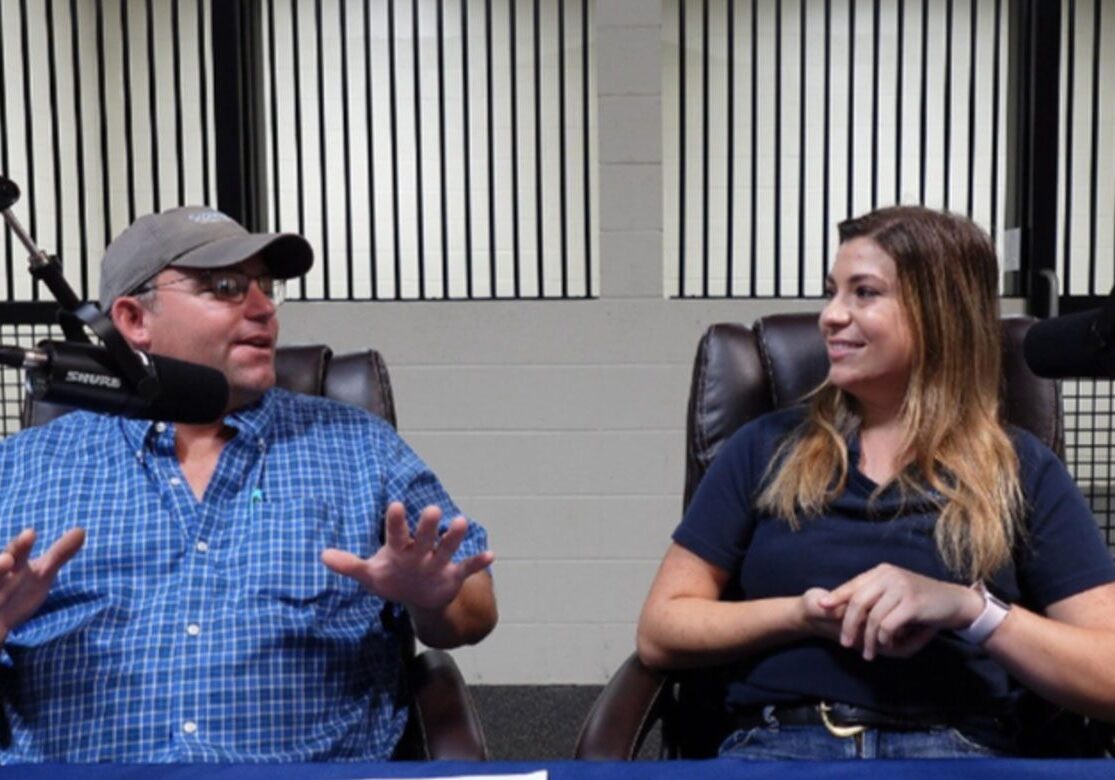
Watch Us on YouTube!
Catch full episodes and exclusive content on our YouTube channel, @countrysidevets2216. Click below to explore our latest videos.