
Ep. 52 – EPM in Horses Part 2 Podcast
In this episode
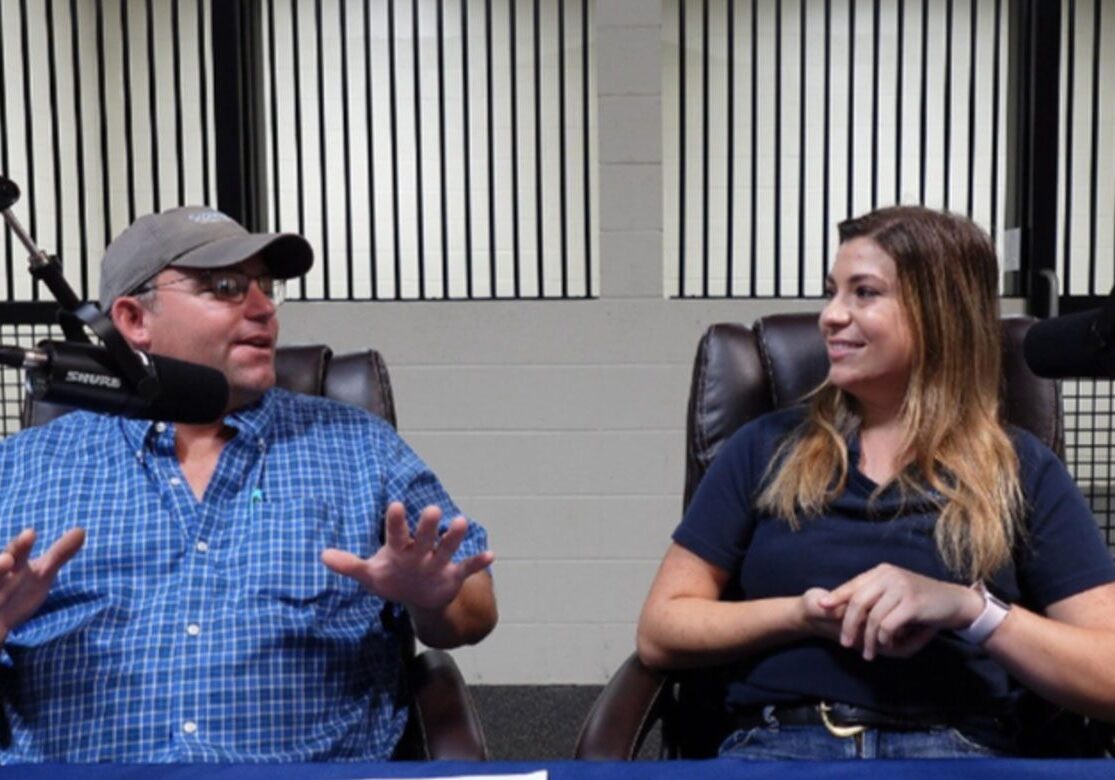
In this follow-up to our first Equine Protozoal Myeloencephalitis (EPM) episode, Dr. Dan Carter and Dr. Caitlyn McCaulley of Countryside Equine Hospital break down the rehabilitation process for horses recovering from EPM. From rebuilding muscle strength and improving proprioception to safe groundwork, in-hand exercises, and the role of nutrition and Vitamin E, this episode is packed with practical strategies for owners navigating life after treatment.
Learn why early intervention, slow and steady progress, and ongoing veterinary guidance are critical for a successful outcome. Whether you’re an owner, rider, or equine professional, you’ll gain insight into how to support a horse’s neurologic recovery and long-term soundness after EPM.
Episode Transcript
Welcome back to The Equine Vet Connect podcast here at Countryside Equine Hospital. Got Dr. Caitlyn McCaulley with me here today.
Good morning.
Good morning. How are you?
Good.
How are you? Good. At one point, I started saying, I’m your host.
I feel like I want to be like Alex Trebek.
I mean, you are the host.
So I should probably start doing that.
Yeah.
Maybe next time.
Yeah.
I don’t know. I always feel it’s our podcast. I never thought about me being the host.
You are the host.
You are the captain of the ship.
Oh, Lord. Well, that’s good. All right.
So one of our last few episodes, we talked about EPM.
We sure did. Equine Possum Malfunction.
Yep. In the EPM world, we said something about rehabbing these horses back and we’d do a later podcast.
So here we are.
Here we are.
EPM Part 2.
EPM Part 2, the rehab portion.
Yeah.
Well, let’s do a quick review of EPM just in case it’s somebody’s first episode.
They haven’t listened to us yet and if you haven’t listened to us, I’d recommend hitting the stop button, go back, listen to the EPM podcast, and then come back to this one. But just in case, EPM.
So Equine Protozoa Myeloencephalitis, it is something that horses pick up from possum feces. And so it’s very, very common in the Southeast. It’s all over North America, but it is very endemic in the Southeast.
Causes neurologic disease, so it can look like anything. So in the first episode, we stress the importance of getting your veterinarian involved early, having us do that neurologic exam along with the testing.
So either serum testing or doing testing of the spinal fluid. And so you have to have those two things together, the neurologic signs on clinical exam and then the testing as well.
And then as far as treatment goes, we talked about the three kind of mainstays of treatment. Usually that is diclazol, or protozole, and then there’s also your third kind of sulfa-based treatment.
And we kind of talked about the things that don’t work as well. But that is kind of the basis of EPM there.
Yeah EPM in a nutshell. Yeah, it was interesting. I was talking to a guy that moved here from California and they had their first EPM positive case.
And like, we don’t see this in California. He’s kind of borderline freaking out a little bit. I’m like, man, this is Tuesday in Georgia.
It’s an everyday kind of thing down here.
Super common. Super common.
It’s common. Like I said, incredibly treatable. Like I said, we treat them with Marquee or Protozil or my two go-to’s.
But then the part that we forget is you’re treating, you have to treat the disease. But then this is where I like to talk about we have to also treat the horse.
Right, because this one is one that it’s not just like, it has a lot of kind of long lasting side effects or secondary effects on it because you’ve got muscle loss and weakness.
You’ve got nerves that have to kind of regenerate and regrow and inflammation that has to subside. And nerves take a very long time to heal.
You know, you’re looking to regrow ones a millimeter a day.
Yeah.
To repair one, we have no idea. There’s only two ways you get that nerve function back. The body repairs itself or it has to regenerate a new neuron.
Yeah.
And if it’s the central nervous system, that neuron starts at the brain and it’s got to go all the way to wherever it’s headed to.
Yep. A lot of millimeters.
That’s a lot of millimeters.
A lot of millimeters, so.
Yeah.
And one of the things you brought up, muscle weakness is really common in these horses. And this is where things have changed. Like, I feel like the old guy now.
Like, had I talked about, you know, graduated vet school 16 years ago now. So I feel like the old guy, because you used to, you would stall these horses. You’d put them in small paddocks.
Like you were trying to protect them from anything bad happening.
Yeah.
And then they were like, I’ll just get them in the stall and let them sit. And we’ve now, and I remember when I got out of vet school, we were starting to re-think that a little bit.
Because when we talk about EPM, it’s affecting the central nervous system, typically the brain and the spinal cord. What’s responsible for muscle is the peripheral nervous system.
But when we put them in a stall, we weaken that peripheral nervous system.
Right.
So it’s one of those things that we already got one part of this wiring system that is not working correctly. And now we’re going to just not pay attention to the other part.
Well, because you’ve got this thing called disuse atrophy. And so if you don’t use those muscles and stimulate those muscles and stimulate those neurons, they don’t, they kind of, they get weaker and they get weaker.
And you’re in order to heal things, you have to stimulate them to get muscle to come back. You have to stimulate it. So putting them in a stall and just having them stand still doesn’t stimulate anything.
Right.
So we’ve got to have like the two things we’re kind of focused on is that disuse atrophy and the other one I often compare to, it’s probably not the greatest comparison, but it’s the closest thing I’ve got to compare it to the stroke victims, where they’ve had a stroke and it’s like, okay, this part is damaged, but we’re going to teach you how to use another part of your body and another part of this nervous system to accomplish the same thing. And so those are kind of the two areas that I like
to think about when I’m building and thinking through the rehab portion. How do we keep them strong? How do we keep that peripheral nervous system doing what it should be doing? Keep those muscles strong.
But then also, how do we kind of relearn to function with this? So let’s say it’s taken a while for this neuron to completely heal. We can still create a functional horse.
The other part of it too that we have to consider is safety for the horse and the handlers as well.
So definitely keeping your veterinarian involved in this whole process and having those regular neurologic exams to say, how stable are we? How aware of our limbs are we? Do we know where we are in space?
Just so we can keep everybody from getting squished.
That’s what I was going to say is we’re going to talk through this today, but always remember the safety portion. Pay attention. I remember a guy once said those little hairs on the back of your neck are that uneasy feeling you get.
It’s there for a reason. If you don’t feel comfortable, if you don’t feel safe doing something, don’t do it.
I do think it’s important to work with your veterinarian on this because one of the other things I see is if you’re the owner, you’re looking at these horses every day. All right, we’re going to see them maybe every two weeks.
Usually I’m seeing them about every 30 days. The time in between is much bigger. We’re able to see bigger changes.
When you look at something every day, it just doesn’t seem like much is going on. But when we look at them every 30 days, we can see those more drastic changes. That’s the other great thing, having a veterinarian involved, another set of eyes.
When you’re going through the frustration, I can’t tell you how many times I’ve come out. I’m looking at a horse that we’re recovering from EPM. We’re just not making any progress.
I’m like, what are you talking about?
This looks amazing. Yeah, this horse looks totally different than it did the last time I saw it. It’s the same thing when you’re trying to put weight back on a horse.
I tell people to take pictures every two weeks because you see them every day.
And it’s just like when you see your niece or nephew for the first time in six months, and their parents see them every day, and they’re like, yeah, they’re obviously growing and changing, but that’s just normal for them.
Whereas you see them and you’re like, oh my gosh, last time I saw you, you were this big. It’s the same thing. But yeah, take pictures and have us involved, so we can give you a more realistic vision of what’s going on.
Going through, we’re going to focus on two things.
We’re going to talk about different things we can do for strength, and then different things we can do to help out with proprioception. Proprioception, if you go back to our last podcast, I like to call it the DUI test.
This is why they make you close your eyes and touch your nose. Because your body knows where your fingertips are, and the body knows where your nose is.
So you’re able to take your finger and touch your nose without looking, and close your eyes and do this. You can close your eyes. For those of you listening, go ahead.
If you’re driving, don’t do this.
Yeah, don’t do that.
Close your eyes and just touch your two fingers together.
Safety first, kids.
Yeah, safety first. Don’t do a neuro test and drive. But those proprioceptive tracks are the most superficial.
Usually, the first one is damaged. That’s actually when we’re doing these neuro tests, that’s actually what we’re looking at is that proprioceptive function.
We’re going to focus on how we can do things to help out with that proprioception where we know where our legs are in space.
This is an interesting thing because if you don’t like, try to actually, if you’re having to use pure vision, like if I wanted to reach over and pick up this cup that’s sitting next to me, I can reach over and grab it very quickly.
But if you’re, next time your hand goes to sleep, try to reach over and pick up that cup, all right? Because you’re going to have to take your eyes and visually look at it, and visually make decisions with your hands to grab that cup.
Yeah.
Because your body, that’s a, when your hand goes to sleep, that’s an eritis. And that’s, you lose proprioception there. And so trying to figure out how to touch that, try that next time you’re asleep, your hands asleep.
With the right grip strength and the right, yeah.
Like all of those little fine motor movements get a little difficult because your nerve is angry, so.
And so then you think about a horse. We got four feet that have to all go in the same direction and not get in each other’s way. And horses will adapt visually.
And so they’ll start using their eyes to see where these limbs are at. The problem is they have to go through a conscious decision of, all right, I see my foot, it’s coming forward, I need to put it down, send a signal, put foot down.
All right, we put foot down. Okay, now I need to move this other one. And that’s a whole lot of decision making.
Yeah. Whereas if our proprioception is working like it should, we just walk.
Yeah, they don’t even think about it.
No, because the other feet are telling us where the ground is. We know exactly where it is. We’re not having to think about this where the brain is not actively involved in this decision from a…
like the frontal cortex is not working here. It’s just pure…
It’s just the wiring system is just firing. Yeah.
Which is absolutely amazing. That whole thing functions off some sodium and potassium changing places.
Yeah.
So we won’t get into that all over nerd and quick.
I’m always blown away. Sodium and potassium swap spots.
Yeah. And things happen.
And the nerve works. Yeah. We know where our feet are.
Yeah.
And it just hops on down the line. It’s crazy. Anyway, myelin sheaths and all the things.
It’s so cool.
It is cool.
I’m sorry.
I love this job.
But yeah, so when it’s working, it works without them thinking about it and they’re fine. But when they have to actually put conscious thought into it, things get a little haywire and they don’t always move the way that they’re supposed to.
And it’s not that they mean to squish you or step on you or hurt you. They’re doing the best that they can.
They don’t know where they’re at.
No, and that’s a lot of body mass to…
And we’re talking about the difference in milliseconds here in processing, but milliseconds matter.
Oh, yeah.
They might, like I said, I tell everybody, next time your hand goes to sleep, your foot goes to sleep, don’t worry about the pins and needles. They’re not experiencing that. And then you don’t worry about the pins and needles.
Go try to do something.
Do something.
I have literally woken up, my hand’s asleep, and I was like, oh, I’m going to do a neuro exam. And some of them are trying to do stuff to give me an idea of what it seems like. Yeah.
So one of the things I like to do when we’re working on developing that proprioception is to present different challenges of different degrees. Ground poles.
Yep.
Big fan of those because that takes an effort to navigate that. And don’t start out like huge.
No.
Start out small.
One pole on the ground.
Right. We’re just going to walk over that pole.
Yeah.
We’re just going to walk over it. Yeah.
And then you can add two poles.
And then you can add a line of poles and ask them to walk over it, and then you can lift one side of one pole and then the other side of the other pole, and just gradually make this challenge more challenging, and so that it builds their strength
that helps. They have to lift and engage their core and round the top line. They have to be aware of where their legs are in space, because they don’t like to whack their feet on the poles.
So, you’re just teaching them to kind of reuse their body and basically re-fire those synapses and make those neurons stimulate them again so that they start to function better, or you’re rewiring new pathways.
And a lot of this I do to walk. I’m not ready to add speed in, because like I said, we talk about that processing time. Milliseconds matter to walk.
They really matter at speed.
Bad things happen quickly, and the faster you go, the faster the bad things happen. So slow and steady wins the race.
So starting off in hand, and I’ll tell you, I’ll start this day one. We’ll start treatment, and I’m starting this day one.
Because that’s one of the things when we look at our counterparts in human med, like people that have had strokes, therapy starts that day. They’re in there as soon as they’re stable. Stable?
We’re starting this right away, and I do the same thing with EPM horses. Like day one, this is what we’re going to do.
Yeah, because time is of the essence. Because we don’t know when we diagnose a horse with EPM, we don’t always know how much is affected or where the protozoa is in the CNS.
We don’t know how much damage do we actually have to overcome at the end of all this. So if we get started sooner, we’re going to be over it and back to the regular working order a lot faster.
So starting in hand, ground poles is a great exercise. The other thing I like is walking on uneven ground.
The example I use a lot is, let’s say you live in New York City and you may be walking 10 miles inside the city, but you’re walking on perfectly level, flat, prepared ground. Well then you decide it’s the weekend, I’m going to go hiking.
Well you walk the same amount of time, but that ground’s uneven and you talk about, oh, my hips are sore, my knees are sore. You haven’t walked any further. But the difference is, is the body has stabilizer muscles it has to utilize on uneven ground.
That it doesn’t have to do on flat, prepared concrete.
Yeah.
And so that’s the same thing, getting these horses on uneven ground is going to require different uses of our nervous system and different muscle groups. So walking on uneven ground, walking on hills. Those are other areas I really like.
And strengthening those compensatory muscles is, and those stabilizing muscles is helpful anyway, just because it makes the whole body stronger.
So those can be super helpful. The other thing sometimes we’ll have people do, even, and this is part of our kind of neuro exam too, is if you have a curb or you have some sort of step up, walk them up and down that.
So that they have to go from low ground to high ground and step over that change in elevation, that can be helpful too.
Absolutely, and again, we’re doing this in hand at first.
Yeah, don’t do it, don’t ride them until we tell you to, please.
We’ll eventually get to where we feel safe riding, but all this is going to start in hand.
You’re being careful, being mindful, and when we talk about the curb, I always say, be smart, if we’re really neurologic, let’s maybe don’t do that on asphalt, where they can fall, and now we’ve scraped something up, we’ve got an injury first.
We want to protect ourselves and protect the horse.
Yeah, for sure.
So, and like I said, ground poles, bigger ground poles, curves, uneven ground, fantastic ways to start.
Yeah.
The other things you can do is you can do like your carrot stretches and just asking them to move their body around, asking them to, you know, move off of pressure and just, you know, lift their belly and round the back and just stretch those muscles out and ask them to engage their body in ways that, you know, will help strengthen them in the long run and help make them more comfortable because you’re stretching those muscles, but also making them more aware of how they’re using their body in space.
Absolutely.
Working the, crossing over our legs behind, crossing over up front, you know, building visual acuity and also making these neurons have to work. Don’t let them just sit there and make them have to work.
Yeah. The other thing, I was at a conference a couple years ago for like physical rehab and they talked a lot about like the different balance pads that they had.
Yes.
And those things are so cool because they again work on those stabilizing muscles and they, you know, you put these horses on these pads and they have different, different thicknesses, different firmnesses and they will basically cause that horse to, they have to balance on those. Their weight shifts and they have to find their kind of balancing point and it does it.
They’re just standing there is what it looks like, but they’re actually working really hard to work on those, on that balance and that proprioception and those stabilizing muscles. They’re really cool.
You know, similar feeling for that for us is try to balance on like a float inside of a swimming pool.
Oh yeah, it’s hard.
Balance on a surfboard.
Yeah.
It’s that same thing. Like you’re just standing there, but the water’s moving and you’re having to work to balance.
After about five minutes, you’re like, oh man, I’m using muscles that I forgot I had. Yeah. And that’s exactly, that’s what we want.
So yeah, those balance pads can be super helpful. It’s also fun. I’ve worked on horses that have done a lot of balance pads, trying to take like foot radiographs and things.
And they’re so used to putting their foot on weird things that you ask them to put it on the tunnel for the x-rays and they’re like, oh yeah, this is easy. And I’m like, oh, this is great. Thank you.
You know what, you’re right.
I’d never thought about that, but I’ve got barns that use them. And those horses stand on a footplate fantastically.
Yeah, they don’t move a muscle. They’re like, oh, yep, I got it. It’s great.
And that’s something fairly inexpensive that you can buy.
It’s a great tool. It doesn’t take up a lot of room. Not a lot of technology to break there, but it is really valuable.
So spending some time doing those balance pads is a great idea.
Yeah. You can do them in the front end. You can do them in the back end.
You can do them, you know. And I feel like that’s the thing, too, people get, when they do a lot of stuff in hand with horses, they kind of focus on the front end, but don’t forget about the back end, too. Like we’ve got to work on the whole horse.
We’ve got to work on everything, working together, strengthening those hindquarters as well. So don’t forget about the back end.
Great, great, great point. Cause that’s, usually the back end’s what we notice first. And that’s usually the more severely affected in lots of cases.
And that’s especially important when we talk about strength. Cause the back end does the work. I would say the front end’s there to look pretty.
The back end doesn’t work.
Yeah. It’s where all your power and propulsion comes from. It’s in the back end.
Yeah.
So, kind of my next thought is when I’m rehabbing these horses is, okay, we’ve got them where they’re balancing themselves. Now I want to put a rider up.
Yeah.
Now again, safety is a paramount importance. We’ll kind of walk you through and be like, all right, I think we’re safe to put a rider on. And then you also need to feel safe with the rider on.
Of course, all this kind of varies on what kind of horse we’re dealing with, temperament, things like that. There’s a lot of things that go into this decision. But we like to put a rider up.
And what I compare this to is it’s now going to change the center of gravity of the horse, and it’s going to change balance for the horse.
Yeah.
Before it had to balance itself. Now it has to balance a rider. The analogy I use for this is you go hiking, hiking is really easy.
You throw a 35-pound pack on your back. Not only has your weight increased, but where that weight is positioned, it’s moved your center of gravity up, now you’re very top-heavy.
And this is a couple of day adjustment to get used to even carrying a pack.
Yeah.
Because again, you’re having to change your stance, you’re having to change how you balance, and it’s no different for the horses. Yeah.
It changes the whole biomechanics when you put a rider up. Yeah. The other thing too, I’m going to be like the safety police over here.
But have a spotter the first couple of times that you get on that horse. Like have somebody there watching that can help if you need to do a rapid dismount or anything like that.
And if at any time you feel unsafe, just get off. This is why we’re going to tell you, have your veterinarian involved. Just because we said on this podcast, does that mean, oh, I can now go do all these things?
No. Have your veterinarian involved so they can like, I think we’re, because we’re looking for subtle deficits that most people aren’t going to see.
Right.
And we can help guide through that process because we want to be safe.
Yeah.
Like that’s number one thing dealing with a neurologic horse. Remember, you got 1200 pounds that I don’t know where my feet are. That’s a dangerous situation.
Yeah.
But when we get those riders up, we’ll go back through, I’ll go back through these same exercises.
But again, I understand we’ve been doing ground poles with them elevated. Guess what? We’ll put a rider on.
It’s back to square one.
Yeah.
It’s one ground pole on the ground. We’re just going to be stepping across it. And then we’re going to add in two.
We’re going to add in three. And then we’re going to start lifting the sides. We’re not going like, all right, we’ve been walking over them.
They’re a foot tall. We’re not going to start out on the saddle going over them with a foot tall. Not what we’re going to do.
No, because that horse is going to trip and it’s going to be a whole thing.
So, yeah, back to the very beginning and you’re going to do it all over again with a rider up.
I like to say when we have, we’ve mastered it in hand up to this level, now we’re going to add a rider in, go back down where we started and then work through it. And this is where I really love trail rides. Yeah.
Trail rides, like, I don’t think people understand the value that comes from them. That even if you don’t have a neurologic horse, getting them out on uneven footing, not perfectly prepared, this is huge for proprioception.
We were just literally just talking about this in the truck yesterday.
I was like, you know, some of the best dressage riders, they take their horses out and they hack them and they take them on trail rides because just the very terrain, having to pay attention to where their feet are, having to use those stabilizer muscles like that in the very terrain, like that strengthens tendons, ligaments, muscles. It fires those neurons like they that makes that horse so much stronger and so much more apt to do a better job in the ring and just safer. I mean, absolutely.
And there’s no thought involved for the person. You just get to go out and enjoy nature. Yeah.
But you’re giving your horse a heck of a workout.
Yes.
Yeah.
And like I said, working out uneven ground, because you don’t think about that little elevation when your foot hits the ground and your foot kind of just leans a little bit.
Or it or it kind of shifts on a rock or something like that’s all those minute movements are all making those neurons work. It’s making the body work harder.
It’s, it’s, it’s, it is, there’s no thought involved, but it’s, that’s that magic of proprioception.
It feels that uneven footing feels that twist in the entire body, all four legs and the whole body adjust to having that one uneven step.
Sodium and potassium, sodium and potassium.
It’s amazing.
It’s crazy.
So getting a rider up, start working through those exercises. And go, kind of go back to ground zero again. You can still do your in-hand stuff.
This is a little more advanced, maybe start with a warm up in hand, then saddle up and then start going back down the lowers. Yeah. And we’re going to work through that.
And depending on how they’re progressing is how fast you’re able to go. That depends on severity of neurologic deficits. It depends on response to treatment.
There’s a lot of things that go into, to where that’s at.
Yeah.
And then after you get kind of back through that process where you’re comfortable going over those raised ground poles and you feel like the horse is moving strong, definitely want to focus on getting them to carry themselves appropriately again,
getting them to lift that core and round that top line, engage the hindquarters, work them in a good rounded frame so that they’re not getting strung out and hollow. They’re building those muscles appropriately again, because that’s huge. Absolutely.
Because that, after you get that proprioception back, you’ve got to strengthen those muscles again, and you’ve got to get that horse moving appropriately so that we don’t have injuries further down the line.
Well again, it goes back to, I talk about this, when I’m rehabbing horses back from injuries, the power of the walk. Everyone discounts the walk. But here’s some facts.
The most efficient gait a horse has is the trot. They can trot forever. Because when you’re trotting, think about the tendons and ligaments, like rubber bands.
When they step down on it, all that’s loaded. So your storing energy goes back to that potential energy we learned about in elementary science class. We stretch the rubber band, we have all this potential energy.
When we start to move forward and weight comes off of that leg, now we’ve moved into kinetic energy. So that’s actually propelling us forward.
So I use a lot of trot work when I’m rehabbing tendons and ligaments because that’s where it’s put in the strain. Muscle involvement at a trot?
Minimal.
Minimal.
Yeah.
You’re not going to build strength trotting, but you can build strength walking because this requires muscle the whole way through. You don’t store enough energy in those rubber bands in the back of the leg to propel the horse forward at a walk.
So every step of the walk, you actually have to use a muscle. Whereas like I said, they’ve done some studies and like once a horse is into a trot stride, very little muscle activity.
Yeah, which is why they can go forever. And when you’re walking, you’ve got to walk with a purpose. Like you want them to be striding out, moving forward, like a good, engaged walk.
But that, yeah, it does wonders.
Yeah, just sitting there on the buckle, just let them just lollygag through, with a purpose. So back to what you were saying, as far as starting to get them to come around again, that’s going to start in the walk.
Yeah.
That starts in the walk.
Yeah.
With a purpose, going through this exercise and doing it correctly.
Yeah.
Not just lollygagging through.
It might seem like a harder workout for the rider at a trot because you’ve either got to sit the trot or you’ve got to post it. And that takes more work for us. But for the horse, the trot’s easy all day long.
I can remember.
So I worked on big ranches out west. And I mean, I’m talking about ranches. It was massive.
So I mean, you may be in a pasture and you may be two miles from the other end of this pasture. And we had to cover ground quickly and we had to recover it efficiently so our horse could go all day. A long trot, that’s where we did it.
Because we could cover a lot of ground and we weren’t killing our horses. And so it’s an incredibly efficient gait. Downside is it doesn’t do a lot for strength.
So tendons and ligaments, that’s why I focus so much on the trot and my tendon and ligament rehab is because that’s where the stress is. So that’s why there’s so much trotting when I’m rehabbing those tendons and ligaments.
Neuro is a little different.
Yeah.
So one thing I do want to mention, just a little side note, it’s important to make sure that we have all these proprioceptive deficits corrected so we don’t end up with a tendon or a ligament injury.
Yes.
Because we couldn’t balance and we overloaded something.
Yeah. We overcompensated on one side and yeah, for sure. The other thing too that’s important to talk about, I think, is through all of this rehab is nutrition as well.
Yes. So we talked about in the other episode, while we’ll have them on the treatment for the protozoa itself, we also will put these horses concurrently on a pretty high dose of vitamin E.
So vitamin E is something that we will continue often through the rehab process to support, to support repair of those neurons and everything. The other thing is too is we’re trying to build muscle back, we’re trying to build strength back.
So we need good protein, we need good quality protein, we need enough of it. So nutrition plays a big role in this one as well.
100% could not, cannot stress that enough. This is one of the few times I will actually get picky on vitamin E. It’s Nano-E.
They have shown, there’s a study out of, I think it was a combined study, but Dr. Fenno did it. The mycelized vitamin E, so what Nano-E is, it’s going to reach a steady state in the nervous system in seven days.
Which is so fast.
Quick.
Yeah.
The acetated form, it’s going to take like 50, I can’t remember if it’s 54 or 56 days to do the same thing.
And in some cases, that’s past 30 days.
We might not still be treating for EPM by the time that the vitamin E reaches steady state in the body. That’s not good.
No, we need this because vitamin E prevents oxidative damage. So just the best way to understand this is you got like this oxygen molecule bouncing around like Pac-Man tearing everything up. Yeah.
Vitamin E’s job is to catch that.
Yeah.
So I used to use my men in black. I always say it’s like when Will Smith walks into there and he touches that little ball of men in black and it like bounces around and tears everything up. That’s a free radical.
Yeah, that’s a free radical.
And then Tommy Lee Jones, he puts on a little mitt and he like catches it.
All right, that’s vitamin E. Yeah. And for younger listeners that haven’t watched Men in Black, your parents have failed you.
Yeah.
And you need to go watch it.
You need to go watch it just so you can understand what vitamin E does. So.
They need to show that clip in vet school. I think it would help everybody understand a little better.
That’s the way my little brain understands it. Like I’ll never forget. I was like, oh, it’s that little ball of men in black.
Okay. Or reactive oxygen. I got it.
Free radicals.
That’s funny.
So it’s really important because when you have EPM, you have a lot of oxidative damage. You’re producing a lot of these free radicals. We need that vitamin E to scavenge those.
Again, the sooner we can get on top of this and limit the amount of damage that’s there, the faster we’re going to get resolution of clinical signs, and the faster we’re going to be able to get that horse back into good work.
The thing I always like to say too is forever in nutrition, we talked about vitamin E and selenium doing basically the same thing or having a sparing effect.
No, vitamin E lives inside the cell wall, so it catches free radicals in the cell wall.
Selenium is involved in enzyme superoxide dismutase, it’s going to deal with free radicals in the jelly of the cell inside the cytosol of the cell, so two different spots.
So they’re not doing the same thing, one’s in the cell wall, one’s in the cytoplasm or the little jelly stuff inside the cell. So, vitamin E.
I’m particular, I’m not paid by KER to say this, you want NanoE from KER, not somebody that says they’re the same, they’re saying the time to go generic, they’re saying the time to take a chance, go with what works.
And eventually will come down, but I mean, it’s like huge doses too, like 5,000 IUs is where I start.
Yeah, so it’s a lot, but it’s very important. There’s in everything we do in this case, like I mean, always, there’s a reason why we are recommending the things we are. It’s not just willy-nilly like, oh, I like this brand.
No, there’s a reason.
Yes.
Yeah.
We need this.
Yeah.
And so, and again, you brought up a great point that’s also going to help us with our muscle development as we go through. We know the vitamin E is incredibly important for muscle development.
Again, because of the same thing, the free radicals that are producing these muscles.
Yeah.
We need that vitamin E on board. Good news, if it’s meeting the demands of the central nervous system, it’s meeting the demands of the muscle.
Yeah.
So very important.
Yeah.
So we’ve got a rider up. We’ve gone through our exercises at a walk. We’re rechecking these horses.
Everything looks good. Now we’re going to start to add speed with the rider. This is also where it’s very important before we add speed, is to communicate with your veterinarian as the rider.
How do they feel?
Right.
And you don’t have to get like, say, oh, has trouble placing this foot, that foot, no, no. What I need is, do you feel comfortable on this horse?
Do you feel balanced? Do you feel, you know, stable?
And you will know if you don’t.
Yes.
Something’s just not right.
Yeah.
We need that feedback. I don’t need, oh, has trouble with placing the left hind foot or doesn’t come through? I can tell that.
Yeah, we got that.
Yeah, we got that part.
I need to know, what does your gut tell you?
Yeah.
When you’re on this horse, you’re like, oh yeah, he feels good. I feel safe.
Yeah.
That’s what I need.
Cool.
Yeah.
Great. We can move forward.
Yeah.
Because you will feel subtle differences when you’re up top that the horse can compensate for, that we might not be able to pick up as easily on the ground, but you can feel it a lot easier on the horse.
So yeah, we just need to have that conversation of like, yeah or nay, like, do you feel good or not? Yeah.
This feels safe.
Yeah.
All right. Feels safe.
Yeah.
We’re going to start adding trot work then. All right. And the reason I’m adding trot work when I got to strengthen tendons and ligaments because they haven’t been doing as much.
Yeah.
But also we got to add some speed.
And when we add this trot work, we again, we don’t want to go straight to ground poles. Yeah. This is where I say, okay, let’s start trotting.
And this is where I will say, we’re going to start off in prepared footing.
Yeah.
I don’t, I want to remove variables here. I don’t want to rock the trip over a hole to step in.
Yeah.
We’re going to start on a really good ground.
Yeah.
And I want you to think big. Nothing tight.
Yeah. No tight turns, no tight circles.
No.
Nice straight away.
Yes. When you get to the end of the arena, I want a huge sweeping turn. Use it all.
Yeah.
Go into your corners, deep into your corners.
Big round turns. Life is good here. Yeah.
Because when we turn, we’ve added one more thing. Now our legs doesn’t have to just go straight. It’s got to go straight and turn.
So when we start turning, this is a different ballgame. Yeah. So we want to go through that.
Your horse is going to have a little bit of lean to them.
And this is also why you want to do your work at a wall, because if we’ve been working on coming around and staying balanced and being fit to hold that, this is a great time to work on that as well, because when we go into that turn, horses want to
lean to the inside of the turn. It’s physics. So when they do, we need to make sure, we kind of want to hold them up a little bit. Don’t let them have a big lean.
Yeah.
Yeah.
So having that control of the body is a great spot to be in.
Yeah.
And then again, you’re going to go through your whole little stepwise, everything in a trot, and just start at ground zero again, and then just work them up until they feel good, they’re strong, they know where everything is, and they’re back fit
again. But slow and steady wins the race. This is a marathon. This is not a sprint.
And doing the work in this whole rehab process is going to get you a very fit, very strong horse at the end of the day. And so I think people kind of look at it as like, oh my gosh, I’ve got to do all this silly exercises again.
But it’s like your horse at the end of this is going to be like…
Well, and I tell people, accept this, it’s going to be boring.
Oh, yeah.
It’s going to be boring. This is not why you got into riding. It’s going to be boring.
Just accept it. It’s just what we got to do. It’s going to be the kale of riding.
Yeah.
But it’s a great time to bond with your horse and you can teach them fun things. But it’s not going to be exciting.
No, it’s not exciting at all.
No.
At least we hope it’s not.
Yeah. We want this to be boring. Boring is safe.
We like that. It’s like when I always say boring anesthesia is great anesthesia. Like that’s the same thing.
Boring rehab is great rehab. That’s what it’s like.
Again, we’re going back through. We’re hitting that one ground pole, then we’re hitting a line of ground poles, then we’re going to start elevating ground poles. Then I start looking at getting turns tighter.
We start getting turns tighter, and this is where we may, depending on where we’re at, start working on some lead changes.
I always say this is a great time, like some of those movements that you’re having more difficulty with, great time to work on that.
Yeah.
Then also, I think this is important. We start working on, like in dressage horses, we start working on lateral work, the shoulders in, the haunches in.
I tell people, don’t drill this to a high level of frustration, because it’s not going to be easy at first. You get one or two good shoulders in, that may be all we get today. Don’t drill it like we’re getting ready for a dressage test.
No, because those muscles and those nerves, they’re tired.
They’ve lost a lot of strength and a lot of normal function. I think the other thing that can be helpful, too, when you are riding at the trot, is to switch your diagonals regularly and feel the difference in the two diagonals.
Because a lot of horses might be a little uneven anyway on either diagonal, but when you’re rehabbing this kind of horse, definitely swap your diagonals a lot and pay attention to how they feel on either side.
And if you do have a horse that’s weaker on one diagonal than the other, guess what? This is a great time to work on that.
Yep.
Because we’re going slow. Yeah. Great time to work on it.
Yeah.
And one thing I like to say, too, is if you can’t do it at a walk, then just don’t try to do it at a trot.
Nope.
So until it’s mastered at the walk.
Yeah. So again, like when we’re doing the walk exercises, we may work on those lateral movements, the haunches in and the shoulders in.
We want to make sure, because like I said, if the horse can’t do it at the walk, not a chance it can do it at a trot with speed.
And everybody is just going to get frustrated.
Right.
Yeah.
So make sure you perfect it at one gate before we go to the next. Then if things are great and I’m not seeing deficits, all right, we’re going to go do some trotting outside this ring. All right.
Now we’re going to get out of prepared footing if he’s safe, and we’re going to get to unprepared footing. But be smart.
Yeah.
Maybe let’s go with the pasture. Let’s don’t head out on the most treacherous trail ride that your county has to offer. Let’s take it easy.
Yeah.
So get out in the grass.
There’s just enough unevenness to help with that and just work through these steps.
Yeah. It’s all about, again, just getting the brain to connect to the legs, to connect to the muscles, basically just refiring all those connections and getting them strong again.
I have a lot of people ask about Pessoas and different type of lunging apparatuses for if they don’t feel safe riding them. My thing is if you don’t feel safe riding that trot, we’re not ready to do the trot.
No.
We’re not going to do that on the line because we need to feel safe, because that’s just going to lead to frustration and also create bad habits for your horse.
They can use that Pessoa system or some of those systems on the lunge, they can use that as a crutch to hold themselves in that frame rather than actually use themselves appropriately. It definitely can lead to some bad habits there.
I don’t think we’re ready for speed until we can do it.
Yeah.
Until we can do it with a rider.
Yeah. Master one thing at a time. Slow and steady wins the race.
The other thing, and we’re probably going to get comments on this, but that’s okay.
I’m a firm believer that dressage is the foundation of all riding.
As it should be, yes.
It is the true foundation. It’s just cool. This is what the Knights did to go into battle.
Yeah.
I mean, this is like some hardened warriors.
Yeah.
This is what we did.
That’s the thing.
If you want to have a better jumping round, or you want to have a better barrel pattern, work on your flat work. Yes. Do some dressage.
Work on your dang flat work. That’s where it comes from.
If you have no idea about dressage, find a dressage, somebody that rides. You don’t need to do some high level Pre-Saint George stuff. But just the basis, like first, second level.
Find a friend, find a trainer. Have them work through with you on some of this dressage work as you’re doing this rehab.
Because I really, when I was looking at my rehab protocol one day for neurohorses and even some of my horses for lameness, I was like, man, this looks awful lot like the levels of dressage here.
I say that because we’re fixing to talk about doing canter, which is third level dressage work. So it all fits really well.
Because what dressage is, is teaching classical movements. It’s teaching the horse how to use themselves appropriately so they can be strong and they can be straight and they can have a strong core. That’s the whole premise of it.
So that they could carry a knight into battle with 200 pounds of armor on. That horse had to be strong.
And had to be able to do it effortlessly because this guy’s, not only is he going to ride the horse, but he’s got to wield a sword or a spear.
He’s leaning off the side. That horse has got to be strong.
Yes.
Yeah.
So that’s a great tool if you’re trying to, if you’re having questions about it, find somebody that does dressage in your area. You can start working with them. Yeah.
I feel like the dressage queens get a bad rap, but it’s actually really important.
It is.
Again, it’s kind of like kale, but it’s important.
It’s important. It’s very important.
Like I said, the people that are successful in their disciplines spend more time on flatwork and classical movements than they ever do on jumping or running the pattern or that is the meat and potatoes of what makes them good at what they do.
When it’s interesting, some of the people have come in, even in the barrel horse world, that dressage, you find out, because you watch them run, it’s like you run different.
You find out, I actually started riding the English, I rode dressage and then I got into barrels. Yeah. Or I got into roping.
Yeah. They put the same movements on their horses.
Yeah.
It’s a great thing because when we talk about the canter, canter, loping, life needs to be perfect from a neuro perspective before we introduce this. Yeah. We’re adding a lot of speed and adding a lot of motor control.
Yeah.
We need to be perfect.
Yeah. Before you start cantering, before you start loping, we’ve got to have all these other movements mastered, and we have to be what I’d say completely normal from a neurologic perspective.
Yeah.
So. Yeah.
Because it’s a complicated, the canter is a bit of a complicated maneuver for the horse to do, and especially when you ask them to turn, and you ask them to do things at speed, like they have got to be firing on literally all cylinders, to do that
Milliseconds really matter.
We do not need these legs getting tangled up. There’s a great probability that can happen.
Yeah.
If horses are going to hit, they’re going to hit at a lope or a canter. So really critical. At that point in time, really when I started introducing canter work, I’m building more strength, I’m building the airways.
From a neurologic perspective, we’re-
Pretty much done.
Pretty much done.
Yeah. We have to be to get to that point.
Right.
Yeah.
So, we’ll add that in. But yeah, that’s kind of your nuts and bolts. And if I had to stress anything, it’s just slow and steady wins the race.
And here’s the other thing I think we need to talk about. You’re going to have bad days.
Oh, yeah.
You’re going to have bad days. Yeah. When you have a bad day, maybe we go back and we do some really easy things and we call it a day.
Because we don’t need to build frustration and new frustration in the horse.
Always end on a good note. Whatever. If you have a bad day, go back to something that you know that they’re good at and you know that you feel good about.
That way, everybody leaves and they feel good about it.
Because you may be two weeks of just steady making progress and then have a day that you’re like, I haven’t done, nothing’s going right.
Yeah.
All right. Well, let’s don’t push it that day. Let’s go back to some simple stuff.
Maybe we’re doing trot work and all of a sudden, nothing’s working from a lateral perspective.
Yeah.
Drop it back to a walk and let’s celebrate what we made over ground poles. Yep.
Great.
Like, just, you’re going to have them.
Yeah.
Accept it and move on.
It’s okay. None of this is linear. This is rehab, it is always hills and valleys.
That’s just how it is.
I like to talk about like a mutual fund. If you watch that mutual fund every day, you will pull your hair out.
Oh, you’re going to cry.
You just want to set a trend over time. I always like to say when the bad days aren’t as bad and the good days keep getting better, we’re going in the right direction.
It’s never linear. I’m also a big fan of pen to paper and keeping. I’m like the calendar lady.
I’ve decided I love a calendar. Just keep notes. What did you do today?
How did it go? So that way you can look at those trends over time and you don’t have to get so stuck in the weeds about it, but you can be like, oh, okay. Overall, we had three out of five good days this week.
Great. That’s awesome.
And I tell people to do the same thing.
Yeah.
And I always hate it because that’s not me.
Oh, see.
I’m writing nothing. A calendar, what is it? I don’t even know what a calendar is.
Well, we do have to tell you when you have to go get your hair cut sometimes.
Yes, that’s kind of bad.
I just wing every day, like get up and let’s see what happens.
I couldn’t be me.
A lot of great people that keep me.
Yeah.
I got people around me that like calendars.
See, my planner is color coordinated. It’s great.
Colors. I hate color.
Well, you can’t see colors, so that doesn’t really help very much.
I’m not a calendar person. I’m just like, I’m just going to go wing it. But I do tell people, it’s like, keep calendar for me.
Take some notes.
Yeah.
I love the people that do keep the calendar.
It’s great.
Like on this day, life was good. This day it wasn’t. We had like three bad days over the last month.
That’s okay.
That’s fantastic.
That’s great.
So let’s celebrate.
Yeah.
It’s all about the long-term goal and all about just perspective and it’s all relative. So don’t get lost in the weeds when you have a bad day.
Absolutely.
It’s going to happen.
We’re kind of wrapping things up. Key takeaways.
Yeah. Slow and steady wins the race. The safety is key and don’t move on to the next thing until you’ve fully mastered the first thing.
Yeah.
I’m going to agree. I’m only just going to add on to that early intervention like we talked about. Always.
Yeah.
Great diet.
Let’s talk nutrition. Keep the diet where it needs to be. Keep your veterinarian involved.
Don’t be afraid to call them like you may be two weeks in and you just need to talk to somebody. Call them up and find out what’s going on.
Yeah.
I can’t. You said it best, slow and steady.
Yeah.
Yeah. I’ve read that book, The Tortoise and the Hare, probably 200 times. You know what amazes me?
Every time I read it, that tortoise wins. Every single time. He always wins.
Yep. So don’t forget that. The tortoise will always win.
Yeah.
Patience, patience, patience. It’ll get you a better end result at the end of the day.
Absolutely. Dr. Caitlyn, thanks for being here today.
April, thanks for recording this. Kasey, thanks for editing all of this, because sometimes it’s a mess, and so we appreciate you making us not sound dumb. To our listeners out there, we really appreciate y’all listening and tuning in.
Keep sending your questions in. We’re going to keep hitting these topics, keep working our way through. If we can do anything for you, just reach out.
We’ve gotten some great requests. I’m going to talk about a little bit. We’re getting a lot of questions.
One of the things we’re going to try to do is do some really short videos to respond to those. They’ll be hooked to these podcasts. On those little short videos we’re doing, you actually just did one on EPM that will be hooked to the podcast.
Yeah, we did.
When you send questions, it’s just a lot easier for us to record something.
I feel like I’m better at the spoken word than the written. We’re going to try to get those questions, answers, and there’s some magic where they can hook them, post them. I don’t know.
It’s above my pay grade.
Hooked up to the video somehow.
Yeah, but they’ll be linked in that way.
If there is a question that comes in, like I had the question about people doing yearly treatments for EPM, and so we touched about that on the podcast, but it was a pretty good direct question, so I just addressed it real quick, and then we just
linked it to the podcast video, and just made it easy for everybody to find. We’ll continue to try to do that, because you guys do send in some really good questions.
If you have trouble finding that, find your local 16 to 17-year-old, and they will know exactly how to find it, so that’s where I’m at in life. Yeah. That’s my IT group.
Well, thanks everybody for tuning in, and we’ll see you all next week.
Have a good day.
Have a Topic in Mind?
We love hearing from our listeners! If there's a topic you're curious about—whether it's equine health, training, industry trends, or beyond—let us know. Your suggestion might just inspire our next episode!
Watch Us on YouTube!
Catch full episodes and exclusive content on our YouTube channel, @countrysidevets2216. Click below to explore our latest videos.