Ep. 56 – Not One More Vet (NOMV) Podcast
In this episode
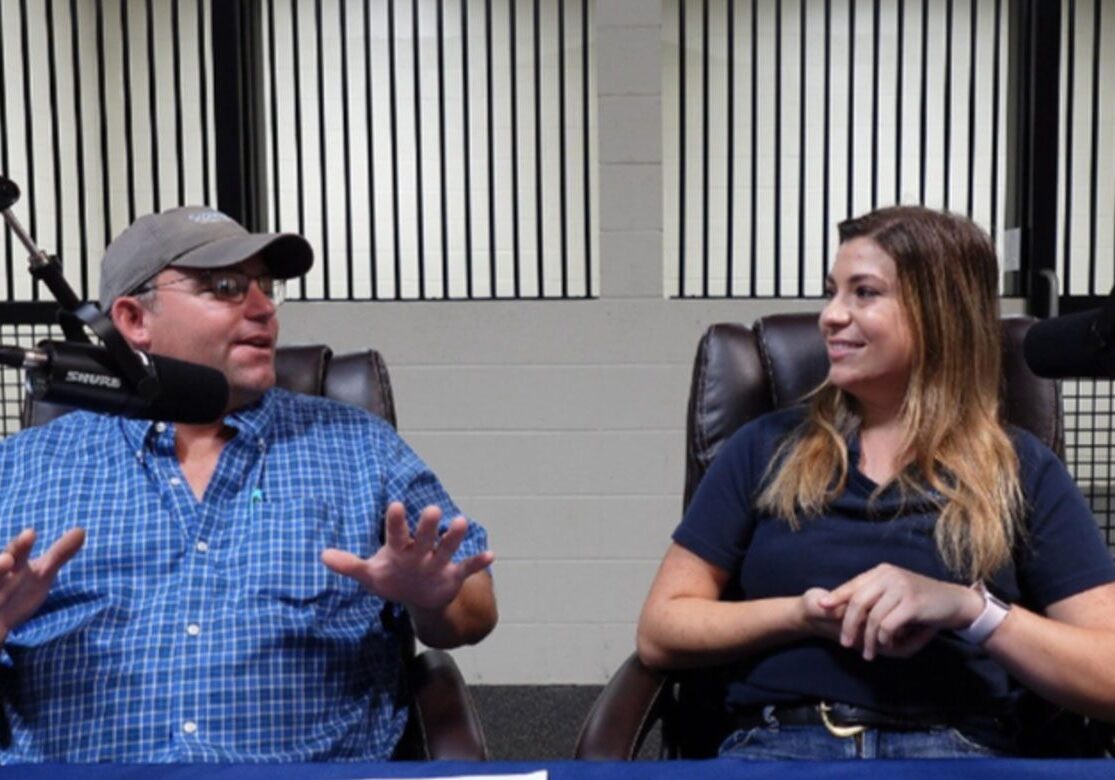
In this powerful and deeply important episode of The Equine Vet Connect Podcast, Dr. Caitlyn McCaulley and Dr. Caroline Brown open the conversation on mental health, suicide awareness, and the challenges facing veterinary professionals. September marks Suicide Prevention Awareness Month, and with veterinarians and veterinary technicians at significantly higher risk for suicide than the general population, this is a topic that cannot be ignored.
From compassion fatigue and perfectionism, to client expectations, social media pressures, and the emotional toll of the profession, this discussion sheds light on the realities many veterinarians face behind the scenes. The doctors also highlight the invaluable work of the Not One More Vet (NOMV) movement, which provides resources, support, and community for struggling veterinary professionals.
Whether you’re a veterinarian, a technician, or a client who wants to better understand the people caring for your animals, this episode is a resource to listen, learn, and share. Together, we can support the veterinary community and work toward a healthier, more sustainable future.
If you or someone you know is struggling, please reach out for help. You are not alone. Resources: NOMV.org | Suicide & Crisis Lifeline: 988
Episode Transcript
Good morning, welcome back to The Equine Vet Connect.
I will be your host today.
I’m Dr.
Caitlyn McCaulley and I have Dr.
Caroline Brown with me this morning.
Good morning.
Good morning.
So we have a topic today that’s a little bit outside of our normal realm of things.
But I think it’s important to talk about.
So September is kind of National Suicide Awareness Month.
And I think September 10th is is the Suicide Prevention Day.
And so we wanted to talk about kind of mental health and suicide awareness in veterinary medicine.
And just kind of get into that.
It’s a little bit, like I said, different, but I think it’s important.
Yeah.
It’s a very real topic.
And I think, you know, one of the things that we, you know, kind of pride ourselves on this podcast is that we are real and we talk about real life things.
And that is something, unfortunately, that is kind of an epidemic in our industry.
And I think it’s important to address it and, you know, acknowledge it.
And I don’t know if it’s widely aware, you know, how much of a toll it’s taken on us as a profession and all that.
But it’s, I think it’s important, so.
Yeah.
And so I think in recent years, I think when I was in school, or maybe before I started school, it used to be that human dentists were like some of the top professions affected by this.
But then, you know, it’s kind of started to turn in, and veterinarians and veterinary technicians are some of the top professionals that are affected by this.
And I, when we were looking up kind of research and stats for this, it’s, I read something that was, you know, male veterinarians are 1.9 times more likely to die by suicide than the normal populations.
And female veterinarians are like 2.4, or 2.4 times more likely, I believe.
And I don’t remember what those stats were for techs, but it’s real.
I mean, it’s really, you know, I think the more we talk about it, the more people are open about it and honest about it.
It’s, we’re learning, you know, that it is a big problem that we have to deal with.
Yeah, and I think, I think, you know, this is a small enough industry too, that when you hear these stories about these veterinarians or technicians or anybody, you know, taking their own life or even considering it, it’s, I mean, we feel it.
Like, it’s one of those things that I’ve cut myself off of social media a couple times, because like, I know that’s a very triggering thing for me, is seeing all of it.
And I mean, it’s scary to see this happen in our own colleagues.
Again, we’re a very small industry.
Very small.
And Equine in specific is even smaller.
So, you know, when it’s one of our own, you know, I think that really just strikes something.
So, you know, I think our goal of today’s podcast is just to kind of talk about why this has become kind of such an epidemic in this industry.
And then, you know, what can we do as professionals to help each other?
What can, you know, our clients do to, you know, recognize this and, you know, maybe kind of empathize a little bit with us and, you know, just kind of continue to spread awareness and, you know, hopefully put this to a stop and make this better for everybody.
Yeah, I think it’s something that, you know, if you ask, you know, any veterinarian we all know of someone or, you know, personally know someone who has struggled with this or, you know, maybe has succumbed to this and it’s real.
And so we just wanted to talk about it.
And I know it’s not a light and bubbly topic.
And but I do, you know, hopefully we can help some people with this and we can help our clients and, you know, just kind of raise awareness because I do think it’s really important.
Yeah.
And mental health has, you know, kind of become a more widespread topic.
It used to be such a taboo thing.
Yeah.
And so, you know, I think one of the things that I think is going to help us in the future is just being able to talk about this and be open about our experiences and, you know, why we feel the way we feel.
And, you know, one of the things I think that, you know, maybe makes this more prevalent in our population is the type of people that are attracted to Vet Med.
We are very compassionate people.
We are, a lot of us are perfectionists.
And, you know, when you’re working in this very high stress environment, you know, trying to maintain that level of perfection just isn’t possible.
Yeah.
I am also a recovering perfectionist.
And perfectionism doesn’t work in practice.
No.
You strive for perfection.
You strive for the gold standard.
You do everything you can to do everything as well as you can.
But it just it doesn’t perfectionism just doesn’t work.
No.
And so you’re met with this constant feeling of almost failure because you can’t meet that standard.
And, you know, you try and you try and you try and you just you just don’t win all the time.
And that takes a toll on us because we want to win.
We want to do it right.
We, you know, we are the type of people that we’re type A.
For the most part, we are highly driven.
We are, you know, and it’s not everybody’s that way.
That’s a strong overgeneralization.
But it definitely it’s hard.
They call it practice for a reason.
Yes.
Yeah.
Yes.
And, you know, it’s we have these these cases that you pour your heart and soul into and you do everything by the book and you do everything.
You go so far out of your way to do these things and they don’t work and you’re looking at yourself and questioning.
You’re like, what did I miss?
What step did I miss?
Did was there something I could have tried or a different procedure?
Or if if I had done this sooner, would this have worked?
And it’s so many of these what ifs and that’s just going to boggle down on you and eat away at you.
And, you know, if that just continually happens every single day, it’s exhausting.
It is.
I think, you know, we’ve even like talked about, you know, where we go home and we sit there and we lay in bed and we’re playing the what if game, like, what if I had done this?
What if I had done this?
And, you know, I think we’ve talked to other colleagues and they’re like, wait, you guys do that?
I’m like, yes, we all do that.
I do that all the time.
I did that last night.
I’m like, I sit there with every case that I work on and, you know, the good and the bad.
And I’m like, what if I had done this and what if I had done this?
And, you know, I can go and save 20 things in one day.
But if I have one thing that I couldn’t say, I’m going to sit there and hyper focus on that.
Yeah.
And I think, you know, that’s what makes us good at what we do because we care.
Yes.
You know, that compassion and that, you know, that desire to fix things and to make things better is what drives us and makes us so good at what we do.
And but it also has the kind of double edged sword to it that it also makes it really hard sometimes.
And I think there’s this, I think there’s this kind of old way of thinking or this thing that’s kind of phasing out with the older, I hope it’s phasing out with the older generation that, you know, clients don’t really care that we’re people.
They just want us to be there to provide a service.
But I don’t, I think that that’s changing.
I don’t really think that that’s true.
I think clients do care that we’re people.
I think they do understand that we’re people and we have lives and things too.
And so, you know, I think it’s important to have these conversations and be like, yes, you know, you lost your animal and you’re grieving, but we’re also grieving with you.
Like we also, you know, we’re also affected by this.
This isn’t just another appointment for us.
Like it does that compassion fatigue.
Like it definitely, it’s a factor for sure.
And like, I’ve had clients say some real ugly things to me.
And I’m, I try to have some pretty thick skin.
I’m like, I don’t try to take things personally.
But the one thing that has stuck with me the most that somebody said is that I don’t care.
Is that, well, you just don’t care about my animal.
And I’m like, that-
Not be further from the truth.
I’m like, I care so much.
I care.
I wish I didn’t care.
It would make it a heck of a lot easier if I didn’t care.
But I do.
And that’s why this is so difficult is because I care a lot.
And I take these cases home with me and I think about them and I ruminate on them and I, you know, pour so much of my energy into these things and, you know, and then for somebody to say, oh, well, you just don’t care.
I’m like, it’s like a punch to the gut.
It is.
It is.
It’s like that.
Again, that’s the worst thing that somebody’s ever said to me is that I don’t care.
I’m like, oh, it’s just, it’s we.
There’s something that I have to say to myself a lot when I’m struggling with client compliance or I’m struggling with, you know, I can’t get somebody to meet me halfway, whether it be financial reasons or they just can’t make it happen or, you know, there’s an educational barrier that I can’t overcome or something that, you know, I can’t treat this animal the way that I know it needs to be treated to help it be better or to end suffering or do whatever.
And it’s like, and I don’t remember who said this to me, and it was years and years ago before I even graduated school, but they’re like, sometimes you can’t care more than the owner does.
And so it’s on the flip side.
It’s like, sometimes I feel like we care.
We feel like we care more than the owners do.
Yes.
And so for them to flip it around on us and be like, oh, well, you just don’t care.
That is it’s so hurtful.
It is.
And I would never tell a client, oh, well, you just don’t care about this.
I would never tell that to somebody.
No.
So it’s just the things that people say can be so, so hurtful.
And the social media thing is real because people just get on, they get behind their computer screens and they wear it like a shield and they just type some nasty things.
Yes.
And that’s I mean, I said it earlier, I’m off social media right now because it’s so ugly and these things that people say and, you know, and everybody’s got their phones now and they can take pictures of you and they can record you doing things and they can take things out of context.
And it’s like, you know, they weren’t there, they weren’t part of this conversation or part of this workup for something.
But, you know, you post anything on social media and people are going to go run with it.
They’re going to run with it.
And it doesn’t matter that, you know, again, they weren’t there or they don’t realize that you’re a person too.
And they can make assumptions and take a snapshot in time and just, I mean, yeah, and it can ruin you.
It can ruin your career, it can ruin your life, it can ruin your family’s life.
I mean, like, it’s terrifying.
It’s terrifying these days.
And that’s a newer thing.
I mean, if you look back 20 years ago, those veterinarians didn’t have those issues.
You know, it was you’re at the appointment.
It’s just you and whomever is there.
There’s not this, you know, access to the rest of the world.
Veterinarians used to be some of the most respected professionals.
And I think that with social media and with the ease of people to be able to write a different narrative about what’s happening, I think that that is, I think it’s kind of changing a little bit.
Like, I think the public’s perception of veterinarians is changing a little bit.
And I, you know, it makes me sad.
It just, it’s a whole, another layer of things to think about when you’re out there working and trying to do your best and, you know, worrying about that in the back of your mind.
Like, is somebody recording me?
Is somebody, you know, gonna say something or take something out of context?
It’s a whole other layer of it.
Right.
And then it’s a very much he said, she said thing.
Oh, yeah.
And I don’t know what it, a lot of times what it is, you see people not backing the veterinarian and they’re coming at them and just cause everybody’s, and I get, you know, there’s, there’s good people and bad people out there and people have their own experiences.
And, you know, if, if you’ve had a recently bad experience with something, maybe you’re a little triggered by it.
You’re more likely to speak up and say something.
And that’s, you know, I get that.
But it’s like the ferocity that some people come out with is just it’s like out of nowhere.
And I’m like, what, what do you, what do you even do about that?
Yeah, it’s, you know, and it’s frustrating and it’s scary because you don’t know it could happen to any one of us at any time.
I think the other thing too, going along with that is like everybody grieves differently and everybody processes things differently.
And so I know if I know that a client is going through a hard time, that’s easier for me to kind of take with a grain of salt and kind of let it roll off my back because I’m like, you’re going through a hard time.
You’re processing a lot of things emotionally.
You probably, you know, aren’t really registering what you’re saying or, you know, how it’s coming across.
So it’s easier for me in those instances to, you know, kind of just let it be and not take it to heart.
But sometimes, you know, people can just be hateful.
Just be mean.
Yeah.
Just mean.
And bullying.
I mean, you see people that have had vendettas against a client or against a practice or, you know, a vet or somebody for years.
They’re coming after them for years and making it like their personal mission to take this clinic down.
Or I’m like, go do something happier.
Go do something positive.
How much hate do you have in your heart for that?
I’m like, it’s exhausting.
Oh, gosh.
I don’t know.
Yeah.
But on the flip side of that, too, you know, there are some clients and people who say wonderful things and who, you know, lift us up and treat us like people and ask us about our families.
And, you know, those clients are the ones that I hold on to because, you know, they’re the ones that we got in this to help.
We want to help.
And those are the majority.
Yes, they are.
That’s the big issue here is that the majority of our clients are wonderful, wonderful human beings, and they’re kind and they’re understanding.
And they, you know, they understand that, hey, we’ve got, you know, 800 other emergencies going on and, you know, we’ll get to you and all these things.
And the nicest thing a client can say, if you have to reschedule their appointment or reschedule something because of an emergency, they’ll be like, we understand if we had an emergency, we would want you to come to us first, too.
Like, we get it.
We get it.
And I’m like, thank you.
Yes, and that’s, and I love that.
I love that we have amazing clientele that are like that.
But again, it’s these.
It’s the bad eggs that stick with you.
It’s the few bad eggs that are just enough to, you know, take it to tape the scales.
Yeah, it’s terrible.
Yeah, but yeah, the good clients, I mean, gosh, they make it so worth it.
And the good patients and all the things, but it’s just like the cases.
You can have, like you said, 20 great cases, but that one bad one is what’s gonna weigh on you for days.
And it’s the same with the people.
You know, you have, you know, we see so many great people in a day, but then you’ve got that one negative experience that you’re like, man, if I, you know, maybe if I would have done the client communication differently, or maybe if I would have approached this differently, you know, and I think about it, I’m like, gosh, why, why, why, why doesn’t this person like me?
Why, you know, what did I do to earn that, you know, type of treatment from this person?
It’s hard, you know, it’s hard.
And I think too the older generation is a lot of, you know, we jokingly say they’re the good old boys.
But that is not what veterinary medicine looks like now and going forward, you know, it’s female dominated, it is, you know, it’s just a different landscape.
And so I think, I partly think that’s why the conversation looks a little differently now, because we’re not afraid to talk about it.
No.
And I think just to, you know, the societal norms for women is, you know, you’re supposed to be, you know, the family matriarch, you’re supposed to help raise your kids, you’re supposed to be there for for them and, you know, do all these things in your household.
And, you know, for a lot of women that are running their own solo practice.
Oh, yeah.
You know, that’s not always possible to do that.
I mean, I know a lot of solo female practitioners that, you know, they try to be there for their kids, you know, life events and, you know, be there for their family and take time for themselves and for that.
And that’s they can’t do it all.
They just can’t.
And then now you’ve got those expectations of, you know, are you letting your family down?
Are you letting your clients down?
Like, you know, that’s exhausting.
And, you know, we’re fortunate enough, we’re in a slightly bigger practice that we’re able to take some of that weight off.
But like, I mean, I applaud those solo practitioners.
I mean, you guys are just, you guys are amazing.
Yeah, I don’t know how y’all do it, like truly.
I mean, I get stressed out here enough on my own.
Like, we’re spoiled.
Yes.
But, you know, they that’s just such a whole different thing.
And again, I think I think it’s these, you know, solo female practitioners that are saying, hey, like, we are going to try to do it all, but we’re not going to be perfect.
Yeah.
And that’s okay.
And we need to, I feel like, as a profession, we need to support them.
We need to say, you know, yeah, if you, okay, you want to run your practice and have a family, okay, what do you need?
Yes.
Like, do we need to have emergency coverage that overlaps with you?
Do we need to have, you know, what do we need to do to support you?
Because, yeah, the landscape in the face of veterinary medicine is changing.
And, you know, it’s not fair to look at a woman and who’s a professional and say, well, you have to choose one or the other.
Right.
I don’t think that’s fair.
No, it’s not.
If you want to make that choice, that’s fine.
But like, I don’t think it’s fair to make somebody choose just because they chose this profession.
So they don’t get to have a family or they don’t get to be there for their family.
I don’t you know, that’s that’s we got to do better.
We do.
Yes.
And again, I think the that kind of mentality is shifting.
I think, you know, even if you look at the equine industry, it’s much more female dominated than it was before.
So I think, you know, a lot of our clients can kind of empathize with that and say, hey, you know, they have their own business that they’re trying to run and also trying to raise a family and they’re, they’re trying to do it all too.
So I think they, they get it.
Yeah.
It’s, it’s just shifting in that, which is, again, it’s refreshing to see, but there’s still that push from the outside that we’re expected to do it all and we just can’t.
No.
And I think I remember Dan, because we have a four day work week here and I think it’s, I think it’s fantastic.
And I remember him kind of pushing for it in some of his veterinary management meetings with other practices.
Like they’re so much more productive on a four day work week because they know they have a day built in that they can go.
He was, he could, it’s all, you know, mostly older men who are in these groups and running these practices.
And he’s like, how many of you go to the grocery store?
How many of you do the laundry?
How many of you, you know, they don’t.
It’s that job a lot of time falls on women.
And, you know, not everybody, not every family is like this, but it’s like giving us as a profession who’s now mostly female dominated, giving us that day of the week to go to your doctor’s appointments, go get your oil change, go to the grocery store, like get those tasks done makes us so much more productive the rest of the week.
Like it’s a huge, I would not give up my four day work week.
No, I don’t think I could go back to a five day work week.
I don’t think I could either.
It’s huge, but just those little changes, like those little changes are things that, you know, can make our work life balance so much more manageable.
Yes.
And just give us, also just give us that brain break.
Like I was on call this last weekend and I was off on Wednesday.
So all weekend I was working and I was like, cool, I know I have my day built in that’s coming, that I can get caught up on all my stuff, you know, take a little brain break.
I’ve got that coming.
I’ve got that built in and that it’s kind of like a buoy for me.
I’m just like, okay, I’ll hold on to it.
You just got to make it to your day off.
Yes.
But there’s lots of changes like that, that, you know, practices can make to support their veterinarians and their technicians.
There’s lots of things that can be done.
And I think, you know, the more we talk about this and the more we look at our colleagues and we say, what do you need?
Like, what are you struggling with?
Yes.
We can, you know, have those conversations and normalize those conversations and just help everybody.
And I think, you know, within our own industry, there’s been this big kind of push for that too.
The Not One More Vet is, you know, one of the big things that have come up.
And, you know, I think they’ve helped with a lot of these practices just giving them resources, giving them people to talk to, you know, helping them to implement changes within their own practice that help, you know, not just the veterinarians, but their staff, because the staff experience is a lot of this too.
You know, they, I hear the way some of the clients talk to, you know, the girls on the phone, and I’m like, man, they can hold it down.
Like, I mean, I think they, they’re like those front lines, like, they get a lot of pushback that, like, we don’t even necessarily know about.
They do.
Is that, you know, they’re able to kind of put out some fires and, you know, but it takes a toll on them too.
It does.
And it’s amazing the things that, and this happens in small animal too, when a client comes in and talks to the receptionist or talks to the technician, they will treat them completely differently than they treat the doctor when they walk into the room.
And that’s not okay.
No, it’s not.
We, especially here, like, the way we run this practice, nobody has an ego.
Nobody is above each other.
We’re all on an even playing field and we all treat each other with respect.
And I expect my clients to do the same.
Yes.
And we will, I mean, if we have a client that we catch wind of them being rude to our staff or anybody, whether it’s the people on the phone or the people working in the barn or the kennels, it’s like, no, if you’re gonna act like that, you’re out of here.
Yeah.
We’re not tolerating that.
Like, this is, no, you’re gonna treat everybody with respect here because we are a team.
Yeah, absolutely.
Absolutely.
But I think, yeah, the organizations like Not One More Vet and just teaching people to have those conversations until just recognize those kind of warning signs.
Yes.
So that you can intervene and you can ask somebody like, hey, are you okay?
Yeah.
Do you need anything?
And giving people time.
I think we even here, if somebody’s had a really rough day, we’re like, hey, how can we help you out?
How can we get you out of here so that you can go home and rest and decompress and all of that?
I think our team here has gotten really good at just checking in and recognizing those things.
There’s so many resources too for these people that are out here doing this.
And I think just watching that change in this industry over the last several years, I think, has been really good for everybody.
Yeah.
That’s the thing.
Nobody loses out when we have these conversations.
All it does is help people.
That’s why we wanted to talk about this today and bring it to light a little bit and be like, you know, this is real.
It is something that we all struggle with.
But, you know, we can make it better.
There’s things that we can do.
And I think, you know, one of those things for me is one of our techs asked me how I deal with how I deal with kind of that failure feeling and when I do everything and it still doesn’t work.
And I said, honestly, it’s having the support system behind you that is there to remind you that you did everything you possibly can.
And sometimes it just doesn’t work out that way.
And that’s normal and that’s okay.
Like I lost a really big case last year.
And thankfully, I was already scheduled to be off the next day because I was not in any shape to be at work.
And I remember Dan called me and he’s like, are you okay?
And I said no.
And he was like, okay, well, you know, you did everything you could.
Like, I’m proud of you.
I would have not done anything differently.
Like in that phone call, like pulled me out of the trenches.
Like that is so important to have those people that will just help pick you back up and pat you on the back and be like, it’s okay.
Because we’ve all been through it.
We’ve all been there.
And I think, you know, that’s one of the things of these more senior veterinarians to acknowledge that in the younger population and say, hey, that’s what it is.
And, you know, for students that are coming through or, you know, vets that are right in their first career, getting these mentors is so important because, yes, they need your guidance and, you know, how to just be a vet and work up cases, but that’s the real thing that you need is just having that, having that support is, and hearing that from a senior vet just really, it does help with that.
It does.
It does.
Yeah, it definitely does.
And I think, and just having the support system at home too, whether they’re in veterinary medicine or not, like having somebody that you can go to and be like, hey, you know, today really sucked.
Yeah.
And I just need, you know, I need X, Y, and Z, or I need to go do something to take my mind off of it.
Like having that support system is huge.
I mean, it’s huge.
And the solo practitioners out there, like if there’s anybody that’s struggling, like call us.
Hit us up.
We will be here.
We will, I mean, I still have, I have, gosh, I have so many clients or classmates that are out there doing solo practice and they are doing such a good job.
And like, I’m so proud of them.
And you know, they text me and they’re like, hey, can you help me with this?
I’m like, yeah, like, you know, please, please, please reach out to your fellow practitioners.
Like, we are all in this together genuinely.
We can’t do it alone and we shouldn’t.
No, and that’s, and I think that was one of the things too, like with, you know, we’ve kind of talked about the bad parts of social media, but that’s kind of one of the good things about social media is that it has brought us together.
It’s connected us.
There’s so many forums that I’ve, you know, seen for vets that just talk about cases like this and, you know, talk about their feelings and they have a support system that they can reach out to outside of it.
That’s, and I think that’s one of the big things is you have to have that work life balance.
You have to have that separation outside of it because it’s so easy to get sucked into this.
You know, I’ve, like we said, it’s, we take a lot of our work home with us.
You know, we come in early, we stay late, we go in hyper-focused on cases and we’re researching things and we’re doing all of this and that.
But, you know, you have to eventually say, you know, put the phone down, put it on silent.
Yeah.
And, you know, go spend time with your loved ones or go, you know, read a book or, you know, go on a walk or do something.
You have to have something outside of this that makes it worth it.
Yeah, I think it’s, you know, we’re very proud of the fact that we’re veterinarians.
You know, we work so hard to get here and do all these things.
But I think there’s, we’re kind of getting away from letting, like, I am a veterinarian, be my whole identity.
Correct.
We’re trying to be like, I am a veterinarian, but also, I also, you know, I bake sourdough bread and I read books.
And I, you know, there’s lots of, there’s lots of other parts of me that make me me.
Yes.
Other than just, you know, I’m an equine vet.
Correct.
And I think that’s important to not kind of, when you’re in school and you’re in internship, you kind of lose, you kind of lose those things because you’re busy.
But then it’s that balance of when you do get out and you kind of get in your groove, it’s like, okay, I got to pull those parts of me back in.
Yes.
And I have to find hobbies that I love.
That was like, I think one of the hardest things that I got out of internship is I’m like, I haven’t done anything for myself in so long.
Because again, your whole identity up to that point is, well, I’m a student, I’m, you know, going into vet school, I’m trying to get in, I’m doing this, I’m doing that.
And I’m like, now I have to find those things that I love and those things that I enjoy doing and that make it worth it for me to continue to come in every day and do this.
And, you know, yeah, it’s, being a vet is still a huge part of my identity.
But there are other things that make life worth it.
And that’s the thing, you know.
And we, I think as, I think as we continue this kind of discussion and growing as that, I think that’s gonna be something that we see in this shift is that, you know, the veterinarians aren’t going to just be a vet.
They’re gonna be, you know, part of, I don’t know where this is going.
We’re gonna be people.
We’re gonna be people.
We’re gonna be people.
Yeah, we’re gonna be people.
And I think, you know, I think clients want us to be people.
I think clients want us to be real and they want us to be, they want us to be there for their emergencies.
Yes, they want us to be, you know, professionals.
And we should be doing all those things anyway.
Yes.
But the amount of clients, because I’m deep in the throes of wedding planning right now and the amount of clients that ask me like how’s it going?
How’s planning going?
Like how’s your family?
How’s your mom?
Like people want to know us as us too.
Yes, they do.
They ask.
They’re like, oh, you got married.
Like let’s talk about it.
Let’s see the ring and like let’s see the pictures.
And it’s cool.
It’s like, you know, again, these people actually recognize that I am a person.
Yeah.
And it’s because we form lasting relationships with clients.
Most of our clients, we don’t just see one time and never see again.
Like the majority of our clients, we especially as equine vets, they have our cell phone numbers.
They have, you know, they, we have this back and forth relationship that is, it’s kind of unique in veterinary medicine and in professionals as a whole.
Like we, we have this unique relationship with people and it, you know, it can be, it can be a really good, cool thing.
Right.
And, and, you know, they’ve, they respect us and we respect them.
Just as, just as much again, like kind of going back to what we were saying earlier, like the whole, I would never tell a client that they don’t care about their animal and I would expect them not to say the same thing about us because again, we do have that.
Like I, I care about you as a person.
I care about your animal as a part of you.
And it’s like, that’s, that’s what makes us so special.
Like that’s what makes this connection.
Just, you know, it’s really separates I think what that old generation of veterinarian is.
Because again, it’s not just a, we’re gonna see you once a year for this.
It’s not just a transactional relationship.
It’s bigger than that, you know.
And that’s what makes it worth it.
You know, again, I love those clients that I know so personally.
Like I think I’m going to go see one today that like, you know, I’ve known them since I first started working here.
And it’s, it’s just I, when I see them come up on my schedule, I’m like, yes, this is great.
But like, I know we’re going to sit there.
And, you know, we’re going to talk about the horses, but we’re probably going to talk about life for, you know, just as, just as much as we are about everything else.
And it’s like, I live for that.
I love that.
Like that’s what makes this worth it.
But, you know, we have to, and we have to treasure those relationships.
We have to value them so much because that’s who we’re doing this for at the end of the day.
It is, it is.
I think, I think the, you know, the things that we struggle with the most kind of, trying to wrap things up and get us back on a straighter path.
We’ve been kind of all over the place, but I think, you know, the things that we struggle with the most is probably you, like, I think compassion fatigue is huge.
I think the, just hours and kind of expectations of people to be available 24/7, 365 days a year, like I think that is very taxing.
We want to be there for you, but we also, you know, we as a practice will definitely, someone will always be there for you, 24/7, 365 as a practice, we will be there.
But, you know, we all here, we have work phones because we try to create that balance.
We try to create that separation.
And so it’s like, if you have my personal work phone number and you have a question, absolutely, you can send it to me as long as it’s not urgent.
If it’s not urgent, I need you to call the clinic.
I need you to go through that route of normal communication so that we can get you helped as fast as possible for urgent or emergent things.
And just not getting frustrated with us if you text us at 8 o’clock at night and we don’t respond.
Right.
You know, a lot of times, if I’m not on call, I put my work phone, I try to put it face down on the counter.
That’s the…
I’m trying to get better and not even take it in the house, but it’s really hard.
Because I want to be there for people, but I also recognize in myself that it’s creating a lot of stress for me.
It’s creating a lot of kind of dysregulation, and I’ve got to get better about that for me, so that I can keep doing this longer.
Right.
And again, we’re never going to leave you without, even the solo practitioners that I know, they are fantastic about saying, hey, I’m going on this vacation with my family.
Please contact…
Or I have this life event today, so if you need something, please contact, you know, this other person.
And that’s something that our industry is so good at doing and doing that.
And, you know, as clients, we ask that you respect that of us, that, you know, we’re dedicating so much of our time to this that we need to be there for ourselves and for our families and, you know, the things that we’re all so passionate about outside of what we do as a living.
Yeah.
Yeah.
And I think, you know, just we’re not saying, like, like I said, we are not saying we are not gonna be there for you.
We are absolutely going to be there for you, but we are just trying to kind of create that balance for ourselves.
And, you know, and that’s something that will allow us to keep doing this for longer.
Right.
Right.
And that’s, it’s a newer thing.
The older generation, you talk, you bring up work phones to them and they’re like, what?
They like, don’t get it.
They’re like, what, what is that?
But again, it’s a newer thing.
I’m like, with a lot of those, you couldn’t just sit there and text pictures of things and send videos, like four and a half minute videos of the horse walking around.
And then they text you two minutes later.
They’re like, have you watched the video yet?
I’m like, I had a client text me on my day off about a non urgent question.
She literally sent me the same message every 10 minutes.
Oh my gosh.
For an hour and a half.
And I was like, I just, I was speechless.
I’m like, what?
And so I finally called her and she’d already just done the thing anyway and didn’t.
And I was like, OK, well, isn’t that worth it?
Oh my goodness.
But anyway, that’s like I said, few and far between.
Few and far between.
Yes.
But sometimes like, is this how you guys text like your family members?
Well, this is my thing.
Or your co-workers?
Or like.
You can’t, my thing has always been, you can’t text your human doctor like that.
No.
So why are you texting your horse’s doctor like that?
At like three in the morning too sometimes.
I’m like, I get some of these texts.
I’m like, what are you doing?
Why are you still up?
Yeah.
Just that, just that, just that mutual, like, just just pause and be like, would I do this to my dentist?
Just just, you know.
They might.
Some of these people might.
They might.
I talked to my husband about the messages he gets on the portal sometimes.
He’s like, oh yeah, people are sending messages all hours of the day and night.
He’s like, why are you up thinking about this?
He’s like, go to bed.
Go to bed.
Get some sleep, man.
I don’t know.
But I think, you know, there’s things that we can do as professionals to kind of help ourselves.
There’s things that clients can do to kind of help us.
And, you know, I will be the first to say I’m terrible at creating those boundaries.
I, in the last six months, I’ve tried, I’ve really started trying because I’ve recognized in myself that this is not sustainable for me long term to keep going the way that I’m going.
So I’m like, I’m really trying to create those boundaries.
But it’s hard because I want to be there, I want to help, I want to answer those questions.
But I’m trying to create that space for myself because I do.
I genuinely, I take it home with me and I can’t put it down and I can’t stop thinking.
And it’s, even if I don’t answer the messenger, I don’t answer the phone call, I don’t engage with that person, I’m still thinking about it for the next hour to hour and a half.
I’m still thinking about it.
Like, and so that, you know, that I could try to be at dinner with my fiance, and then I’m still thinking about this case, and I’m not really thinking about what he’s saying to me.
I’m thinking, you know, and that’s not, that’s not fair to him.
No.
And so, you know, there’s, that’s, there’s more that goes on behind the scenes that I think people don’t really realize how impactful just a small thing like that can be.
Right, right.
And so I think, you know, kind of wrapping this up and saying that, I think, you know, our kind of closing messages are, you know, if you are, if you’re in veterinary medicine, whether you’re staff or veterinarian or manager or whatever, if you’re struggling, please reach out to somebody, whether that’s, you know, a colleague or a close friend or a professional service line or something, please reach out.
And, you know, it doesn’t make you lesser of a person to ask for help.
No, and you are not alone in how you’re feeling.
I promise, I promise you.
It’s, even if you think you are, even if you look around and you think that everybody else is, you know, is thriving and coasting and just doing great, I promise you we’re not.
If there are vets out there that are thriving and doing great, I’d like to talk to you and what are you doing?
What are you doing?
What are you doing?
But.
Because we’ve all been there.
We all struggle.
We all struggle.
Yes, we’ve all felt the dark thoughts and let that happen.
But, you know, it’s we have to be there for each other.
And, you know, if you’re a client and you’re hearing this, you know, just understand that, hey, we’re we’re humans, too.
We make mistakes.
We, you know, we feel the same feelings that you do.
And, you know, we take everything to heart.
And, you know, we want to be there for your animals just as much as you do.
And, you know, I don’t even think we got into talking about, you know, money and all of that.
That’s a whole nother.
There’s so many layers to this.
We could do like three more episodes on this.
Like it’s, there’s so many facets of things that go into this.
And but yeah, we want to help.
We want to be here.
That’s why we did this.
That’s why we went to school.
That’s why we, you know, we want to help.
But in order to be here, to keep helping longer, there’s things that we have to do to safeguard ourselves and our, you know, mental health.
Right?
Trust me, if there were, if I didn’t love this, I’d be doing literally anything else.
I’m like, there are tens of other jobs I could be working that work way less hours, probably make more money, probably be less stressed out on a daily basis.
One of those cutesy little, little work from home jobs or something.
I don’t know.
But that, we do this because we love it.
Yeah.
We do this because this is what we’re passionate about.
We love helping people and we want to help, we want to help them.
Yeah.
That’s it.
We do.
But yeah, I, man, we didn’t even like, we, there’s so much that we could talk about.
I know.
I know.
Like we didn’t get into money and the price, they’re like, you’re gonna send this for the money.
I’m like, do you see, I got holes in my boots.
My car had standing water in it a couple weeks ago.
If I was in this for the money, I’d be doing literally anything else, y’all.
Literally anything else.
The debt to income ratio is scary.
We gotta keep the lights on.
You’re just price gouging me.
No, I’m not.
No, I’m not.
First off, I don’t make the prices.
I just practice the medicine.
Also, go look at your last hospital bill and at your human hospital.
Outrageous.
Outrageous, yeah.
But, yeah, I think, I think, like Dr.
Brown said, we do this because we love it.
We want to be there to help you.
But just, I think this is a good start to the conversation of just like, this is real and, you know, it’s something that we need to talk about.
It’s something that we need to get more comfortable talking about with each other and just being there for each other because it’s true.
Like, we’ve all we’ve all been there.
We’ve all struggled.
So, yeah.
But if there’s anybody out there that needs help or just needs somebody to talk to, like genuinely, please reach out.
Like, we are here.
We understand.
We’re not going to judge you.
We’re not going to, you know, think lesser of you.
Gosh, no.
No.
We’re right there with you.
Down in the trenches, man.
Yeah.
But in all seriousness, I do like I do, you know, think that this is super important and I’m glad that we talked about this.
So thank you for being here, Caroline.
But yeah, if anybody, you know, if there’s more topics that we should hit on regarding this or people have questions or you know, clients have questions about, you know, okay, I have this situation, like how’s the best way for me to handle it?
Like, you know, we’re happy to have those chats and conversations and, you know, and just kind of help guide people because it’s important.
And we want our equine vets to stay in this, right?
We want our equine vets to beat the statistics and be here after their five years.
And we need to stay in this.
We need to make it sustainable.
So we’ve just got to, we’ve got to pave the path.
So.
Yeah.
All right.
Well, we will wrap that up.
We’ll be maybe a perkier topic next week.
Yeah.
All right.
Have a good day, everybody.
Thanks, you guys.
Have a Topic in Mind?
We love hearing from our listeners! If there's a topic you're curious about—whether it's equine health, training, industry trends, or beyond—let us know. Your suggestion might just inspire our next episode!
Watch Us on YouTube!
Catch full episodes and exclusive content on our YouTube channel, @countrysidevets2216. Click below to explore our latest videos.