
Ep. 57 – Bandaging 101 Podcast
In this episode
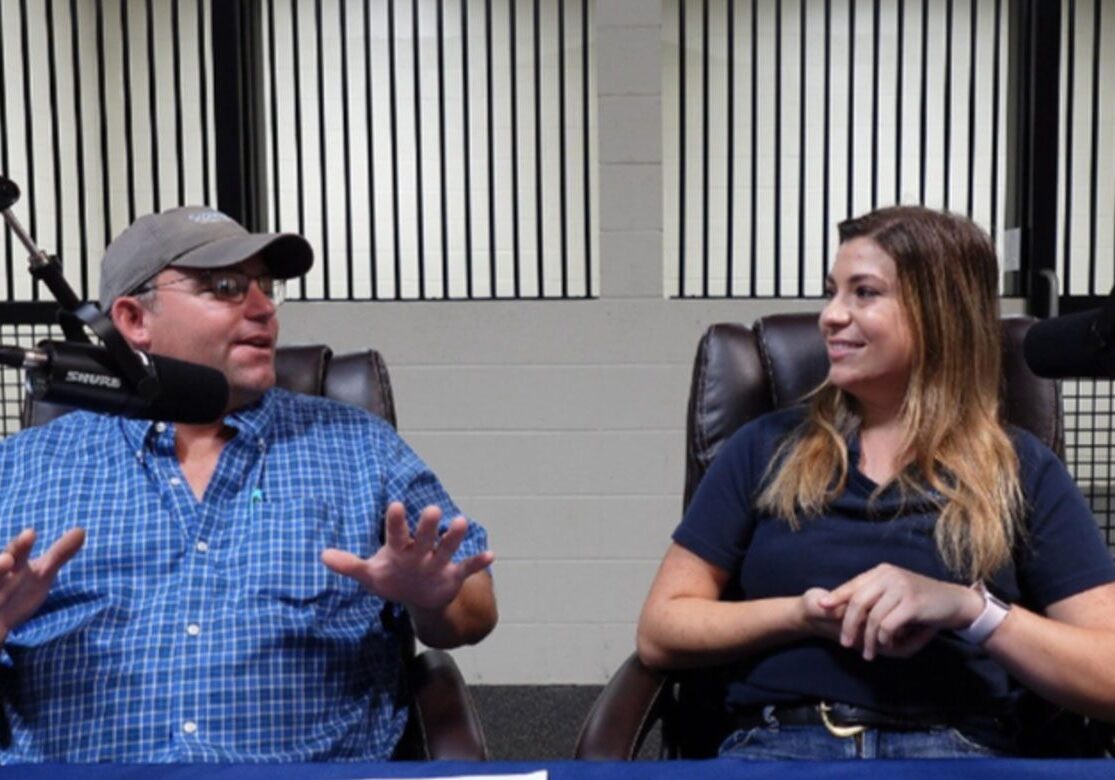
In this episode of The Equine Vet Connect Podcast, Dr. Dan Carter of Countryside Equine Hospital sits down with Clare O’Dowd, Business Manager of The Franklin-Williams Company, to break down everything horse owners, trainers, and equine professionals need to know about bandaging horses correctly. From daily leg care and managing swelling to wrapping wounds, preventing bandage bows, and choosing the best materials, this conversation is packed with practical tips to protect your horse’s legs and support healing.
You’ll also hear the story behind Franklin-Williams’ Combi Roll and Redi Roll bandages, why consistent, medical-grade cotton makes all the difference, and how to avoid the most common bandaging mistakes that can slow healing or cause complications. Whether you’re preparing a horse for a show, managing an injury, or stocking your trailer’s first-aid kit, this episode delivers expert guidance on equine bandaging, wound care, and leg support you can trust.
Episode Transcript
Welcome back to The Equine Vet Connect Podcast here at Countryside Equine Hospital, I’m Dan Carter.
I’ve got a special guest with us today, Ms.
Clare O’Dowd.
She’s the manager at The Franklin Williams Company up in Lexington, Kentucky.
Yep.
So today we’re going to be talking about bandaging.
All right.
It seems odd that we’re going to do a whole podcast on bandaging, but if you really think about it, I would probably say the one thing owners probably do medical wise more than anything else involving their horse is bandaging.
Yeah.
I mean, this is common whether it’s just wrapping a leg for swelling, managing cuts and abrasions.
This is the one thing we need to get right, in my opinion.
Absolutely.
So we’ve been involved with the Franklin Williams Company.
You’ve been providing this bandage for 16 years now.
Right.
Yeah, at least.
I remember when I first met the company is when I was in Lexington, we used them there and y’all were in a small little warehouse down off of Nandino.
Yes.
I remember just the way I started with it, I remember I was like, I looked at the address on the package, I was like, I’m opening a practice, I need these bandages.
I just drove down there, shook hands with the owner.
Like, can you send me some bandages?
With Bill Johnston?
Yes, I know.
Yeah.
I was talking to Frank, who was his son and his partner in the company, and Frank has been like a mentor to me in my time at Franklin Williams.
But I was telling him I was going to come down here and see you.
And he said, I remember when he came into the office and my dad called me and said, this guy wants to take those bandages, but we got to get him set up with something good.
So, yep, they remember the history and they’re really proud of the connections that they have with you.
Yeah, it was fantastic because at the time, like now we have individual roles, but at the time, y’all just had these big, the big rolls of bandages like are up here on the table.
Yep, our Combi Rolls.
But now you guys use mainly our Redi Rolls, which are the pre-cut non-sterile rolls.
Yes.
So that way that saves you guys time and labor not cutting them.
Here at your practice, you can just grab them, open them, and put them on the leg.
We actually had up in the old clinic, there was actually a mark on the counter, and if people didn’t have anything to do, your job was to take the big Combi Roll, roll it out, cut the bandages, wrap them up, and at that time we were just using drape material throughout the bandages.
When you didn’t have anything to do, you rolled bandages.
We had boxes of these, and it was a lot more work back then, but like anything, it’s kind of like, oh, the good old days.
Yeah, it seemed like a pain at the time, but yeah, good memories.
No, it definitely was.
So, Clare, you’re a Kentucky native, right?
Yes, I am.
Born and raised, Paris, Kentucky?
Born and raised in Paris, Kentucky.
I grew up on a thoroughbred farm.
My dad was a manager at Runny Mead Farm, and so I grew up there.
That was my first job.
Your dad was Martin?
Yes.
All right, so story on your dad.
Oh, I love it.
Yeah, okay.
Martin was one of my favorite people in the world.
Oh my gosh.
I loved going out there, and I can remember any time there was a horse in the clinic, Martin came in every single day.
With peppermints.
Peppermints and carrots.
Yeah.
I’d be out at the farm, say, Dan, I’ll be in later today to bring so and so of their carrots.
Oh, wow.
He came in every day.
That is crazy.
I love that.
That is something he always taught me and instilled in me.
He was like, Claire, you go in, you make sure those girls, because it’s always his mares, those girls make sure your girls know that they’re okay.
Go and visit with them and they’re going to remember that.
And that’s what he said.
Like he had a mare that hated him after a really bad dystocia.
And it was a rough foaling.
And he said, she ended up having to go to the clinic and he went and brought her peppermints.
And he said, after that, the mare totally changed her attitude towards him and loved him ever since.
No, he is one of the,
You always have those people.
You have people you remember, then you have people you’ll never forget.
Your dad’s the one I’ll never forget.
Because here he is running this massive breeding farm, taking care of all the horses, the yearlings, the foals.
And yet he still made time to drive to the clinic.
It wasn’t like a short drive.
No, it’s about like almost like a 30 minute drive.
Right.
He came in every single day to see his girls.
Yep.
Without fail.
Well, that’s awesome.
I didn’t know that you knew him.
I’ll have to tell him.
Absolutely.
I remember him very, very well.
He was one of my favorite people.
When we came to the farm, he always had things ready.
He was waiting on us.
Everything was run so well.
Yeah.
He was tough to work for sure.
It was a wake up call.
It was my first job working for him.
He didn’t give me any favors at all.
It was pretty cut and dry.
What you got to do, you got to get it done.
He didn’t take it easy on me when I was there.
But I’m grateful for it now.
Absolutely.
I always remember he’d come check on his girls.
Yeah.
He’d come check on them every day.
I always say you have people to take care of horses.
You get horsemen.
That was truly a horseman.
Absolutely.
That’s a great way of putting it because that is very true.
But yeah, I grew up around him, so that was a huge foundation and that was what set my heart on fire for horses.
I always knew that was where I wanted to go.
So I worked for him.
I went to school and then I worked the sales.
I moved around to a couple of different farms.
I ended up at Lanes Inn Farm.
I worked my way up to be Assistant Brood Mare Manager there, and then I moved to Summerwind Farm and was Brood Mare Manager there for a couple of years before.
I had a family while I was there and having kids and being a Brood Mare Manager, a manager, a vet, anything where the well-being of those horses is, it’s a lot of pressure, it takes a lot of time and hours.
I just got to the point where I said, I either really need to dedicate my time to my family or to my profession, and I ultimately decided like my family was going to be where I needed to focus more of my time on.
And thankfully at that same time was when Frank, at Franklin Williams was starting to realize he needed to retire and get out of the business.
And the new owners and I had a connection and they said, hey, if you’re open to it, we’re needing somebody to help run this business.
And they initially didn’t tell me what kind of business it was.
And when I met with them and they had a Combi Roll on the table, I was so excited, because I was like, wow, like we, Combi Rolls are great.
And it’s a product that so many people have in their barns that you just take for granted to be there.
And I couldn’t even tell you the name Franklin Williams, to be honest.
I knew what a Combi Roll was.
I knew what a Steri Roll was, but I didn’t know the name.
And that working there and working under Frank, it gave me such an appreciation for the name, Franklin Williams.
He gave me the background of everything, of how it got started in the early 90s, the time, the dedication, the research, and not only that, but also the relationship with the clients, with the clinics, with the vet schools, everything.
And it just, it really was easy to step into that role, and I feel such a privilege to be able to, you know, carry that on the same way that Frank and his dad were doing at the beginning when they started it.
So how did they come up with the Combi Roll?
Because for those of you listening that aren’t sure of what this product is, it is actually one of my favorite things on planet Earth.
It seems very simple, but I can remember when we started to run low, and there were some, a few issues with, I think you all changed it.
And like literally, of all the things that I was struggling with, like the thought of not having a Combi Roll to wrap a leg with, that I actually got a little panicky.
Like I’m not going to lie, I was, because the product is fantastic.
It pulls water away from the leg, keeps the leg dry.
It’s almost, I described it as almost like a diaper material, but talk a little bit about the construction of the bandage and how the design that went into it.
Because like I said, I guess I came up under the old sheet cotton days.
Right.
And I can tell you if you want to know what a terrible bandage is for a leg, it’s some sheet cotton.
Absolutely.
And so when I found these when I got to Kentucky, I was like, Oh, this is great.
This is the greatest thing ever.
Exactly.
And I do think that a lot of practices are missing out on it, but that’s beside the point.
In the beginning, Frank, not Frank, his dad, William Bill Johnston, he had a background as a product developer at Eli Lilly.
And so when he’d retired, he was in Central Kentucky, so he had some friends in the vet community.
And he had a vet that came up to him and said, Hey, look, I’m interested in creating a bandage that could be sterilized.
Do you think that you would know anything about this?
And that’s where the ball kind of got rolling.
It kind of stopped for a while.
That was like in 1990.
And when Frank, his son, was finishing up engineering school and was kind of looking for his next project as well, you know, they said, Hey, why don’t we team up and bring this idea back to life?
Because he had researched it, kind of saw, you know, how much work would go into making it, how to sterilize it, how all that would come together.
And they decided it was worth it.
So at that point, in about 1992, they got a group of five veterinarians together in Central Kentucky, and decided that they were going to come up with a plan of how to make it with the input of each of those vets.
Now, one of the driving forces behind this bandage was a vet you’re probably familiar with, was Dr. Bob Copeland from Paris, Kentucky, as well.
He was a pioneer in equine orthopedic surgeries in the 60s, and so at this point, he really wanted something he could have in his hospital that was already sterilized, take it off and put it on, and like you said, saving time from all those cutting bandages, having to autoclave it.
He had been using sheet cotton as well, or just the tear cotton that you would use to clean wounds or to clean mares.
He had been using that and wrapping the blue paper around it, and autoclaving it that way, and basically really makeshifting a bandage, and he said it wasn’t getting the job done.
They took all that thought to Bill and Frank, and so they came up with this.
They wanted to make sure that they got a product that was all made in North America, USA cotton, and the outer wrap,
They also sourced.
It comes from Kentucky as well.
And so the integrity of this bandage is North American cotton, and then it’s wrapped in an outer wrap, and then it has an adhesive down the middle.
And so the way that it’s made, it’s just made that it’s very consistent cotton.
You’re not getting like breaks or clumps of cotton, or as you know, like cotton is a natural product.
So sometimes twigs or leaves or things get mixed in there if it’s not done well.
And this is medical grade cotton that’s been sorted through, and that it’s nice and it conforms well to the leg.
But going back to when it was created, so the Steri Roll was actually the first product created, and they figured out how they wanted to get it sterilized, the most appropriate way to make sure that all of it was analyzed for bio-burden, and that it was done correctly.
And it just went from there, so after that, they created the Steri Roll, and as time went on and product demand went up, they came up with the Combi Roll was the next product.
Now, and it’s kind of funny you talk about cotton.
Growing up farming, we grew cotton and tobacco.
And you’re right, cotton is not the easiest thing to get where it’s uniform all the way through.
This is difficult.
And that’s one of the things like I remember during COVID, we had to use some non Franklin Williams product.
And I remember we used a 16 inch bandage and they were 15 or 14.
Yeah.
Like I was like, no, no, no, 16 inches is 16 inches.
Right, right.
And they were of all different shapes and sizes.
And it was not uniform.
You’d get like a stretch where there’s nothing in it.
It’s just overwrap.
Yep.
And you’re just like, how do we do this?
So having this consistent product, like I said, it’s a big part of our practice.
And like I said, if you’re in the equine world, like every one of us has been through Pony Club.
We’ve been involved in some way of having to wrap a leg.
And we take it for granted.
But at the same time, this is one, like I said, this is the one thing you’re going to do from a first day perspective from a care of your horse perspective.
It’s the one thing you’re going to do more than anything else.
Is wrap legs.
So having a good product is definitely, like I’m thankful every day.
Oh, absolutely.
That you came up with this product.
So.
Yep.
They did a great job.
So, let’s talk a little bit about proper bandaging.
One of the things is, is, is padding.
I came up, I remember working on some of the racetracks.
This was old school.
Like, some of you listening to probably will remember this.
Some of you are like, what?
But we used to have quilts and flannels.
Right.
And you would actually tear flannel bedsheets.
And your job as a groom is you had to have like a couple of things.
One of them was a cigarette lighter, the other one was a roll of electric tape, because you would wrap these bandages.
And after you got them around, you would use electrical tape to hold the quilt on.
Well, there’s always these frays.
So then you’re in there like burning off the ends.
Right.
And you had to be very careful when you did this, because if you put too much pressure, you could get the dreaded bandage bow.
And that’s one of the things we’ll talk a little bit about the padding in here is I don’t think you can bandage bow a leg with one of the Steri Rolls or the Combi rolls.
If you have enough of it, like what’s in the other Redi Roll that we use, I tell people all the time, you’re not going to bandage bow this leg.
I don’t care how tight you pull it, can’t pull it off that wrap won’t get tight enough.
That’s one of the things I love.
So the padding part of it is I think really important.
Yeah, absolutely.
And I know you guys use our 16 by 54.
So yeah, that is one of our longer links that we have available.
And our Redi Rolls and Steri Rolls come in different pre-cut links.
So I think also you’ll find that different owners, maybe even vets and farm managers, all have their different opinions on how thick or how long a bandage should be.
And I’m totally with you that, you know, the longer it is and you get like a good inch, inch and a half of that padding on the leg, you’re not going to bow that tendon if you have an inexperienced person applying that vet wrap.
But there’s always the vet or the farm manager who thinks, you know, a shorter bandage is appropriate because they’re confident that they’re not going to get it too tight.
So we have bandaging, bandage links from 36 inches all the way up to, we have some 60 inch length bandages as well.
And then the Combi’s are great because you can kind of eyeball it and say, I like them to be this length, cut them that way every time.
And or if you have an injury where you think you want some more or you want less, you can adjust it there.
But the bandage material itself is medical grade cotton.
And like I said before, it’s uniformed, it conforms well to the leg, and we have the different lengths.
So our biggest, our longest length that we have, or width is an 18 inch.
And I think a lot of people don’t know that we have it, but it’s really great for hind legs.
You have a big warmblood, you have a draft horse or something, or you have an injury that’s maybe closer up to the hock, that allows you to cover the whole leg with that uniform pressure and get it to where it needs to be covered.
And then we also have our 8-inch, which 8-inch is more for a hoof pack type deal.
But yeah, and then the cotton that’s inside is great for absorbency, like you said.
It’s that medical-grade cotton that is going to be able to absorb it.
So depending on how long you leave it on there or what kind of wound you have.
Yeah, especially, that’s one of the things I like, is when you talk about convenience, if you’re using a regular standing wrap, that’s going to reset at least once a day, sometimes twice a day.
There’s a lot of situations.
We can’t, like in the winter time, we can go three days on the bandage change down here.
Summertime, you’re pushing it.
Yeah, the dew.
Yeah.
But what I love is it pulls that moisture away from the leg.
That’s important because when you bandage, those legs sweat and that sweat, the salt, the components of sweat can cause a scurf underneath the bandage.
So then you’re treating this wound, but then you’re creating another one.
And so that’s why having that really absorbing cotton from a bandaging perspective, I think, is very important.
If we can keep that leg dry, then we can win the game.
I mean, we used to have to do, I mean, we did alcohol bandages.
We put alcohol on the skin and bandage it.
And the whole point of the alcohol is to keep the skin, is to dry that skin out and to keep that leg from scurfing.
Right.
But you use the right product.
Don’t have to worry about that.
Exactly.
So, I’m sure your dad taught you a lot about wrapping legs.
He taught me some, yeah.
So, what are kind of your key points when you are putting a bandage on?
What are the things that were passed down to you?
So, I think, honestly, so, you know, when you put on a bandage, I think most important, and I do believe that there’s some, like, maybe points that you could say this is right or wrong.
But when you’re applying a bandage and say it’s rolled up already, like, your Redi Roll is, so you’re going to be rolling it away.
So, you’re putting the pressure on the front of the cannon bone when you’re wrapping that leg.
So, you’re unrolling it towards the tail, wrapping it around, and then putting that pressure, again, on the cannon bone and going that way.
And you want it to be lined up.
You want it to be uniformed.
You don’t want it to be up and down in different layers, and, you know, half of it lower down on the fetlock and the other part of the bandage higher up.
You want it all the same.
So typically, if you’re wrapping like a front leg, you’re going to start under the knee and start on the inside of that cannon bone, wrap around, and then finish right, you know, towards the middle of that fetlock, right above the fetlock there.
No, and I think that is really important when you are wrapping a leg.
One of the things that I don’t think can be stressed enough is if you don’t start out with that bandage being tight to begin with, no amount of brown gauze, no amount of vet wrap, nothing is going to keep that tight.
It starts with wrapping properly.
And having that even pressure through the leg.
I think that’s where I see a lot of bandages are tight in one area and loose in another, and that’s also when they slip.
But having that even pressure throughout a bandage is very important.
This takes practice.
Absolutely, yep.
This takes practice.
I tell people because they’re like, oh, I’m just not good at this.
Y’all are so good at it.
Well, we put on 30 of these things a day.
Yeah.
I saw a couple of yours and they’re beautiful.
But I remember starting out, I probably still have them on my camera roll.
You put on a good bandage and you’re like, man, that looks nice.
I got to take a picture of this.
It is something that makes you feel proud and you see that cohesive wrap, your vet wrap has that nice pull to it where it’s just like even the whole way down, it looks great.
It’s going to stay on.
Right.
You can’t see the individual rolls.
It looks like one giant piece of that wrap where everything is laid on beautifully, evenly.
Because the other key, I say, when you have the bandage on right, if you look down a leg, you have the cannon bone, the fetlock, and the pastern.
The cannon bone is smaller, it gets bigger around the fetlock and then narrows into the pastern.
If you put a bandage on correctly, you should still be able to see that variation.
It should still be smaller over the cannon bone.
You should see where the fetlock is and you should see it tighten up through the pastern.
Right.
And to me, that’s the telltale.
You got your bandage on properly.
When it looks the same all the way down, you’re way too loose.
Right, because you’re not, if it’s a swelling that you’re trying to control, you’re not applying appropriate pressure to that area.
If there’s a wound when that may be on the pastern or may be on the fetlock, you’re not covering it.
If there’s a telfa underneath, it could be shifting or whatever dressing you put on it, it’s probably touching an area that does not need it.
No, and it all starts with putting that bandage on correctly from the get-go before you put the vet wrap on, making sure that’s pulled tight.
Right.
And then, bandage placement, I run into that a lot, because let’s say we’re working with a tendon or a ligament injury, people, I have some people, they just want to wrap from the fetlock up.
And what I try to explain to them is you’ve got to come down below that fetlock, because that’s where you’re actually getting your bracing from.
Right.
It’s acting like a brace at that point in time, not just compressing that tendon, but it’s providing support to the leg to help hold that leg up, and take some of the pressure off of that.
So placement is really important.
That’s why when you talk about the different lengths, it matters which one you grab.
Yeah, definitely.
You know, you talked about this a little bit when you’re wrapping for swollen legs.
I think a lot of people forget when that leg swells, one of the best things you can do is a very snug, tight bandage and squeeze that fluid out.
Yeah, do a nice sweat, which is one of my favorites to do.
You can put a nitrofurazone on it or you can put a DMSO sweat.
I don’t know about you.
I don’t know how you’d like to do your sweats, but a farm I worked in the past, they like to use puppy pads because you get that cotton and then you get the plastic on the outside and you put on whatever your DMSO or nitrofurazone that you want to put on it, wrap it around and then you get your cotton combine bandages and you put that on it, and that’ll just really draw out the swelling.
Yeah, I don’t use near as many puppy pads because we used to use Saran Wrap under them, we used to use puppy pads.
Believe it or not, now I just put yours directly on there because you’re going to get on some of these really swollen legs and when you’re using a sweats, you’re actually trying to use as an osmotic gradient sometimes.
I’m a big fan of the osmotic sweats where it’s the nitrofurazone, DMSO, and the epsom salts, methyl salicylate, which oil of wintergreen is the other name for it.
We would put that on these legs and then we wrap it with the Combi.
Because of the osmotic part of that sweat, you’re pulling fluid out through the skin as well.
That’s the beautiful part about these bandages, that fluid comes out and it’s wicked right away by the cotton.
You pull it away, the legs, and you can properly wrap properly sweated leg.
I can pull that down 24, 48 hours.
It is amazing.
You want to make a cellulitis.
Oh yes, definitely.
Antibiotics are great.
Anti-inflammatories are great.
You don’t wrap that leg.
You’re not.
It’s going to be a much slower process if you don’t.
Yes.
Absolutely.
I’m about speed.
I’m going to get this done quick.
Yes, exactly.
I like to kill mosquitoes with sledgehammers.
That’s what we say around here.
Like, yes, newspaper would be fine, but hit it with a sledgehammer, make sure it’s taken care of.
Let’s get it done one time.
We’re talking about wounds as well.
That’s a very common thing.
We have to wrap is a wound.
Any tips or tricks for people that are having to wrap these wounds, and what are some of the key components that you think of when you’re wrapping a wound?
First, when I’m wrapping a wound, I think about what kind of dressing I’m going to put on it first, and I think that just depends on a lot about personal preference, but also where the wound is located.
You know, I love biozide, I think is a really great wound dressing, and then so if it’s a deeper wound, I might do biozide.
If it’s more of a scratch that is also getting some residual swelling, I might just do like a triple antibiotic, rub it on there, maybe a telfa.
If I’m going to do that and I’m really worried about it, maybe if the telfa moving, I might do some light gauze on the inside and then wrap our bandage around the outside.
If this is a bandage that you know that the horse is going to be stalled and you’re not turning it out and you’re not worried about getting wet or anything, you want it to last, I would also consider keeping some cribox on hand or some chili and vaseline, mixing it together and putting it at the top of that bandage so that if you got a little mouthy colt that wants to just bite and take it off because he’s bored and he wants to be outside, you put that chili on there, he’ll learn pretty quick that he shouldn’t do that and that was a bad idea.
Yeah, it’s funny, we used to use a wrap last.
Oh yeah, a wrap last.
A rap last is that oil of a cayenne pepper plant.
This stuff, I can remember getting it on my skin, it burns.
It does, yeah.
We had this colt in here and he was chewing on the bandage and I was like, we’ll fix that, grab the wrap last.
I swear, I don’t know if the horse was like part Cajun or what, but I think he ate it more.
He was like, oh, actually, thanks, it tastes better now.
It’s delicious, you added hot sauce.
The partner was like, you’re a man of my own heart.
I like a little hot sauce.
He’s eating away on this bandage.
Yeah, you can do what you can or you could try some elastikon at the top and bottom.
That elastikon will conform so tight to the leg or just bandage it down that they won’t have anything to grab on to.
So that would be a good thing to do as well.
And that’s one thing we talk about bandages.
I always say there’s elastikon and there’s elasti-can’t.
You want, now they’ve changed the brand name, but it used to be made by Johnson & Johnson.
Now it’s the box changed.
I’ll be honest, I had a little bit of a panic attack when it came in because it was like, does somebody buy generic?
Because you want to see me lose my mind, buy some generic elastikon.
There you go.
Because it sticks to everything but the leg.
It is awful stuff.
But elastikon, fantastic.
So big fan of that.
So the other thing we talk about bandages, there’s some red flags.
There’s some things that, hey, you’re not doing this correctly.
We talked about one of those being too loose.
But what are some other common things that you see with bandaging that is, I guess, red flags or things that, hey, we did this incorrectly?
Right.
I think number one would be not enough padding.
So if you’re too conservative and you just put one, like your bandage goes around one time and that’s it, and then you put vet wrap right on top of that, you’re probably, that is not enough protection to that leg and those tendons from that vet wrap because the thing about vet wrap is, the longer it’s on and sometimes with movement, it actually can get tighter.
And so you’re not protecting that leg from that horse being able to move and walk around.
And the whole point is to protect the leg, to increase healing, to create a healing environment.
So you want to make sure that you’re getting enough padding.
Uneven pressure on the vet wrap with, again, I think if you have enough padding, you can kind of eliminate that risk if you have a less experienced bandager putting on the bandage.
But if it’s not enough, you’re putting on the vet wrap really tight in one area, not enough in the other area, you could end up bowing a tendon in that way.
Not going up high enough, not going all the way down low enough.
Yeah, it’s just the inconsistency can be damaging.
No, and not having enough padding.
I always say that’s when we take a bandage, we make it a tourniquet.
And I have seen these legs where they didn’t have enough padding and you’ll go to take their bandage off.
And all of a sudden below that bandage, it’s really big, it’s really edematous because you’ve essentially formed a tourniquet.
And this leg is swelling because of that.
And that gets a little scary because like I said, you’ve had a tourniquet on the leg.
Yeah, yeah.
And so I tell people like, don’t cut these in half, don’t skimp on the padding.
Exactly.
Because you can really cause a lot of harm when you do that.
Yeah, that’s so true.
And let’s talk a little bit about a bandage bow because some of our listeners may not be familiar with the topic.
And if you’ve been, I would say if you’ve been a pony clubber, they beat this into your head, the bandage bow.
But bandage bows are where we get uneven pressure on the tendon, especially the superficial flexor or the extensor tendon up front.
And the bandage actually rubs on the tendon or pulls the tendon in an unnatural way.
And that results in a lot of fluid accumulation or edema within that tendon.
And you essentially end up tearing those fibers because of the fluid accumulation.
And there’s ways we can definitely go about preventing that.
We kind of touched on those a little bit.
But, you know, things we can, when you’re putting this on, you want to be mindful.
You know, we used to be terrified about the direction.
Right, right.
The direction, like, was, oh, make sure you wrap it.
Have to do it this direction, yeah.
We have learned that if you have appropriate padding, that’s not as big of a deal.
Yeah.
When we were throwing the old flannels or you’re using old sheet cotton, this mattered.
Yeah.
The direction mattered.
But that’s one of the myths that, you know, if you’ve got appropriate padding, I think that’s why I love 54 inches.
You’re not going to bandage bow horse with a 54 inch wrap.
That’s correct, yeah.
But, so you’ve touched on one, making sure you have appropriate padding.
And the other is getting that even pressure.
Do you have any tips for people to make sure you get that even pressure all the way around the leg?
I think besides just practice, practice, practice, and get a good feel for it, at Franklin Williams, we have a fake horse leg.
And I actually think probably, I know like my time on the farm, it was just like I was monitored putting on bandages at the beginning.
You know, it’s like make sure you get like when you’re stretching out that vet wrap, you kind of want the wrinkles to disappear, but you want to like make sure you’re putting that uniform.
There’s almost a sound that goes with it too of like stretching it out.
And you just get a feel and it’s something that you kind of have to learn over time, I believe.
But yeah, I do, I do think that that’s important, just getting that pressure right and making sure that you leave maybe an inch and a half at the top and the bottom so that you’re not accidentally going too far or too far up to where, oops, you know, the maybe where when the vet wrap does contract, it pushes down the cotton.
So when you leave that half inch at the top, you’re not going to have that happen.
The cotton is protecting the entirety of the leg.
I like to tell people the leg is round, but we wrap in straight lines.
So when you pull, like you’re on the outside of the leg, you stretch that vet wrap out, you pull it tight, and then you lay that onto the leg.
Correct.
Yeah.
When you’re at the front, then you pull it forward, stretch that vet wrap out, and then you lay it on the inside of the leg.
Yeah.
You work your way around the leg, and imagine two straight lines, if that makes sense to our listeners.
Right.
Yeah.
You’re pulling it, and if you watch that vet wrap, it will go from dull to shiny.
Yes.
When it’s shiny, that’s when you’ve stretched it appropriately, and then you’re going to lay that down.
Because what you don’t want to do is the inside of the leg, because you’re new at this, so the inside of the leg is really loose.
The outside, you’ve gotten really tight.
And now we have this uneven pressure all the way around.
And so it’s very important to maintain that same pressure all the way through.
Right.
Yeah.
It is kind of like a two-part movement of rolling it out one way, stretching it out one way, wrapping it and doing it.
That’s very good how you explained it.
And everybody thinks brown gauze, putting that on first is going to save your soul.
If you can wrap a leg, you don’t need brown gauze.
Yeah, I agree.
I agree with that.
I just, brown gauze is a crutch.
If it makes you feel better, that’s fine, but…
If you do it appropriately, you don’t need it.
Yeah.
So, and you talk about the training.
I can remember in Kentucky, that was, I tell everybody, it didn’t matter how great of a vet you were, if you couldn’t wrap that leg properly, they judged you.
Oh yeah, for sure.
You may not come back to that farm if you did a poor job.
Yeah.
And these guys, they’re good.
Like those grooms in Kentucky.
Oh yes.
They are amazing at wrapping a leg.
That is so true.
So.
Some of the guys I’ve worked with, they had it down and you knew the best ones and they loved doing it.
It’s something, I don’t know, it was something that when you get good at it, you don’t enjoy having to put a bandage on a horse.
You don’t want a horse to have an injury, but it’s a practice.
It’s almost an art to be able to get it down really well.
And it’s a pride thing when you get done, you’ve got that great bandage on there.
And I can remember, as close as you ever get to a compliment in Kentucky, is they look at you and go, huh, okay.
Yeah, yeah, yeah, right, yeah.
They didn’t correct you, they didn’t give you.
Or they just said, yeah, who put on that bandage?
Okay.
And then the next time, hey, make sure someone says the one that puts on that bandage and they’re like, I did a good job.
I got it right.
We say that here, when Dan doesn’t give you a tip or tell you how to, you did a good job.
But if you’re looking for a, hey, that’s a great bandage, it’s probably not happening.
You’re not gonna get it.
Cause you can always do better.
But yeah, that’s getting that, you know, I’m kind of diverted there, but getting that bandage even pressure.
And you know, the other thing is like a taboo practice.
And you don’t need much to practice.
Like if you’ve got a fake horse leg, that’s great.
If not, if you have any round structure, any round structure, I remember one guy I worked for, we would have to, if we couldn’t wrap, he had this fence post in the barn.
And if we couldn’t wrap that post, we couldn’t wrap a horse leg.
Wow, that’s an idea.
And he wanted it wrapped perfectly before we would do that.
No, I was just gonna say, you know, like going back on talking about injuries, you know, wounds and when to call the vet versus when to trust your own bandaging skills.
You know, in Kentucky, you get a lot of, like foals getting screws.
And so you have those incision sites that they come back.
And it’s very imperative with these sale babies, you know, like they’re babies now, but next year, they’re going to the sale and you don’t want any white hairs.
You know, that white hairs are, you know, from scarring, from rubbing off the hair, from a bandage rubbing.
And, you know, ideally, you’re gonna get that foal back from surgery.
You’re gonna keep the bandage on, a Steri bandage.
And when it’s time to change it, you’re gonna be monitoring that incision site.
So I think, apart from even just putting on the bandage, it’s like making sure that the bandage doesn’t get wet, and you are watching out for that and trapping bacteria underneath.
Watching the bandage, you know, if you’re, if this is your personal horse and you go to work and you look at it in the morning, you come back, you check it at night, and if it’s dry, it hasn’t slipped, you know, you might be good to leave it on.
If you’re at the farm and you’re checking it, you’re checking it at eight o’clock, you’re checking it at one o’clock, and then you’re checking it in the evening before you leave.
And with more, with post-op wounds, you want to make sure that you’re not getting that infection, right?
So if you start to notice drainage or anything like that, and it’s been a day or two, and you feel that you’re doing your best to bandage, I think then that’s when it’s time to call your vet.
No, I agree, because you made a great point there too about the bandage not getting wet, because that cotton goes both ways.
If they’re out in the rain, it will pull moisture in and that can take it to the leg.
Especially when dealing with the surgery site, it can wick through and actually cause an infection if you allow that bandage to get wet, or what we call strike through.
This is, we used to monitor this on most of our surgeries, if you get strike through, which is where you have seepage from that wound, and it migrates all the way through the bandage where you have a wet stain on the outside of the bandage.
Yeah.
That’s a bandage that needs to change way more frequently.
Absolutely, yeah.
Think about that wet spot coming from the wound onto the outside.
You just created a highway for bacteria to travel in.
You have created it, it’s got its own little express way to go right through that fluid and right into the bandage, or right into the surgery site.
Right.
So monitoring for that strike through is really important on these.
Yeah, that’s a great point.
We may say every other day, but if we’re getting strike through, we’re going to increase that to every day.
Absolutely, yep.
That’s super important.
Monitoring for those things.
And again, just quality products, quality wraps, things that make your job easier, better, and really protect that leg, I think is really critical.
It’s worth the investment, really.
Yes.
Because you get an infection and you’re looking now at antibiotics, you’re looking at a vet call, you’re looking at a lame horse, it just goes downhill from there.
So anything you can do to avoid that, it’s super important.
One of the things, let’s talk too about first aid kits, because I think having bandgage material in a first aid kit, especially if you’re going to horse shows or if you’re traveling with your horse, let’s say you’re going on a trip somewhere, you’re taking your horse, you’re going to ride somewhere.
What are a few things from a bandaging perspective you think needs to be in every first aid kit?
Well, I’ll just use this as a plug.
We actually have a first aid kit.
We call it our Equi-Wrap Trauma Kit, and we have this at a few different retailers.
But ideally, this would be your kit, and it’s ideal for your pony clubber to stick in there, in their tack trunk, and it comes with your cotton combine bandage.
This is a 45 length.
You got gauze, gauze sponges and betadine to use to apply that to a wound.
So say you got a scrape in the trailer and it’s bleeding.
So there’s surgical gloves that are in this as well.
You put on your gloves, you clean up the wound, and then you can apply a Telfa is in there as well.
That’s super important to protect that wound from anything, getting on it between cleaning it and putting on that bandage, and keeping that area as sterile as possible in a non-sterile environment.
Then your vet wrap, so I think gloves, gauze, betadine, some type of disinfectant for the wound, a Telfa pad is great, and then your bandages are super important.
These are really cool because I love the fact y’all put everything in one package.
I mean, it’s basically you tear up open the top and everything you need to get.
Because I would say like when you’re in the field, you want to think about yourself, you’re a paramedic.
You’re a paramedic, your job is to stabilize, get things ready and then get it to a vet.
Having everything in one package, because I can’t tell you before these kids, we’d put these together and everybody’s like, it was great, I had everything I needed, but I forgot I took the vet wrap out to wrap another horse, I forgot to put it back in the trailer.
These are easy, convenient, you’ve got everything in one spot, you just throw a couple of these in the trailer, nothing to worry about.
We have a shipping company that recently started keeping them in their trucks, so all of their drivers have one of these in case something happens during a trip, when they’re dropping off a horse at the clinic, breeding shed, wherever they’re picking it up or dropping it off, they’re ready.
Now ideally, you won’t have to do that, but horses don’t really go by the book, so you just got to be prepared.
And what I love about the Redi Rolls from your perspective, it’s that non-sterile, pre-cut bandage.
You might be going out to somebody who’s never, a lot of these horses are low maintenance, and they’re never gonna just come up with the inflamed tendon for no reason, and that’s a great horse to have.
But one day, that horse is gonna get kicked, he’s gonna get his leg caught in a fence, and she’s gonna say, well, I never had to bandage him before, so I never kept it at my farm, I never kept it.
And you can just say, here, take two of these, change it every other day, look at it, and he should be good to go, or if you need more, they sell it over here, grab it there.
So I think they’re handy for vets, you can use them yourself, but you can also pass them off, and know that it’s the right length where they’re probably not gonna mess up this bandage.
Yeah, we sell a lot of those, a lot of our farms just keep them on hand, because they, again, they’re so easy, so convenient, easy to use.
I mean, it’s, and like I said, knowing about this first aid kit, we’re gonna start carrying those as well, because having everything in one package where you don’t have to think, scavenge around, try to find out what you need, that’s really important, because it’s an emergency situation.
You’re out somewhere and your horse has cut its leg.
Now what?
You’re already a little panicked, so now you gotta try to find everything.
And most people, we all like to think we’re great and organize things.
Yeah, this doesn’t always happen, but what’s great about these also is that they have instructions, so like if you’re like you’re not, I’ve never had to do this before, what steps should I do it in?
It literally has the instructions.
And if you turn this around, it has it in Spanish too, if your grooms are there and you happen to have somebody that only speaks Spanish and they want to do it the right way and you know, so it’s great.
Well, that’s great.
Well, I’ll say thanks for being here today, Clare.
One of the things I use to always in my podcast with is always say like if you had to have your key takeaways, if people learn nothing else from this or they tuned in for the last five minutes, you’re kind of like when you read the last chapter of the book, what would you say that the key is to bandaging and lay care?
What would you describe as the key takeaways?
So key takeaways is you got to have quality material, which of course Franklin Williams I think is the top quality that you’re going to get and it’s made in America.
It’s not coming from China, so you’re not getting any of that.
But having that quality cotton, having it be consistent to where it’s going to conform to the leg appropriately, life we’ve touched on, making sure that you have say at least an inch of padding around that leg, right?
So keeping that padding and starting out tight when you’re putting it on is going to set you up for a really good bandage job and having that vet wrap, making sure you seal it down tight when you finish it out.
I think monitoring it and watching out for any of the signs that you’ve mentioned, I think those are the most important things and don’t be scared to call your vet if the
Swelling is not going down.
If now he has a fever, these are all signs you should call your vet.
But I think having the knowledge of how to put on a bandage, making sure you have the materials for a great bandage, you’re probably going to be okay and your vet is going to be so happy that when you called him out two days after a laceration, well, I’ve been wrapping it with cotton combine and putting furozone on it and cold hosing it, he’s going to be happy you’ve been at least taking those steps.
Well, thank you for being here.
Like I said, we’ve been with Franklin Williams for 16 years, and the one things I love, you all are an American-made product.
Yeah, definitely.
I’ve used the Chinese-made when I had to, and it’s what you’d expect out of China.
Yeah, definitely.
It’s inconsistent, terrible.
Yeah.
We know what’s in this product.
It’s a great product.
We’re happy to have it here.
Well, thanks.
We’re really proud to be able to supply you guys, and I’m grateful to have you guys as customers, and as clients, and friends.
Yes, ma’am.
Well, thank you for being here today.
April, thanks for putting all this together.
Kasey, thanks for doing all the editing.
You all keep sending your requests.
We’ve got some great ones coming up.
We’ve got more episodes we’re working on.
Like I said, I wish we could sit around and podcast all day, but unfortunately, we have to have a real job.
So to our listeners out there, thank you all for tuning in and we’ll see you all next week.
Have a Topic in Mind?
We love hearing from our listeners! If there's a topic you're curious about—whether it's equine health, training, industry trends, or beyond—let us know. Your suggestion might just inspire our next episode!
Watch Us on YouTube!
Catch full episodes and exclusive content on our YouTube channel, @countrysidevets2216. Click below to explore our latest videos.