

Ep. 19 – So You Want to Breed Your Mare? Podcast
In this episode
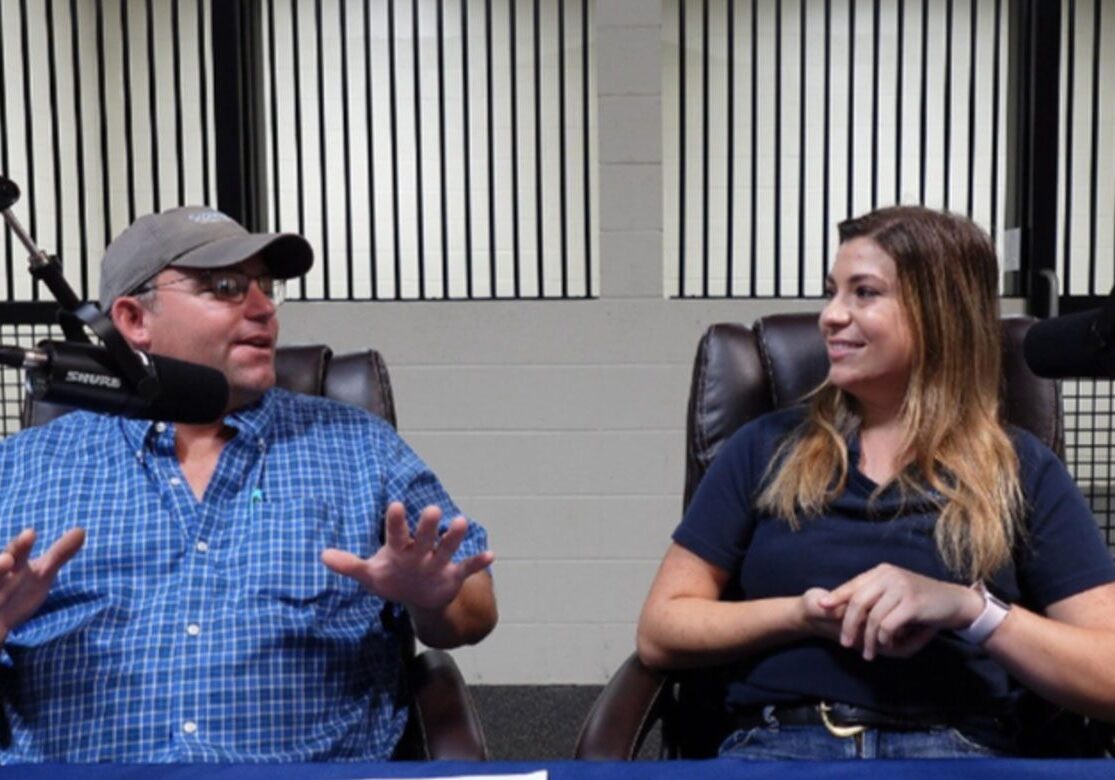
Breeding a mare is much more than a single decision—it’s a commitment to a long and detailed process. In this episode of The Equine Vet Connect Podcast, Dr. Dan Carter and Dr. Caroline Brown dive into everything you need to know before taking the leap into equine reproduction. From understanding your mare’s health and genetic testing to timing, lights, and the intricacies of semen handling, they tackle the common challenges and myths surrounding breeding. Whether you’re planning for your first foal or looking to refine your approach, this episode offers invaluable insights to ensure you’re prepared for the journey ahead. Tune in and start your breeding season the right way!
Episode Transcript
Welcome back to the Equine Vet Connect Podcast.
0:42
I’m Dan Carter, we’re here to Countryside Equine Hospital back in the old studio, old treatment room 1.
I got Doctor Caroline Brown with me today, so it’s December and so it’s that time of year.
0:59
The most wonderful time of the year.
Most wonderful time of year, you know, coming up to celebrate Jesus’s birthday.
Santa Claus is on the way, Christmas carols getting sung.
You got your holiday shopping going.
And if you’re in the breeding business, this is the time of year it all starts as we start getting ready for breeding season.
1:20
Right.
Yep, yes it is.
So, that’s what today’s going to be over, I think it’s a great topic.
So you want to breed your mare?
So you want to breed your mare?
So yes, it is I think something that every vet has probably heard at some point in their career, probably on a weekly basis of “well, I want to breed my mare”.
1:39
Yep.
And the first thing I’m going to say to you, if you say I’m going to breed my mare, I’m going to say, why do you want to do that?
Great question.
So what are some things we do need to be considered?
And I’ve got my thoughts on this.
What are some of your thoughts?
If we’re going to breed this mare, what do people need to be thinking about?
1:54
You know, because I think it’s, it’s very easy to say, oh, I want to breed my mare.
But you know, breeding your mare is it’s a commitment to not just the short term, but you know, it’s long term because you know, a mare’s pregnancy is almost a year.
So we’re going to be dealing with this mare for a year and then now we have a foal on the ground and in, you know, most of our disciplines that we’re working with.
2:17
You can’t really do much with that foal for the first 2-3 even more years of its life.
Yes, and foals are really, really good at, you know, racking up vet bills in those first couple years when they’re not doing anything.
Well, even just the process of getting there, right?
2:34
Right.
And, and just so that’s, that’s part of it.
And then, you know, getting, getting there.
So it says, OK, we’ve, we’ve got our mare and let’s, you know, figure out who we want to breed her to.
And is she a good candidate to even breed?
And, you know, how are we going to be able to get her pregnant on the first try?
2:51
Or is this going to be a little bit more involved of a process?
So there’s a lot of things that are involved in it that I think, you know, when somebody just says, oh, I want to breed my mare, that I’m like, you’re not.
We need to think about this before we do this because there’s a lot to commit to here.
And one of the things again, I’m, I’m more of a performance horse guy.
3:09
So one of the things I hear a lot on pre purchases or if I’m working on some of these horses and we’re having a performance issue, having a lameness issue, I hear this a lot.
Well, I guess if this doesn’t work or I guess if she goes lame, we can always breed her.
And I can tell you that’s a yes and no question because I look at some of these horses we’re fighting tendon or ligament issues on more than one leg.
3:37
We’re fighting multiple limb lameness’.
And it’s just a battle.
And it has been.
Am I, are we sure we want these genetics?
Yes.
Maybe, maybe we need to look at this like I get you have a one off injury that may be career ending and it wasn’t anything.
3:56
Any faults of the horses?
Yeah, great.
We got a brood mare.
But the other thing you got to look at is if literally, you know, this mare is 7 years old and we’ve been struggling keeping her sound, keeping her performing since she was five, maybe these aren’t the genetics we need.
4:15
Right, right.
And even a lot of these things that we haven’t necessarily identified a, you know one particular gene that doesn’t, we know that some of these things are inheritable like DSLD is we know that it has some sort of heritability.
4:30
DSLD, some of the neuromuscular conditions, I think the first one that ever got identified for, for those of you that have been around the quarter horse industry for a long time is the HYPP gene.
I think that that gene sort of changed how we look at breeding because it was the first truly genetic trait that we identified a gene for, we’re able to test for and we can make decisions should we continue passing this gene on or.
4:57
Not right, right.
And, you know, and luckily now in the age that we live in, there are, you know, genetic tests that we can do before we even start the breeding process.
So you can take your mare and say, hey, let’s, let’s do a panel on her.
And it’s usually something simple.
5:13
It’s just pulling some hair, sometimes some blood.
We send it in a couple weeks go by, we get some results as to is she a carrier for any of these things.
And that can, you know, kind of help us to make our and say, OK, even if she is a carrier for some of these, is this something we want to risk or do we need to be a little bit more picky when we’re looking at a stallion to breed her to to make sure that he’s not a carrier for something?
5:35
Correct.
You know, HERDA is one that we actually had a case of HERDA this year where the mare was not a carrier, but the stallion wasn’t checked, after this particular mare carried this foal we identified
5:53
HERDA, the stallion was checked.
Lo and behold, he is a carrier as well.
And so HERDA is a condition for those you listening where, for lack of a better word, their skin just starts to lack elasticity and basically just falls off. They usually
6:09
Don’t live past two years old.
Horrible condition.
But thankfully we do have that genetic test.
And because of this, we’ve been able to, you know, start to get rid of a lot of these undesirable things that, you know, were devastating.
And, you know, so it’s good that we have these tests and that we can kind of be a little more picky about, hey, if we’re going to breed this mare, let’s be a little more selective about the stallion.
6:35
So.
I look at Pasafinos.
Pasafinos is where DSLD was first identified, and for some reason only in that breed we’re able to find a genetic
Link to
DSLD and it’s the only breed we’ve been able to find that in.
The other breeds have it, but that one we’re actually able to find a gene that coded for this condition in one generation because the association got serious about it in one generation.
7:00
We’ve all wiped out the DSLD in Pasafinos, right?
So knowledge.
Knowledge, yes,
Is power and there’s some other traits unfortunately that we don’t have.
We don’t have great
7:15
We don’t have a genetic test for.
We’re looking for it.
We just don’t have them.
So I always look and say, OK, we’ll test for the things we can test, make decisions based on that.
These things we don’t have genetic tests for.
We really need to analyze the mare and analyze the stallion and say, OK, what’s the likelihood
7:36
That something like this could happen, right, right.
So, you know, genetic testing is one big component to looking into this.
And then, you know, being able to fit to carry is kind of my other big category that I look at.
So you know, we do like we were talking about these mares that have these, you know, career ending injuries and we say, hey, you know, they can’t perform what they need to.
7:56
Can they still carry?
And unfortunately some of these things, if they’re really painful, like horses that are struggling with really chronic laminitis or DSLD or some of these things that they’re just having difficulty standing up in the morning and walking around in the pasture, Are they gonna be able to carry a foal comfortably for 11 plus months?
8:18
And that’s a lot of stress on your body.
Anybody that’s carried a baby themselves, I’m sure could attest to that.
So we look at that as well.
I mean, I’ve had some people that come to me with these really nice mares and they say, hey, I wanna breed them.
And I’m like, OK, but we can’t even stand up and walk soundly, right?
8:37
So, and there are and there are some options that we can talk about, you know, for, for kind of overcoming that, you know, embryo transfers, a really, you know, kind of common thing now these days in practice that that is something that we’re we’re able to do and we’ll kind of talk about a little bit later in this podcast.
But you know, that is something that we have to think about.
8:54
And on top of that, you know, age is up there as well.
Any, any older mare is going to be a little bit more challenging to breed, especially a maiden mare that we’ve never tried to breed before.
So if you know, this mare is, you know, 18, 19, 20 years old and we’re trying for the first time, we might be struggling a little bit trying to get her pregnant.
9:16
No, I’ve definitely watched you go through that.
Somebody comes in with the 18, 19.
I think you even had one that was 20. 20, yes.
And they want to foal out of this mare for the first time.
And you were honest with them, like, hey, this is gonna be an uphill road.
Yeah, everything’s got to hit perfect.
9:33
And even if everything does hit perfect, we still may not get a foal.
It’s not impossible, it’s just it’s, it’s much more tricky.
And I, and I think that’s, you know, kind of the other component too that a lot of people get surprised of when we, when we get into the breeding is how expensive this can get very quickly.
9:50
Yes, and it’s the work too.
You know, people think you just wait for the mare to come in to heat and breed the mare.
No, no, no.
It like I said, we say it starts this time of year.
So what we’re trying in the majority of breeds, these horses have a birthday of January 1.
10:07
Quarter Horses, race horses, a lot of the breeds that have the futurity type events have aged classes, they’re going to have a birthday of January 1.
So we’re trying to time these foals, but they’re born as close to January 1 as we can because a foal born January 2nd and a foal born June 1st, they’re still considered one year old.
10:30
The next January.
Well, obviously there’s two different and we had six months difference here.
And so as we’re trying to get these mares timed up to where we can breed this, this time of year.
You know, a big thing we talk about is lights.
So what is it with lights?
10:46
You always hear let’s get these mares under lights.
Let’s talk about what are we doing?
Why are we getting these mares under?
Lights, right, Right.
So mares are their their species is called seasonal polyestrous.
There’s your, there’s your vocab for the day, which means that it’s, it’s a good vocab word.
11:04
So Yep.
So seasonal polyestrous, that means that they are cycling during a certain point of the year and they’re having multiple cycles during that time and then they have a period of inactivity.
And so for mares, they are what we call long day breeders.
11:19
So they need a longer amount of daylight compared to night time in order for them to be cycling normally.
And, you know, when we’re in the, the dead of winter or is, you know, my, my dad used to call it the pit of despair in this time of the year where it’s just dark all the time, We’re not going to be cycling normally.
11:39
So we have to kind of manipulate these mares into thinking that we’re actually doing more, that we’re actually in more of a light than dark.
And so in order for mares to be completely cycling, they have to have 16 hours of continuous daylight and night as well.
11:55
So they do need to have darkness that has been shown time and time again that you can’t just leave these mares permanently under lights.
They do have to have some period of darkness in order for their, you know, R.E.M.
Cycles or sorry for their pineal gland to kind of continue its natural cycle.
So one of the things that we do will say is get your mare under the lights.
12:14
And so we’ll say, you know, if it’s this time of the day and you know it’s getting dark by 4:00, then we will put them in the barn and we’ll leave the lights on for a certain amount of time, make sure we get to our thing, and then we’ll turn the lights off at that point.
You know timers work great for that.
12:29
You know, really inexpensive timer can really help with this.
And we talk about lumens, right?
And everybody always says what does 16 lumens look like?
And what I was always told was if you can read the fine print of a newspaper, that’s you’ve got at least 16 lumens.
12:47
Now my question is, is that 20 year old Dan that could read the fine print of a newspaper, or is that now 45 year old Dan?
And do I get my glasses?
Are newspapers even a thing anymore?
You know a better question.
Yeah, A.
Better question, who’s?
Got a newspaper?
You know, I’d say light the thing up.
13:03
You can’t.
I’d rather be too bright.
But not bright enough, right?
So.
But then, yeah.
And the important part is having that darkness as well.
They do need that.
And then for, you know, our horses that aren’t in a stall or a barn, they have, you know, contraptions that we can put over their head.
13:20
It’s a little mask.
It’s called an equi loom.
And it shines a light just kind of directly into one eye.
And it is also on a timer so you can turn it off and on.
And so it’s for our mares that just kind of live outside full time because normally if we’re not, you know, if we just let nature take its course and we’re waiting, these mares aren’t going to come into heat until, you know, down here, it’s usually mid-april.
13:42
Yep, and they’re usually cycling until kind of about September ish is usually when they they start to kind of come out of that transition.
So you know, when we’re, if we’re only starting to breed in mid-april and then we’re, you know, say we get it first try, that mare is not going to be falling until you know, May at the soonest.
14:01
And so for these breeds where we do need to have them as close to January 1st as possible, these lights are a good alternative.
Yep.
Now, I agree 100%, get them under lights.
The other thing we need to be thinking about is this also the time of year.
14:17
We start doing culture, start doing cytology, we’ll call, we’re going to say, hey, when you get your mare in and get them under lights, get them cycling.
Then we need to get them in and we need to clean them up.
So describe that process.
What are we doing?
There.
So before we even start trying to put the semen in the mare, we’re gonna want to make sure that our uterine environment is healthy, that our mare is healthy, and that she’s again fit to carry this foal.
14:41
So stuff we’ll do before we even start, you know, the breeding process is we’ll do an ultrasound of her repro tract.
We’ll make sure that, you know, all the parts look the same.
She’s got two ovaries that are functioning and her uterine body is OK.
14:56
And she doesn’t have any, you know, cysts or little fibrotic tissue or anything like that that would eventually potentially prevent an embryo from adhering to the wall.
So we’ll look at structure.
Sometimes we’ll do blood work to just look at, you know, normal vitals.
15:13
We’ll look at, you know, hormone levels if we’re concerned about that.
And then we’ll do a culture and cytology of the uterine lining.
And so that will tell us, you know, is there any inflammation in the uterus?
Is there bacteria that we potentially need to treat, which involves, you know, antibiotics and infusions?
15:32
So we’ll flush all that, you know, pollution out of there and try to get it as clean as possible.
If we’re concerned about, you know, for potentially mares that maybe haven’t been able to successfully get pregnant for a couple cycles, we can do a biopsy of the uterine wall.
15:47
And we can actually, you know, we have a grading system that tells us, you know, what is the likelihood for this mare to carry a foal to term.
And so, you know, sometimes if we if we have these mares, we’ve been trying and we can’t get them pregnant or we get them pregnant, they can’t stay that way.
This will be kind of a good way for us to, you know, at least put like a number value to it and say, hey, maybe this mare isn’t fit to carry.
16:10
So let’s look into other options.
And I think, you know, we talked about these uteruses and I think a big problem or, you know, some of the one of the things that can set us up for failure is, is bad anatomy.
Right.
Yes.
Because when you look at the mare, the the rectum sits above.
16:26
The vulva.
And so some of them can actually have a sunken in confirmation that can lead to urine pooling in the vagina.
Can they lead to fecal contamination.
And so that’s really important to know those things going in because we need to.
16:46
You don’t want to be two or three breedings in before you figure out you got this problem right.
Let’s find that problem now and let’s get a plan put together so that when it does come time to have that expensive semen shipped in, your mare’s ready, right?
We’re not, we’re not finding out.
17:02
Then like, oh, we got a problem.
Right.
And it kind of allows us to plan ahead.
So if we know that, we say, hey, this mare is a urine pooler, you know, going into breeding, it doesn’t necessarily mean that we can’t breed her, but you know, we’ll take some extra precautions when we do get to the breeding.
17:20
So we’ll, you know, probably clean her up before the breeding season starts.
And then when we do get into the breeding, we can say, hey, we need to make sure that we’re flushing this mare out before we put the semen in there so that we’ve got the cleanest environment possible, and then maybe flush her out again when we’re done so.
I think we said they have a plan, yes.
17:37
One of the things I routinely say is breeding a mare is not a single act, but a process.
No, it is a process.
It’s a process and there’s a lot going on, yes.
And I do want to back up for a minute because you, we kind of ran through it.
We talked about culture and cytology.
17:54
One of the probably in my opinion now I do very little breed work, but I do, I do some consulting on it and I preach this all the time because it was beat into my head.
A culture is great, but if you don’t have a cytology, it may be useless information, right?
18:11
You’ve got to have that.
Cytology, right?
Because you could have picked up a contaminant and the uterus will be fine.
Yeah, the cytology, we actually, we look at those cells and say, hey, we’ve got intercellular gram positive cocci.
That culture comes back with a gram positive cocci type bacteria.
18:30
We know it’s real.
If we go in there and we got gram positive cocci everywhere, but it comes back with a gram negative rod, we’d probably need to go reculture that mare.
Right, right.
So.
Because again, it’s a, it’s, it’s not exactly the cleanest environment when we’re getting things.
18:46
So it’s very easy to, to get contaminants too.
So, you know, it’s, it’s the cytology is, like you said, just as important.
And then there’s this, you know, very annoying thing called a biofilm too, which can, oh Lord, which can build in there, which is basically you create this like mini ecosystem inside of the uterus and it’s, you can’t really necessarily kill one bacteria.
19:10
You kind of have to get all of it and.
You know biofilm, I equate to if you’ve ever been in a college student’s apartment shower, if you’ve been in there, you know that’s what a biofilm is.
19:26
You know, it’s, yeah, it’s just an, it’s a nasty environment.
Yeah.
And we’ve, we’ve learned over the years, you know, we knew about biofilm, but now we’re actually culturing, doing biofilm assays, trying to figure out what we should do with this biofilm because that biofilm it’s.
19:43
It’s real.
Oh, yeah, it’s real.
I mean, and you can, you can flush them, you can throw antibiotics and they’re all you want, but it’s not coming out, no, unless you get aggressive with it.
Yeah.
And antibiotics are useless in the place.
Yeah, in the presence of a biofilm.
And again, that’s why we need to start early because if we’re dealing with this, we don’t want to find out after we bred for the first time.
20:04
We want to find that out beforehand so that we’re not all right now.
It’s April, we breed.
It doesn’t go well.
Then we look into this, and when we look into it, we found biofilm.
We found a nasty bacteria in there.
All of a sudden we had a Club Cielo set up shop and now you’re looking.
20:23
Somebody’s like, OK, now we’re in this for months and we’ve got a couple months of cleaning this up.
Unfortunately, right?
I mean, in a couple months we’re gonna miss two or three heat cycles getting this cleaned.
Up right.
So now we’ve delayed it even further.
Now we’re getting into congratulations.
You got a 4th of July baby.
20:39
Yeah, well, and a lot of these stallions stop collecting too after a certain time, you know, 4th of July for a lot of these stallions, they’re they shut down.
They’re they’re done.
But like a lot of the quarter horses like they don’t they because again most of their foals are on the ground, they want them as close to that time as possible.
20:57
So they’re say we’re done for the season, we’ll see you next year.
Yeah, so.
See, we got a window here.
Yeah, we have a very small window and so we want to be aggressive with it.
We want to be proactive and try.
So that’s why it can be frustrating when somebody’s like, I want to breed my mare and I’m like, it’s May.
21:15
It’s May.
And I think too, you’ve got to look when you’re going in and you know, like I said, we kind of ran through it, but we’ll go back.
We’re doing that initial exam.
We’re looking at the confirmation of that rectum and vulva and how that’s set up, doing the ultrasound because you do that early and you’ve got a bunch of cysts in the uterus.
21:33
Well, now we can look at, hey, do we need to go in and laser cysts.
We’ve got treatments available that we can set us up for success.
Right.
Or we may go in and say, hey, you’ve got a, you got a lot of cyst in the uterus feeling your cervix, you’ve had previous foals in the past.
21:48
You’ve got damage to the cervix.
This thing’s not going to close.
The cervix is what separates the vagina from the uterus and it kind of forms that seal.
Once that baby’s in there that keeps, keeps that environment sterile, you can get damage to that cervix and that cervix is unable to perform that job again.
22:08
If we know that ahead of time, we can say, OK, we got to make a different plan either there are some surgeries available for fixing the cervix.
We may say we might want to look at ExE because this mare, we’re not even going to be getting, we don’t even know if we can get an embryo out of this.
22:24
Right.
So maybe we need to look at ExE or maybe?
Embryo transfer or.
Embryo transfer, things like that.
Right.
So having that plan early so we can get that plan put together is important.
Right.
And so, you know, kind of jumping into to embryo transfer, that’s, you know, it’s a kind of, I don’t even want to call it new, but I think it’s just more accessible because, you know, we’re think more and more, you know, practitioners are figuring out how to do it and that it is successful.
22:53
So basically what this is is you have your donor mare and she’s not gonna carry her own foal either she’s not fit to carry it or she’s a performance mare and she’s showing and we don’t want her to be pregnant and showing.
So we take the embryo out of her and then we put it into a donor or into a recipient mare.
23:12
And then we have the recipient carry and you know, there’s a lot of qualifications for finding a good recipient mare.
You know, there’s a size thing.
You know, we don’t want a little tiny pony carrying a big warm blood right foal.
You know, we, we like mares that are, you know, kind of bigger, stockier attitude as part of it as well.
23:30
Sometimes you want to a mare’s that’s a that’s kind of nice to handle.
A lot of times we like mares too that have done this before.
You know, they already kind of have that maternal instinct.
So they’re just really good moms, but they’re.
Reproductively.
Sound yes, they’re reproductively sound.
23:45
You know, we’re not we know that you know, they’ve got good confirmation back there.
We’re not worried about, you know, repeat infections.
They’ve delivered lots of foals before.
You know, they don’t have tons of damage in there from previous foalings.
So, you know, there’s, there’s good candidates for it.
And, you know, if we decide that, hey, we’re going to go on the embryo transfer route, that’s a whole another thing we have to plan for because we have to find a recipient.
24:08
And finding a recipient can be really, really challenging.
You know, if you can’t just take any old mare and be like, yeah, she’s going to be my recept.
It’s.
When a lot of times by this time of the year, most of the recipient mares out there, they’re spoken for.
So there’s, there’s companies that have large herds of recipient mares that are available to have your NBO transplanted into.
24:31
But there, those embryo mares, those embryo transfer mares are almost like real estate, right?
Yes, like they’re valuable.
There’s a limited number of hotels in an area.
If there’s a big event that hotels booked well, breeding season is a big event.
So a lot of these people that have great embryo transfer mares,
24:51
They’re booked.
And it’s also difficult because most embryo transfer mares, they have that foal, they don’t get another embryo that year like they’re going to carry, they’re going to nurse that foal and they won’t be available to the.
Following right, Right.
So because they’re at someone else’s farm, they’re no longer at the facility.
25:08
And so again, we need to have that plan like if we know embryo transfer is where we’re going to go, we need to start booking those mares August, September, you need to get your mare.
Booked yeah, a lot of times they open up that they’re like alright, our recipient list is open and I mean it’s full by the end of the week quickly it’s very, very quick so you have to be very proactive and and then do it so.
25:33
So again, not a spur of the minute decision.
No.
Especially if you’re going to embryo transfer and just because you have another mare, does that mean you have a built in ET mare?
Right, right.
Transfer mare or recipient mare?
That mare may not be reproductively sound.
25:50
No, no.
So.
Again, a lot of things to think about before again.
And like we haven’t even, we haven’t even really gotten into talking about, you know, well, what is the reproductive cycle or any of that.
Like we haven’t gotten into any of that.
We’ve just gotten you checked out and we’re just talking about what do you need to plan.
26:08
For.
We just don’t breed any.
Mare. Yes, exactly, because again, you know with these, when people come up to me and they’re like, I wanna breed my mare.
I’m like, OK, but have you really thought about this?
Like have you really sat down and thought about the commitment that you’re getting into?
And most of the time once I’ve explained all of this to them, they’re like, yeah, maybe we need to table that.
26:27
I’m like.
Yeah.
So we get into time and on that.
So we’ve got them under lights.
We’ve done all the things.
We’re ready to breed, so now breeding sheds are going to open up.
We’re going to start shipping usually
Around February is when people start shipping.
Mid February, everything’s ready to go.
26:45
We’re syncing your mare up.
Yep.
So how many checks are you going to do?
Because I mean, you’ve got a well, let’s back up.
We’re going to go forward to backup.
What’s the timing to put semen in a mare?
Where do you want them to be?
27:01
How close to ovulation do you need to have the semen in that mare?
Yeah.
So and to kind of answer that question, we have to talk about the reproductive cycle itself.
So in a regular cycling mare, once she’s gone through her transition period and she’s full on cycling, it’s springtime.
27:18
Our cycle is 21 days long.
And there’s kind of two phases of that.
We’ve got estrus, which is where she’s showing signs that she’s ready to be bred and she’s leading up to ovulation that ends.
And then we go into diestrus, which is kind of this, it’s almost like a pseudo pregnancy state.
It’s the body kind of getting itself ready to be pregnant and it’s looking for that embryo to, to be ready to support following the ovulation.
27:41
So when the mare is in estrus, we’re seeing all these, you know, kind of typical signs of like mares in heat.
So you know, they’re, they’re, they’re flirty, as I like to say, you know, they’re, they’re kind of lifting their tail.
You know, they’ll, they’ll, you know, kind of go to the stallion if you tease them to one and you know, they might kind of turn their butt toward them and like lift their tail up and kind of pee all over themselves.
28:00
So they’re like, Hey, I’m, I’m ready for a baby.
I’m, I’m getting, I’m, I’m wanting my semen.
I’m, I’m ready to go.
So, you know, when, when we’re getting up to this time, we have, it’s called estrus because we’re getting this big rise in estrogen in the body.
So, you know, and when we look at it and there we’re seeing the uterus is nice and soft and we’re watching this follicle grow.
28:20
And our follicle is the egg that is about to, you know, be ovulated.
So we’re, we’re watching it on ultrasound and it’s, it’s kind of growing.
It’s, we call it the dominant follicle because there’s usually lots of little follicles that are kind of popping up here and there everywhere.
And this one starts to get bigger and bigger and bigger.
28:38
And at this we’re kind of waiting for it to get to a certain size, about 35mm diameter is our target size for these.
And once they get to that point, we say, OK, we can get this mare to ovulate.
So at that point, we will give them a drug called GnRH.
29:00
And this starts this kind of ovulation, you know, cascade.
And so when we give them this GnRH, it stimulates the pituitary gland to make a hormone called luteinizing hormone or LH.
And that surge is what causes this ova to ovulate.
29:17
And so during that time, we’ve got about, once we administer that drug, we have about 40 hours for that before that follicle ovulates.
And when we get this semen, we have to look very closely at like what type of semen we’re dealing with.
29:36
So fresh semen is going to be, you know, your most ideal, it’s going to have the highest, you know, percentage of, you know, normal active sperm because when we’re putting the semen into the mare, we want to have a, the minimum of a billion like active progressively modal sperm is what we call it.
29:57
And so when we’re putting this in them, we have to look at, you know, fresh semen’s obviously going to be the best if we’re dealing with, you know, shipped semen.
So it came from somewhere else and it got mailed to us.
Some of that semen is going to die the second it’s out of the body.
So we have to do some calculations to see how much we’re going to put in there.
30:16
If we’re dealing with frozen semen and it’s gone through a whole process of, you know,, getting frozen down and you know, all this, we’re, we’re going to have even less motility.
So we have to be really, really careful about what we’re putting in and how much we’re putting in and when we’re doing it.
So, you know, the, the fresh, the, the normal, you know, kind of fresh sperm, they can live in the body for up to a week almost.
30:39
It’s, you know, they, they can, they can hang around, but most of them are usually going to be dead within about 24 to 48 hours after being put into the mare.
So, you know, we want a time when we’re putting that semen into as close as possible.
So I like to personally, the second I get the semen, I want to put it in the mare because semen is always going to be happier in the mare than in the fridge.
31:05
You know the way one of my professors in vet school put it goes man has yet to create a syringe.
This is as good of an environment as a uterus.
Yes.
So.
Put it in, right.
So we, we put it in and we, you know, we, I, I like to do my protocol where I put it in at about 24 hours before I think they’re gonna ovulate.
31:23
And then sometimes we’ll do another one, you know, write it about when they’re ovulating.
We try to get it as close to, but then once that ova has ovulated, it’s only alive for about another 8 hours.
So yeah, so it’s only alive for that.
31:39
So once the mare’s ovulated, you’re kind of stuck.
So one of the things we do if we’re, if we’re breeding with frozen semen, like we said, you know, it’s, it’s a lot, you know, there’s a lot less, you know, active sperm in there.
We will check them every six hours because we will try to get that dose in there as close to ovulation as possible.
32:00
So we’ll sit and we’ll watch them and we say, OK, you know, at 12:00 you didn’t ovulate, at 6:00 you ovulated.
So sometime in that 6 hour time span you ovulated.
So we’re going to put that semen in you and we’re going to go in here because we know that we’ve got, you know, this kind of eight hour window that we’re working with.
32:21
So we’re, it’s, it’s a very, very, you know, time sensitive process.
And, and, you know, and people have been doing it for, you know, centuries before we even got, you know, the, any of the ultrasound technology or, or any of the, you know, there’s, there’s blood tests that you can do.
32:41
You know, there’s, there’s all kinds of stuff out there that, that we do.
But, you know, when we’re, when we’re trying to be efficient like this and we’re like, OK, we want to try to put the most amount of semen in there as possible.
We want to do this, you know, as efficiently and try to get it as close to here.
It’s, it’s kind of the best thing that we’ve come up with because.
32:58
No, I agree.
And you know, another thing is tracking these mares you talk about, we want that 35mm follicle over the years.
We’ve had some that 35mm, they’re ready to ovulate.
Yeah, we’ve had some that they got to build like 42s.
I’ve seen them like in the 50s.
33:16
Yeah.
And I think you talk about GnRH, sucromate,
I’ve used quite a bit of it.
Yeah.
That was supposed to be like the Wonder drug.
You know, ovulate like within 12 hours.
They laugh at my sucromate.
33:31
You know, I’m on the fence.
I got some that works
great.
Yeah, there’s some that doesn’t, and it’s interesting.
It’s definitely like mare to mare like I have.
I’ve had some that I’m like, yes, she doesn’t listen to my sucromate so I just kind of have to see what she does and check her.
And that’s where I was going.
33:47
It’s like knowing like if we can track these mares through a cycle before we breed them to know like, hey, this mare, this mare doesn’t ovulate till she’s like a 42.
And, and I’ve worked on some big breeding farms.
I do some consulting work.
And that’s one of the things that we have luckily is we’re breeding the same mares year after year.
34:07
And so it’s very easy because we know that top flight whoever doesn’t even think about ovulating till she’s at a 42.
And then we also have an idea to go from a 35 to a 42 that normally takes X many days in her. When we have these mares we’re breeding for the first time, it’s you’re trying to figure that out.
34:27
So we know 35 we should be able to get them to ovulate.
We should, should, however.
They may have different ideas.
And you add an even more complicated factor in it and that you know, 90 plus percent of the time the stallion’s not here, the stallion is in another state or sometimes in another country.
34:45
And they collect on Monday, Wednesday, Friday, or they collect Tuesday, Thursday.
And so we have to try to time that out with getting the semen from the stallion.
And so, you know, we’ll, we’ll kind of be trying to, we, we try to, you know, hormonally manipulate these mares to, to kind of work on our own schedule.
35:02
And, you know, we can only control nature so much sometimes.
But, you know, I’ll, we’ll call the stallion shed.
And we say, hey, this, this mare is ready to go.
I need semen.
They say, great.
They put it in a box and they ship it.
And then it gets stuck in the Dallas airport and I get a little sad.
35:20
Or my favorite.
Is.
You call it in like, hey, we need semen on Wednesday or we need semen shipped Wednesday.
Like great, we’ll collect.
You get the call midday Wednesday.
Stallion wouldn’t jump.
Yeah, so.
You’ve done everything you should, and the stallion’s like.
35:36
Not today.
Or I, I got one and you know, normally the stallion was, you know, really, really good active semen and I get it and everything is dead.
And I called the shed and I said, hey, what, what’s going on?
And they’re like, oh, he colicked last week, yes.
35:51
So you know and.
That can knock it.
Out it can knock it out yeah, it’s.
There’s a lot of things to make that semen like they get a really high fever,
That semen could be dead, Yeah.
You know, people, people never think about the staying part of it.
But once that sperm is produced, it’s a 60 day transit and it’s maturing during that time, right?
36:10
They get a really high fever during that time.
They may cook all that sperm.
Yeah.
And these horses may not have good semen for.
Months, months, months and I mean, and it’s super devastating and so if you’ve ever been to one of these breeding sheds where they keep all these stallions, I mean these stallions are very well taken care of.
36:30
They are living the life, yes, so.
And like I said, so you know, you’ve done everything right.
You’ve got the whole mare timed up.
Yeah, we still got another horse that’s got to play ball.
Exactly.
And so then you think the answer is going to be frozen, right?
All right, great.
36:45
We got some frozen semen.
We ship it in.
We got to sit here in a tank at the clinic.
It’s ready to go.
We time everything up.
But let’s talk about percentages.
So if you’re looking at, so live covers the gold standard.
37:02
Live covers are gold standard.
It’s, it’s going to be the, the, the freshest thing.
It’s, you know.
Still, what are we looking at?
You know, 80 percent, 80% if I, if I have, you know, like 80% of the sperm that are in there or like progressively modal and like normal, normal, like, you know, anatomy to them.
37:19
I’m like this is good.
We’re this is happy or like, you know, kind of shipped cooled.
So it’s about 24 hours old at that point.
If I can get 50%, I’m usually pretty happy with that.
I think that’s what a lot of people need to understand is it’s I think the last stats I read there was some people reporting up to 60% chance.
37:38
Yeah.
Of conception on a single dose chilled semen AI and we all feel like rock stars with that number. 60, because.
When we first started doing this.
Yeah, because what they do when they like, after they’ve collected it from the stallion, they usually like, you know, they, they do some math.
38:02
They like take the, they’re looking at the volume of it.
They’re looking at concentration.
They divide it up into how many doses?
Because again, most of these stallions that are breeding, you know, they’re not just breeding to one mare, they’re breeding to lots of mares.
And so you may have 3 or 4 mares call on the same day and say, hey, we need semen.
38:17
And, you know, so they have to take it and they have to divide it up into, you know, all of the doses.
When you’ve got to put an extender in there, that also helps keeps it alive while Delta, FedEx, whoever’s working this time of year, you know, however fast we need to get it the best way it ships, we got to put that in that extender.
38:36
So the.
Semen will survive the transit.
Right.
And so once it gets here, you know and and some of the semen actually really likes the extender.
I’ve had some that their motility is kind of questionable when it comes out of the stallion because most of the time they send us a report of, you know, the what, what how the stallion collected that day, like what the volume was everything.
38:53
And yeah, so the motility will be kind of myth like when it comes out and then I get it and I’m like, wow, these things are swimming.
Like, yeah, they, they, they like their, their juice, but.
And you know, that’s other thing, once the shed puts it in the box, FedEx picks it up.
39:10
We have no idea what’s happening from there.
It’s cooled, it’s insulated, but if you’ve ever been in the cargo hold of the plane, the cargo hold of the plane is not heated.
It’s not cooled, it’s not insulated.
It’s at 30,000 feet.
And then it lands in Georgia where it’s 95°.
39:30
And so it’s going from this like cold shock to hot shock.
And we’re doing all we can to make sure the stuff arrives the best.
Yeah, and you?
Know sometimes we got to send it Delta Dash, which if y’all aren’t familiar with that, it’s literally you drive down to the airport with a box of semen they handed to you it goes underneath a Delta flight and that may be the Delta.
39:50
Let’s say that flights leaving Seattle, your stallions in Seattle, it’s going to go under that plane in Seattle and we’re going to literally drive down to the Delta terminal Atlanta.
And when that flight from Seattle carrying passengers lands a box of semen is coming up underneath it.
And so we can have this stuff sometimes within, you know, in the same day that it is collected.
40:10
Yeah.
But again, you’re still at the mercy of how does, how does it get shipped?
And there’s there’s a lot of variables here.
Yes.
Leading up to about a 50 to 60% conception so everybody’s really excited we’ve done all this work, life’s great, everything’s done perfect we put the semen in and now we got to hope the mare does her job and gets pregnant and it’s going to happen about 50% of.
40:36
The time, yeah, right.
And so that and that’s that.
And then we get to the Frozen and if I can get 30% on Frozen, I’m pretty happy.
That’s Rockstar.
Day 30.
Percent, 30%, you’re like, whoa, we’re cooking here.
And So what we’re saying they’re gonna keeping up with this topic of so you want to breed your mare, be prepared to have to do this more than once.
40:59
So you got to be ready to do this more than once, because the odds are you’re gonna have to do it more than once.
Right.
And, and the stallion contracts are interesting too.
You know, there’s, there’s some like that are, I know a lot of the quarter horse ones, you know, they have like a yearly contract.
41:15
So they say, hey, like this is the year fee for the year.
And then sometimes there’s like extra cost for the shipping.
So how many times you have to order the semen.
And then there’s other stallions like I know in Europe they charge you per straw that you buy and one frozen straw is usually not a full dose.
41:34
No.
So I’ve had some people bring me one straw and I said, OK, where’s the rest of it?
Where’s the rest of it?
And they’re like, that’s all I bought.
And I was like, OK, we’ll work with this.
Yeah, we we got like.
A.
We don’t work with it, but we got. 100,000 sperm cells in here when it’s frozen.
41:50
And I need a billion.
Need a billion.
I need a billion.
So, so and you think about why you need so many.
Well I always joke like it’s got a long way to go.
Right, it does.
Uterus, it’s got to go through the uterine body, through the uterine horn, and it’s got to get all the way up to where.
The, there’s two uterine horns, so some of it’s gonna go one way, some of it’s gonna go the right way.
42:09
Am I running jokes always?
Like, remember, these came from men.
They’re not gonna stop and ask for directions.
They’re gonna.
Get lost along the way.
So we got to send a million in there and hope, they hope.
That one of them.
Somebody asked directions and somebody eventually finds out where they’re supposed.
To be.
42:25
But good news, it does only take one.
It just takes one.
I’ve had some that I get it and I’m like, well, there’s not a lot in here.
We’re gonna put it in anyway.
We’re gonna.
And then you got lucky, right?
I don’t know that one.
There’s one sperm in there that’s just chugging along.
42:41
So, you know, so we talked about this and we kind of was kind of going to retouch on this.
You’ve got all this going on just to get the semen in the mare.
You have all these variables going on.
You’ve got not great odds if you don’t do your homework beforehand making sure the mare doesn’t have any reproductive issues.
43:03
She’s cycling normally, she’s clean, She’s got good confirmation.
You don’t have all those things in order.
And now we’ve already got all this stuff right there at the time of breeding that we’ve got going on.
Your odds are going way down.
43:19
Yeah.
And so I can’t encourage you enough, like, do your homework on the front side, do the things that need to be done because we’ve already got this.
I think that’s why I don’t like breeding.
There’s just too many variables in it for me.
It’s like too much all over the place.
43:36
So I’ll leave it to people like you.
In my world.
I want them all on Diastasis, you know, in my ovaries in Diastasis.
And keep performing.
But you know, you’ve got all this stuff.
And so again, I think breeding comes down to doing all the little things, right, Yes, not skipping any steps, not trying to cut corners anywhere, doing all these things right.
44:00
Because we’ve got enough chaos.
Like just when we get down to we put the semen in the mare, there’s enough chaos.
Like I said, we’re going to send a billion sperm in there hoping one gets there.
Yeah, I have picked up sperm from the airport at 2:00 in the morning.
44:15
Yep.
Because that is how time sensitive.
Yes, this is, you know, we’re we’re like, hey, this mare is going to ovulate.
We’ve got a very small window of time and we got to get this done.
Yep.
Like so it is, those days are hectic.
44:31
Like those few days that we’re working with, like they are so precious.
And so doing your homework on the front side, starting now, making sure this mare is ready to go is crucial.
Yes.
Because like I said, even when we get down to the day of actual breeding, we got enough to worry about that day.
44:51
We don’t need to find out then.
We don’t need to go in to breed this mare and like, what’s the stuff coming out of?
Your uterus.
Yeah.
Why?
Why is there gunk in here?
What’s all this?
Yeah.
So because it’s devastating when you get in there and you’re like, oh, no.
Oh, it’s a swamp.
And that’s why most of the time, like, you’re going to breed a mare, y’all are checking them and they start getting close to ovulation.
45:10
Like OK, they need to come hang out at the clinic.
Yeah, it’s, it’s, you know, if we have them here, you know, we can, we can do it in our time.
You know, if the semen comes in super late at night, we can easily get over here, put the semen in if we need to check them a couple times during the day, we can easily get it done.
45:25
It’s.
This is that time of year where we’re all involved because, you know, you may be doing the breeding, but you got to have help doing it.
And so now our late tech, our night tech, it’s like, hey, be ready, semen’s gonna get here.
Delta says it’s gonna land at midnight.
I’ll be back at 1:30.
45:41
Yep. 2 in the morning.
Yep.
And we’re gonna breed this mare.
A lot of late night breeding parties.
I know I’ve been up here and seen you come in all hours of the night breeding the mare.
I may be up here with an emergency.
Yeah.
Next thing I know, here comes Doctor Brown sliding in sideways.
45:56
Yeah, we’ll do it then.
We do it on, you know, on weekends, middle of the night, first thing in the morning.
Like it’s we’re spouses need a huge shout out because it’s amazing how many times there’s a spouse involved because it’s like, hey, I gotta breathe this mare, I need help you’re going with.
Oh yeah, no, my husband’s, he can hold a twitch.
46:14
Yes.
It’s about all he can do, but I’ve.
My wife has accompanied me on one of the few mares I’ve bred.
I was like, Ashley,
I’m gonna need you to go with me.
And so it’s a big shout out to the unsung heroes.
46:29
of breeding
Season and that’s the spouses that get.
Roped in.
I’ve seen, I’ve seen some vets bring their kids.
Oh yeah, they got the kid like, you know, back there scrubbing like.
You know, it’s always.
Doing a hot water bath like.
So it’s, yeah, it’s a great thing when it works.
46:50
It’s a fantastic process.
But you know, the thing I can tell everybody is like, if you’re considering this, start having these conversations with your vet now.
Yeah, listen to them.
Start getting prepared.
I would rather you be prepared in the last minute, and not do it than not be prepared and in the last minute decide you’re going to do it because again, there’s a lot of steps and like and all we’ve done at this point in time is bred the mare.
47:15
No, we haven’t even talked about like, let’s pick a stallion.
Like let’s do this like, you know, and.
Then you know, the next episode is like, OK, we’ve bred your mare, what is the next?
What do we do now?
What’s?
The next year, look like yeah, say all we’ve done at this point in time is get your mare bred.
47:31
Yeah.
And then you always say then it’s the longest 14 days in Vet Med because in 14 days we’re going to bring your mare in and see if we’ve got a foal or not.
And so you do everything right, mare’s bred.
Well, now we all hold our breath for the next 14 days.
47:49
Are we the 60%?
Are we the 40%?
So it’s a process, not something that needs to be taken light.
Like I said, it’s not a single act.
You don’t just breed your mare.
Nope, this is a.
Process to breed your mare.
Start early, be prepared.
So well, I want to thank everybody for tuning in.
48:08
If you’ve got questions about breeding, reach out to Doctor Brown here.
She’ll be more than happy to help you with that.
And like I said, if you’re getting ready to breed your mare, your vet will thank you.
Go ahead and pick up the phone, call them.
I want to start breeding a mare,
They’ve done this before.
48:24
They’re going to lay out a plan for you.
We’re going to get this moving forward, but start early.
I, I kind of like voting right?
You know, breed early and breed often.
You plan on multiple chances.
Don’t, don’t hope for one shot because I don’t care how good they are, how good your vet is at this.
48:43
I don’t care how good your merit is, things happened.
Like, like you’ve seen, there’s a lot of chaos.
Seems like there’s a lot of organized chaos.
A lot of organized chaos.
And there’s more things that have to go, right?
Very little room.
I think it’s why I like it because it’s, I think so there’s so much chaos to it that like when you finally have the success, you’re like, yes, you did it.
49:01
Like conquered, I’ll.
Never forget there’s a vet, Tad Aglaw.
I think he said it best.
Like, Tad was one at the forefront of a lot of reproductive stuff, and he one time said “if you do what you’re supposed to do when you’re supposed to do it exactly how you’re supposed to do it, you can get a large percentage in foal”.
49:21
But again, what you’re supposed to do exactly when you’re supposed to do it exactly how you’re supposed to do it, not the time to cut corners.
Nope.
Do it right.
Do it right.
So, well, I want to thank everybody for tuning in.
Hopefully this answers some of the questions about so you want a foal, you want to breed a mare.
49:43
If y’all have more questions, like I said, reach out to us, reach out to your vet.
We’re going to be talking about this more as we’re getting ready to go into breeding season.
We’re going to be having a few more of these on “so you want to have a baby”.
So thanks for tuning in and Doctor Brown, thanks for being here today and I look forward to seeing y’all soon.
50:00
Again, if you’ve got any questions, you’ve got any topics you want us to discuss, shoot us a message, send us an e-mail, make a phone call,send a smoke signal.
However you want to get a word to us, let us know and we’ll be happy to do that.
Thanks.
Have a Topic in Mind?
We love hearing from our listeners! If there's a topic you're curious about—whether it's equine health, training, industry trends, or beyond—let us know. Your suggestion might just inspire our next episode!
Watch Us on YouTube!
Catch full episodes and exclusive content on our YouTube channel, @countrysidevets2216. Click below to explore our latest videos.