

Ep. 2 – Equine Metabolic Syndrome, Insulin Resistance, and Laminitis, Oh My! Podcast
In this episode
Number One Rule: Being Proactive is Key!
As the crisp fall air begins to trickle in, horse owners may notice a troubling uptick in equine health issues such as metabolic syndrome, insulin resistance, and laminitis. In this episode, we delve into why fall is a critical time for these conditions, exploring the seasonal factors that exacerbate them.
Join us as we chat with Dr. Dan Carter and Dr. Zoe Latimer as they shed light on the latest research and practical strategies for managing these health concerns.
We’ll discuss how the change in forage, cooler weather, and other autumnal factors impact your horse’s metabolism and hoof health. Plus, get actionable tips on diet adjustments, exercise routines, and preventive care to keep your horse comfortable and healthy as the seasons change.
Whether you’re a seasoned equestrian or a new horse owner, this episode provides valuable insights and expert advice to help you navigate the challenges of fall and ensure your horse’s well-being. Don’t miss out on essential information that could make a difference in your horse’s health this season!
Episode Transcript
All right, welcome to The Equine Vet Connect.
We’re here in the studio, also known as the Treatment Room.
We’ve got Dr. Zoe Latimer, one of the vets here at Countryside with me.
I’m Dan Carter.
Today, this question was actually sent in by a listener, Ashley M.
Ashley, be on the lookout.
We’ve got a Countryside swag bag coming to you.
Thanks for sending this in.
We look forward to diving into this topic.
It couldn’t actually be better timing, Dr. Zoe.
We’re going into fall.
This is when we start to see a lot of our metabolic diseases show up.
This is going to be great.
We’re going to go through and give you a high-level overview of three of the most common metabolic syndromes we see.
We’re going to go through Cushing’s, better known as PPID, Pituitary Pars Intermedia Dysfunction.
We’re going to go through Insulin Resistance.
Sometimes you’ll hear us abbreviate that IR.
We’re also going to go through Equine Metabolic Syndrome that we’ll abbreviate EMS.
So if you hear those, just know these are what we’re talking about.
So with that, let’s get started.
Welcome on Dr. Zoe and let’s dive into this.
PPID, fall, time of year.
This is when we’re starting to see it.
What are you looking for?
Well, typically horses with PPID, we’re finding them this time of year.
Usually because one of the first signs that will kind of tip us off that they may have Cushing’s disease is they are foundering, is what people like to call it.
So foundering is just kind of a lay term for a condition known as laminitis, where they’re having basically a flare up of the lamina in their feet.
It’s very painful.
People notice this by the horse’s rocked-back stance, putting a lot of weight on their hind end, trying to get the pressure off of their front feet, and having a hard time getting around.
Don’t want to really want to eat or drink, and that’s usually, we get a call about that first.
And then as I’m there assessing the horse for the laminitis, then we start talking about, has your horse ever been tested for metabolic disease?
Because typically, that is the gateway right into all kinds, these basically these three metabolic diseases that we talk about.
Because laminitis is one of the hallmarks of really all three of the diseases.
So, and laminitis is more common in the spring and fall.
So, this is like our really busy time of the year for those cases.
Absolutely.
We’re talking about Cushing’s.
Like I said, we gave a big term, right?
We gave Pituitary Pars Intermedia Dysfunction.
Big name, but let’s break this down, okay?
Yep.
Adrenomality in the pituitary gland.
Pituitary gland sits at the base of the brain.
It is a benign tumor that slowly grows over time.
The fact that the tumor slowly grows and becomes larger over time, is kind of one of the reasons why we also recommend, say, you say, oh, well, my horse was tested a couple of years ago for Cushing’s and it was negative, so there’s no way my horse can have that now.
That’s not true.
So, they slowly can develop Cushing’s over the course of a couple months to a couple years.
And so, just because your horse was tested last year, doesn’t mean that the tumor hasn’t grown in size.
And now, they might be positive on the test.
And I know a lot of people are hearing you say the word tumor, right?
They’re hearing tumor like, oh no, my horse has got a brain tumor.
I guess technically yes, but it’s not scary.
It’s not scary like that.
Right.
It’s not like brain tumor.
My horse’s brain is going to get consumed by cancer and the whole world is ending.
It’s not that serious.
It’s not that.
You know, one of the things I try to remind people is anytime we say the word tumor, we’re referring to neoplasia, which is just an abnormal tissue growth.
So it’s not something that’s going to take over your horse’s brain, anything like that.
But it does cause an increase in release of ACTH.
Yep.
Which is a hormone in the body.
Correct.
It’s going to feed down to the hypothalamus, and it’s going to release a little pre-opera-
We’re going to go with POMC.
So downstream effects, we’re going to release cortisol.
Sorry, guys, I’ll head into over nerd land, and I will over nerd, but-
He does like to nerd out, most of his clients know he’s a big nerd.
But yes, basically, it stimulates the overproduction of cortisol in the body, and cortisol affects nearly every single tissue in the body.
So that’s why we see so many seemingly random symptoms that are surrounding Cushing’s disease, but it’s because every tissue in the body is affected by cortisol.
So if you have high cortisol, you’re going to have all these systemic effects.
And so those kind of look like to people, like people always want to say, oh, my horse doesn’t have Cushing’s because he doesn’t have the long hair coat.
Well, they’ve actually proven that the long, the teddy bear hair, that’s actually at the end of the disease.
That’s one of the last symptoms that you see.
So usually if you’re paying close attention, you’ll start seeing other symptoms long before you ever get to the long hair coat.
And our goal is to educate everyone, all of our clients to be on the lookout for these other symptoms.
So that way we’re not finding out your horse has cushings after they’ve already had it for two years and they finally have the long hair coat.
We’re trying to clue y’all in on some of these more subtle symptoms.
And so some of those can be muscle wasting, particularly over the top line.
They’ll start to drop in their back.
And that’s something I want to bring up, Dr. Zoe.
We often hear, hey, my horse has got this big, cresty neck.
We’ve got fat pockets everywhere.
I’m worried about cushings, but really that’s the exact opposite.
Most of these horses, they’ve got, they have what you were saying, that poor muscle tone, that difficulty gaining weight.
They’re kind of ribby, but with a pot belly.
And then their back doesn’t have muscle on it anymore.
Their hips are kind of sticking out more.
Absolutely.
And that’s one of the things that we look at because, you know, unfortunately in my world, I’m working on a lot of show horses.
And show horses, they’re staying clipped.
And so it becomes really difficult to pick up on those signs and symptoms in those older horses that could be developing Cushing’s because these horses stay clipped.
I never get to see that hair coat.
Sure.
Yeah.
So gotta be on the lookout for these other symptoms.
Absolutely.
To lead you there.
Some other ones people might see is increased thirst, increased urination, abnormal sweating.
That’s a big one.
Yes.
And it can go both ways.
They can either not sweat at all, whereas they used to sweat before, and now they don’t sweat anymore.
And also the opposite, they’re just overheated all the time.
They’re really sweaty, kind of inappropriately.
It’ll be cold outside, but yet your horse is kind of sweaty.
It feels warm to the touch.
And like a big one that we had listed before was obviously the delayed shedding and the abnormal hair coat.
But then also one that I feel like occurs more in the beginning phases of Cushing’s, and it kind of clues me in sooner, is a lot of secondary infections, particularly skin.
Yes.
And dental disease as well.
So a lot of secondary “skin funk” is what I like to call it.
Just like their skin is flaky, they get a lot of rain rot, they have chronic scratches.
And then when I talk about dental disease, we’re talking about infected teeth, a chronic sinusitis, which is like a snotty nose.
And they all of a sudden are not able to fight off the effects of heavy parasite loads like they used to be.
So say if a horse never really had a problem with parasites in their body, now all of a sudden they’re just overwhelmed and their body can’t handle it.
So these are all signs and symptoms that their immune system is kind of under attack.
Absolutely, because we hear a lot about cortisol, people talk about cortisol and the bad effects of it.
And these are the bad effects of that increased cortisol.
One of the other things that I see a lot of times is these horses don’t like to heal.
So they’ll get a cut.
Corneal ulcers, we find it a lot.
We see a corneal ulcer and it’s like, I forgot about eyes.
This eye should heal.
And we go out and we look at this eye and we’re like, hey, this thing ought to be healed in like a week.
Like it was a teeny scratch.
There’s no reason it shouldn’t heal in a week, but it’s taken them like two months.
Right, we come back and recheck this eye in a few days and we’re getting worse or we’re not improving.
And that’s a big indication for us, like, hey, we need to check this horse for Cushing’s.
Absolutely.
Also, I’ve seen it with tendons and ligaments.
You go out and look and you’re just like, these aren’t healing the way they should.
The horse sustains an injury.
It’s just not healing the way it should.
And…
Yeah, reason being, is a high cortisol suppresses the immune system.
So you can imagine if your immune system is being suppressed, you’re not going to be able to fight off infections that a normal horse would easily be able to fight off or keep away at bay.
So you’re not going to heal appropriately and you’re just going to very easily become sick.
You know, it causes a whole host of these issues and can really be a pretty devastating…
It can have a lot of devastating effects, but luckily we’re going to talk soon.
We’ve got a great product on the market, a great treatment for this.
It is very well controlled and we’ll get into that a little bit later.
One thing I want to talk about is the seasonality of it.
It’s an interesting condition in that it seems like we have…
It’s documented, we have a seasonal rise in this ACTH, and that’s one of the things I was glad this question came in because we’re in that time, Zoe, right?
We’re in that time of year where we need to be on the lookout.
Absolutely.
Yeah, absolutely.
Really, there’s two ways that are really popular to test for Cushing’s.
They’re both blood tests.
The first one we call is considered more of a screening type test, which is just a, it’s called a baseline ACTH.
So if you remember back to we talked about, Cushing’s causes an increase of release of ACTH in the body.
So therefore, we can go in, take a little blood sample and measure that just baseline level of ACTH.
And if it’s really high, that clues us in.
This horse, pretty much, we know that it has Cushing’s.
But if they’re in the early phase of disease where the ACTH may not be super high, it’s maybe even just creeping up, but it’s not out the roof yet.
We have more of what they call a dynamic test, which is a TRH stim test.
It’s just a different hormone that’s further along in the chain of events in the release of ACTH into the body.
But we can actually stimulate that release of ACTH using TRH, which is a different hormone.
And then you basically measure the difference in the production of ACTH.
So it’s more of a dynamic test, which is a little confusing, but basically if you put the two together, we can catch most of these cases even early on.
And I can tell you, I’ve pretty much gone completely to the TRH stim test.
So have I, because hopefully we’re catching it in the more early phases of disease.
And so I kind of, that’s my go to as well, just going ahead and doing that TRH stim so I don’t miss them.
Right, because I mean, you’re pulling that baseline ACTH, then you’re administering the TRH, which is thyrotropin releasing hormone, and then you’re pulling a second sample.
So really you’re getting both those tests at once.
You have a much better chance of catching this condition.
And I think that’s one of the biggest things we hear at the practice.
We try to be very proactive about this because we want to try to find it before we get to that Laminitis stage.
Because once you discover it and we get your horse on medication, we’re looking at six weeks before this gets under control.
So we gotta make sure that the dosage is correct, which we’ll go into that when we get into the medications.
We’ve gotta catch it.
We know it’s gonna be a six week process before this is being controlled.
So the TRH stim, at least in my mind, it gives me a much better chance of catching that early.
I agree.
I agree.
And I’ve had many cases, and the reason why I swapped over really is because I’ve had a lot of cases where we just measured the baseline ACTH and it was quote unquote normal.
Then we do the TRH stim test, and lo and behold, they have Cushing’s because they were just more of a subclinical, like they were in the beginning phases of the disease.
So I’m just like, why wouldn’t I just go ahead and do it?
I agree 100%.
Let’s just get this tested.
And one of the things we talk about when we’re looking at when do we start testing, and when these horses start to get in their late teens, I think it’s a great idea to just…
In my mind, anything, definitely anything over the age of 15 is fair game, but really, it’s kind of creeping more towards 12.
Like I’ve seen a couple that are a little younger, but definitely 15 and up, always on my rule out list, if I have anything along, any symptoms along these lines.
And one of the things that I pay a lot of attention to, and again, I think this probably goes back to my farrier background, is we’ll start to see very subclinical, and I even hate to use the word laminitis, but we’ll start to see that real subclinical lamellar change.
Being very involved in the farrier community, I talk to these farriers a lot about what you’re seeing in these feet and how you can help these horses.
And one of the things is this horse has always had a really great foot, and you’re having a hard time managing it.
You’re starting to see the stretching in the white line.
And I have found a lot of horses when I’m out of the barn and the farrier is like, hey doc, while you’re here, can you look at this foot really quick?
And I’m starting to see that stretch, and then I’ve also got that horse that’s in that later teens.
Again, because I may not see the hair coat, but I’ve got these changes in the feet, and it’s like, hey, we’re…
And their muscle quality may even be changing a little bit too.
Absolutely.
And so then we’re going to get proactive, and I cannot use that word enough when we’re talking about these metabolic conditions as being proactive.
We’re going to get those horses tested.
Well, I mean, that’s really a huge goal in medicine, right?
Every year we hope to be able to catch all diseases earlier and earlier and earlier so we don’t have these later down the road horrible diseases, like laminitis, which is a terrible, terrible thing.
And we want to, the goal eventually for medicine hopefully would be to have no more cases of laminitis because we just, we catch everything so early on.
Well, since we’ve made that proactive approach, you know, several years ago, we decided to get very proactive with metabolic disease and really bring it to people’s attention, paying attention for ourselves and getting proactive.
I can tell you the number of laminitis cases we’re treating is dropping significantly.
That’s one of my areas of specialty is podiatry and I love laminitis from the standpoint of I want to fix it, but more than anything, I want to prevent it.
That is 100% my goal.
Way easier to prevent?
How do we prevent it?
Yeah, way easier to prevent than it is to fix it after the fact, for sure.
So what now, Dr. Zoe?
You’ve come out, you’ve looked at my horse.
We’ve done the TRH stim test because we were seeing some of these clinical signs we spoke about.
You’re going to pick up the phone, you call me like, hey Dan, we just got these results back.
Your horse has got Cushing’s.
But we don’t need to worry, right?
Because we’ve got medication for this.
We do.
It’s a very easy medication.
They’ve got it pretty dummy proof now.
It’s one pill a day for the average horse.
Of course, if your horse is small, like a little mini or something, we definitely cut that dose down.
But a normal horse, one pill a day, pretty easy.
It’s a drug called Prascend.
Comes in a bright pink box.
I’m sure most of you have seen the box before somewhere around the barn, because unfortunately, Cushing’s is pretty common in your late teens population, and most of what’s in our barns these days.
But it’s called Prascend, or the actual drug name is called Pergolide.
And they do have compounded forms with the drug, but we see a lot of issues surrounding the compounded form, so we highly recommend going with the FDA approved product.
I cannot stress that enough.
Dr. Zoe, you’re very fortunate.
You’ve only known Prascend.
I hate to sound like it hadn’t been that long ago, but I’m starting to feel like the old guy in the practice.
How long he’s been in medicine, giving himself away.
But I can tell you, when I first started, we had all the Pergolide out there was compounded.
And one of the things we found is that Pergolide is very unstable.
It oxidizes.
So when it’s exposed to air, the product degrades very rapidly.
And I can remember we would get a bottle in, we’d never give out more than a 90-day supply.
That’s why it comes in those little push-pill pockets too, because you don’t want to open it to air until you’re ready to use it, so they don’t give it out in a big bottle.
It’s in those little pop containers.
So we’re dealing with this compounded Pergolide’s, and you get a call from the lab, and this stuff’s got a stability of 30%.
And so what that means is, we’re supposed to be giving one milligram, and we’re actually, the horse is only getting 0.3 milligrams.
And one of the things we know when we’re dealing with the endocrine system is it likes to be well regulated.
So these ups and downs is very difficult, and I can tell you that the failure rate was really high.
Prascend, let me tell you, that’s been a game changer.
I’ve gotten to the point where I will not write a script, and I will not sell compounded pergolide.
It just doesn’t work, and I can’t stress that enough.
Prascend is where you want to be.
And one of the things you brought up earlier is it comes in a little foil pack, individually dosed, because it does not like air.
And so it’s important.
A lot of people want to make up feed bags, right?
They make up little supplement baggies, which is very helpful.
However, percent is one of those drugs that you cannot put in the foil packs.
Oftentimes, I have a horse that’s having trouble, and one of the first things I do before we increase the dose is like, okay, how are we doing this?
And you’re like, oh, I come out on Sunday, and I break up all the feed bags, and I put my Prascend tablet in there, and it’s like, nope, stop.
Because by the end of the week, your tablets aren’t working.
Right, it’s just not working.
Prascend is too expensive to not work.
Yes, and the other thing is I hear people just want to throw it in the feed and hope they eat it.
Well, hope’s not a plan, right?
Hope’s not a plan.
It takes two seconds.
People like to give their horse a treat anyway.
I love those little German stud muffins or German-
Oh, or knicker makers.
They have those too, or the stud muffins.
The little soft ones.
I had one person, they would actually take mini carrots and drill holes in it and pop the Prascend in the mini carrot and give their horse a treat.
And that way you know your horse is getting it, because that’s the other thing is you throw it in the feed pan, you hope they get it, but what if they pick around it?
And it seems amazing, but a horse can pick around.
I have literally seen feed pans.
Every speck of grain is gone, and I’ll see that tablet still sitting there.
Oh, they know.
They know.
They’re not dumb.
So get it in there, make sure they’re getting it in there, hide it in a treat, hide it in a carrot.
And pop the pill fresh out of the pack every day.
Absolutely.
So we do those things.
We’re going to come back again, like once your horse is being treated with Prascend, we’re going to want to come back in about six weeks, because we want to check those ACTH levels.
Make sure they’re coming down and leveling out.
And we do that.
And I’ll be honest, once I’ve gotten these horses treated and managed, they really live a normal life.
I’ve seen a lot of these things.
You can’t say all the time, but I would say the majority, the high majority of the time, we see the skin clear up, we see the muscle tone come back, we stop the laminitis.
And I think that’s why it’s so important to get early, because it’s going to be six weeks to get that regulated.
If we’re dealing with that laminitic state, knowing that we’ve got to hold these feet together until that medication works.
One question, I’m going to ask a little complicated question for you, because I get this one kind of frequently.
So say I test somebody’s horse and it comes back positive for Cushing’s.
They’re like, okay, what now?
And I say, we need to start Prascend.
And they’re like, well, is it going to cure the disease?
And I say, no, no, there is no cure for Cushing’s.
It’s a benign tumor.
The only way to cure it will be to go in, surgically remove the tumor.
But I’ve never seen that being done.
I don’t think that’s possible yet in this state of medicine.
And it’s not enough.
A group out of Germany actually mapped the vasculature.
And so they were actually able to go into the carotid, similar to like what we do with stroke victims to put in stents.
They actually map the vasculature and were able to get a catheter all the way to the pituitary gland.
And kind of the hope there was that we’ll be able to maybe one day do a procedure where we could actually maybe ablate the tumor.
But I think we’re talking.
We’ve got a long way to go there.
In today’s medicine, it’s not really a thing.
So no, we cannot cure your horse of Cushing’s disease.
And so they’re like, well, then why would I treat with Pergolide?
So why?
I can tell you, like, yes, we have the tumor there.
Yes, it’s secreting this.
Yes, it’s causing these problems.
But the tumor itself, like we talked about, that’s not the issue for your horse.
That’s not going to be what causes your horse’s demise.
It’s all of the cascade effects.
It’s the secondary effects.
So the medication is not meant to cure your horse of Cushing’s.
We’re going to manage it.
It’s meant to tamper down all of the systemic effects that your horse is experiencing and improve their quality of life.
Bring it back.
I mean, there’s no fountain of youth, but I would say this is probably the closest thing we’ve got to it, you know?
Your horse was 17 that felt like it was 25.
All of a sudden goes back to feeling 17 again.
One thing we didn’t mention earlier is you see really frequently with the onset of Cushing’s behavioral changes.
So their blood pressure decreases and they become more depressed or they have a lot less energy.
So they’re like, my horse was so active before and was acting X, Y, and Z, and now he just kind of mopes around all the time.
He’s really sluggish.
I feel like he’s aged a lot in the matter of a year.
And I’m like, hmm, yep.
That’s a really good point because one of the things I often hear is, you know, my horse feels brighter.
My horse is just happier.
Has more energy.
Yes.
Yeah.
So, you know, again, it can be a big issue, but like I said, we’re able to really effectively manage this.
I can’t encourage you enough.
You start to see these things, get with your veterinarian.
Early testing, I think, is the key.
In a perfect world, we would test every, quote, unquote, elderly horse every year.
I agree.
If we could do that in a perfect world.
Like I said, if we can cut down the incidence of laminitis, that’s really what we want to see.
Save a lot of heartache.
It’s a terrible disease.
One of the other conditions we often deal with, insulin resistance.
It’s a really hot topic right now.
A lot of people are focused on it, which is a good thing.
Absolutely.
People used to not even recognize it as a disease and it is rampant.
Very.
What is insulin resistance?
What is that?
Well, basically, the body has an inappropriate response to insulin, so…
A lot of times, what happens is these horses start to get overweight in the body.
Insulin is responsible for the uptake of glucose out of the blood and moves the glucose into cells.
So, once the body has got more glucose stored than it really needs, these cells no longer become sensitized.
The body is still producing insulin, but the cells themselves are no longer responding to that insulin, so we’re not getting that uptake.
Oftentimes, it’s related to type 2 diabetes in people, but I don’t want to group it into that category because there are major differences…
Well, for nerds out there, there’s big differences.
For most people, it’s easy to compare.
Easy to compare it in your mind to something like type 2 diabetes.
Right.
So…
It behaves kind of similarly.
You know, why is insulin resistance bad?
Like, why should you carry your horse’s IR?
What happens?
Well, number one, laminitis.
Laminitis.
Laminitis.
Yeah.
Yeah.
You know, I can’t…
I can’t tell you how many times…
How many times we have found some sort of metabolic disease in a horse with laminitis.
And…
If we could have just caught the insulin resistance ahead of time, we could have saved a bunch…
All that stuff from happening.
So…
And it’s a pretty…
Again, a very easy thing to test for.
We will do a base…
What we call just a baseline insulin.
Sometimes, you know, some papers will recommend that you fast them for three hours before you measure the insulin.
Have you found anything, like, you can just take it right off the bat without fasting or…
You know, my big thing is you don’t want to take it right after they’ve eaten.
Like, morning grain.
If they’re eating feed, I don’t want to take it right after that.
But I don’t mind if they’re eating hay.
I don’t mind if they’re eating grass because if the body is functioning appropriately, we should regulate.
Yes, high starch or high sugar meal can temporarily push that up.
So as long as we’re outside that window from a high starch or high grain, you know, high sugar meal, very comfortable testing.
And one of the things we used to send this test out a lot, Cornell does a great job with it, several other labs do a great job testing for insulin.
But again, that takes days.
One of the things, one of the tests we use now is a wellness-ready insulin test.
It’s really cool.
Technology is awesome.
It’s stall-side.
Stall-side is very simple to use.
A friend of mine, Dr.
Dryden, actually developed this test.
We worked together at Rood & Riddle.
We were both in podiatry and we saw the devastating effects of insulin resistance.
And we also saw where testing was taking days to come back.
So you’re just waiting.
With this test, we know it’s those 15 minutes, right?
And I mean, when it comes to Laminitis, every minute counts.
Absolutely.
So it’s a very quick blood draw and the test takes 15 minutes.
Yes.
We can run it off of the trucks.
You have a little source of power, you can run the test.
So super easy these days.
One of the things that I think is very, very important when we’re talking about insulin resistance, we’re talking about testing is again, you’re going to hear this word a lot being proactive.
Because we know that steroids can have an effect on insulin levels, right?
Absolutely.
So they make them go up.
Right.
We give a dose of steroids, blood glucose goes up, and when that blood, and some of these longer acting steroids, like the steroid I hate the most, Trimicinolone, you know, we know that it can push these insulin levels up for weeks.
But it’s because that blood glucose level goes up, when that blood glucose level goes up, the body’s trying to get rid of that.
So it’s producing insulin, and the pancreas keeps seeing that elevated glucose, it keeps making insulin.
Insulin’s not getting consumed.
And so we have these higher insulin levels.
And so one of the things that’s very important to me is, if I have these horses that look phenotypically, these horses are overweight, they’ve got fat pockets behind their eyes, fat pockets on their tail heads.
They’re similar to myself, they’re rather portly.
well-conditioned, well-conditioned, easy keepers.
We’re basically, at this point in time, beating around the bush with their fat.
Yep, yep.
Their horse is obese.
Yeah, let’s just call it what it is, their fat.
Before I’ll use a steroid on those horses, I will run this wellness ready because if that insulin is above 35, we’ve got to come up with a plan B, right?
Yeah, we’ve got to take a pause.
No steroids for you, not for at least a minute.
Because in numbers terms, 35 and under is considered normal insulin levels for a horse.
My medium risk category is 35 to 50s-ish, and then anything above 55 and up is very high risk of a laminitic episode.
I think that some papers are saying 100 and up, like you’re basically guaranteed to have a laminitic episode.
But I don’t even want to let them get to 100.
Right.
That’s always my biggest fear, like I’ll get these horses, we’re testing them before we do their maintenance joint injections, before we put a steroid in there, and all of a sudden that test pops at 100.
And you’re sitting there, the test comes back 100 or above.
Sorry, we’re not doing joint injections with steroids today.
And I’ll be honest, my heart stops a little bit.
It’s like, okay, yes, we’re going to do this, but now we got to talk about something completely different.
We got to regroup.
We’re on the verge of having an issue, but like I said, great news, we’re catching a lot of those horses early, being proactive.
So again, that Wellness Ready Insulin Test, I’m so thankful it’s here.
I don’t want to practice without it.
We believe so much in it.
I think there’s one on every truck.
I mean, it’s just…
We have one in the hospital, one on every truck.
We’ve got them everywhere.
Right.
Let’s us know quickly.
So we’ve come out, we’ve looked at your horse, Dr. Zoe.
Your horse is…
It’s portly.
Well, you say that, but I have actually had some of the worst cases of insulin resistance that I have found have been on very, very skinny horses actually.
That’s a weird thing about insulin resistance.
Whereas EMS, Equine Metabolic Syndrome, usually they are pretty classic, like classically fat.
Insulin resistance can look either way.
So some of the worst ones I’ve seen have actually been just real, real ribby and look kind of poor.
Well, and it’s interesting because they’ve done some work.
There was a paper presented at AAEP where they’re actually looking at horses fed a diet of beet pulp and corn oil, which sounds incredibly appetizing.
Sure.
Yeah, it’s like frosted flakes.
The goal was actually to see if it would help these horses lose weight.
But what they found is yes, they had a weight loss, but-
They try to mimic ketosis or something.
Right.
The crazy part was they were seeing these elevated insulin.
They’re seeing elevated insulins off that diet.
So we found that interesting.
I’m hoping we get some more work out there.
One thing is too, in some of these skinnier horses, I feel like there’s some breed predilection to that.
Oh sure, there’s definitely a genetic link to it.
A lot of your gaited horses, they internalize a lot of body fat.
So you may not see it on the outer cover, but I’ve been in colic surgery on these horses, and this horse may look really thin on the outside, and all of a sudden, you’re opening them up, you’ve got a ton of fat right there on the abdomen.
We actually get inside the abdomen.
There’s a ton of body fat all around the intestines.
It’s like they have a lot more internal fat.
They’re internalizing their fatness.
Well, and people would see the exact same way too.
There’s different genetic links to ways that you store fat, and they call that just like different fat deposition patterns.
And so, yeah, they just store it more internally.
So you might think, my horse is skinny, but there’s no way it has insulin resistance.
Definitely not true.
Definitely can happen.
You know, we talk about that, and I think one of the reasons we got here with some of these metabolic conditions, if we go back, like let’s just say 100 years ago, and even before that, you can go all the way back to when the ancient Romans were using horses.
You can go back when the Mongols were using horses.
This is the original mode of transportation.
Today, the big question when people are buying a car is, how many miles per gallon?
That’s fuel efficiency, miles per gallon.
I often think we took these horses, and for years because they were traveling long distances, and the speed at which an army can move or the speed at which you could travel was based on how many miles your horse could go on a pound of feed, right?
Today, we have engineers designing cars to get better and better fuel efficiency.
Well, back then, the original fuel efficiency was breeding horses that could go more miles on less feed.
We’re finding something that we’ve been breeding into these horses for centuries, and now we’ve hit this place where we’ve got great fuel efficiency in our horses, and downside, we’re not using these horses like we used to.
I mean, your horse may be at a horse show, or it may be getting trained for a horse show, you’re in a lesson, you’re working 45 minutes to an hour, and we’re talking about, if you go back 50 years ago, these horses were-
12 hours a day?
Yeah, 12 hours a day.
Yeah.
And so, we’ve kind of had that perfect storm.
We’ve got certain breeds that seem to be more predisposed to this.
Sure, yeah.
So, Zoe, my horse has insulin resistance.
You’ve done dropped the bad news on me.
Hey, Dan, the horse has got IR.
What are we going to do?
What are we going to do?
Well, first things first, we’ve got to put the fire out.
We’ve got to get your horse’s insulin down to a safe level.
We’ve got to get it under 30.
Under 35, 30.
So, we have a couple of different medications that are available to us.
Some of them are actually used in human medicine.
You might be familiar with the medication called Metformin, if anyone in your family has diabetes.
Metformin is a…
usually, it comes in a tablet, and they’ll get twice a day Metformin for that.
We measure their insulin as we go, and they stay on that Metformin until it starts coming down, then we can start weaning them off of the Metformin.
Another medication that’s new on the market, that it’s called ertugliflozin.
The flozens.
You’ve probably seen that advertise on TV.
Invokana, I think, is the name of it.
It’s also a human medication.
Yes.
So we’ve seen those TV commercials of Invokana.
That’s ertugliflozin.
Yep.
I just love that name.
It kind of just rolls off the tongue, you know?
It just rolls off.
And it’s really, really relatively new on the market, but it works very well.
So if we have a severe case, we will stick them straight on that medication.
Absolutely.
The fact that we have ertugliflozin is fantastic.
Again, I hate to keep showing my age, but all we used to have was Metformin.
Some horses didn’t respond.
Some horses won’t respond to Metformin.
Yep.
And the other thing about Metformin, because we’re going to segue, this is a good segue, into diet and exercise.
The problem, one of the big issues with Metformin is after a few months, they can actually become desensitized to it.
Yes.
So, you know, we put your horse on Metformin and all of a sudden, and we can’t just put them on Metformin and wish them well, because they will become resistant.
And the same thing, like we’ve got them on ertugliflozin, but my whole goal is not to have these long-term medications in this case.
Like we need to be looking at that diet and exercise program to see if we, no different than Type 2 diabetes.
I mean, most people with Type 2 diabetes, if they get their diet under control, they have a proper exercise routine, these people come off of these medications.
Yeah, yeah.
Well, and exactly that’s, I mean, a lot of people get doctor’s orders, you need to exercise, you need to eat properly, and you can’t, this is not one of those things where you can rely solely on Western medicine to fix all your problems.
You’ve got to change your lifestyle, you’ve got to change the horse’s lifestyle, or else the problem is going to just continue to get worse, and it’s going to have to live on medication, which nobody wants, and could even potentially get to the point where we can’t control it anymore, so lifestyle is a huge, huge deal in these cases, in really any metabolic case.
So when we’re talking about diet, you know, our whole goal is to reduce the intake of simple sugars, all right?
So these are simple sugars like sugar itself, but also some of these very simple starches.
Yeah, and I know a lot of you guys talk about it on Facebook, and the hot topic is, well, NSCs.
I mean, I hear people talk about NSCs, which are non-structural carbohydrates.
Absolutely.
That is the hallmark of the issues surrounding the starches and sugars, and that’s why…
Well, one of the things I really wish more and more feed companies would do is actually put the NSCs right there on the back.
I mean, if you’re going to find this, you have to really, really dig.
You do.
Yeah, you have to do like a separate Google search.
But, you know, a great thing is with the advent of the balancer rations, which are high-protein rations, they’re made for horses that are easy keepers.
Specifically low in NSCs.
Very low in NSCs.
It has a great amino acid profile.
It’s also getting our vitamins and minerals that we need.
So we can feed this at a very small rate.
Most horses, maybe two pounds a day.
Our NSCs are very, very low, but we’re still making sure we get the necessary amino acids.
We’re getting what we’re not getting for forage, which one of the things I can’t say enough is your horse’s diet should be balanced off of forage.
Forage is so important.
We want to maximize that forage intake.
Anything additional we give them, and we’re going to dive into another episode on more on nutrition later, but by getting that forage where it needs to be, and then what we feed grain-wise should just complement that forage.
It should make up what they don’t have, and I think that’s, in these horses with IR, I think having those balancer rations is, it’s been a fantastic thing.
It has really helped.
Well, and a lot of people think, oh, my horse has insulin resistance, or it has EMS, Equine Metabolic Syndrome, and we just got to starve it to death, and that’s not the fix.
That’s not the fix.
That’s a great way to make your horse colic.
And one of the questions I get a lot is, what kind of hay to feed?
Everybody’s like, oh, they can’t have alfalfa.
They can only have Bermuda.
Oh, not true.
Alfalfa is very helpful.
Average NSCs in alfalfa is about 11 percent.
And ideal for a horse with metabolic issues, the NSC in the feed stuff should be ideally less than 10 percent, but really, hanging in that 10 to 12 percent is ideal.
So alfalfa is right there.
And a lot of people are like, oh my gosh, alfalfa is so sugary.
But it’s a different structure.
The sugar is a different structure.
It’s got a much more complex carbohydrate.
It just has a very soluble form of fiber.
It’s metabolized differently in the body.
So the NSCs are actually quite low, 11 percent.
So probably the two hays that I fear the most when I’m dealing with insulin resistance.
Rye.
I love rye hay.
It’s a fantastic hay, but this stuff is…
It is corn flakes.
Yes, it’s corn flakes.
I mean, frosted flakes, sorry.
Frosted flakes.
I’m a big frosted flake fan.
Yeah, corn pops.
Yes.
So rye, definitely want to avoid that.
And believe it or not…
And grass and hay.
Rye grass and hay.
Both of them have very high sugar content.
And Bermuda.
There’s so many different varieties of Bermuda out there.
And these plant breeders have actually done a really good job of increasing the non-structural carbohydrates in Bermuda.
I would say the teff hay is actually improved, is it not?
Yes.
That’s a new subset of Bermuda that they’ve been trying to breed more towards lower NSCs.
Yes.
That’s actually what we’re growing here for our grass is a teff tough hay.
Yeah, our teff tough grass.
So, watching our hay, I tell people try to find more mature forages.
And the one thing I can’t encourage enough is test your hay.
Don’t guess your way through.
Everybody wants to just look at hay.
Well, if we go back…
Looks can be deceiving.
Before I was a vet, before I was a farrier, I thought I was going to be a nutritionist when I grew up.
And one of the things I quickly learned when I was doing a lot of forage sampling was you cannot look at hay and know what it contains.
It’s true.
The ugliest hay can have actually very high nutritional content.
And vice versa.
Beautiful hay.
Beautiful hay.
And this stuff has got a relative feed value of nothing.
We’ll get into that in another episode.
Yeah.
But basically, testing every batch of hay would be a perfect scenario would be every time you get a new batch of hay, you have it tested.
Working with your county extension agent, it’s very cheap to have your hay tested.
It’s very easy.
The county extension agents are wonderful.
They can help walk you through it.
It’s really not that hard.
A lot of people, but nobody really does it, but it could save your horse’s life.
It’s a very simple process.
You can actually pull the samples, send them in.
County extension agent can help you a ton.
University of Georgia’s got a great lab for forage testing.
And the extension agent’s helping you is all free to you.
That’s part of your benefits of living in a county with a county extension agent.
I know that a lot of people are like, oh, how much is that gonna cost?
Well, I think the actual hay test is really cheap, but the help from the extension agent is all free to you.
Free.
I think you can test hay for under 20 bucks.
I think it’s like $11.
I mean, it’s really cheap.
It is really cheap.
If you’re like, hey, I really don’t want to call my agent.
I don’t want to have to go anywhere.
You can bring a baggie in.
You can bring a baggie in to your agent or there’s a lab called Equine Analytical.
You can package up in an envelope, put a stamp on it, ship it up to New York to Equine Analytical.
It’s a subsidiary of Dairy One and they will forage tests and back.
So, you get your forage test back.
If you don’t know how to interpret it, don’t panic, your vet can help you with that.
Or the extension agent as well.
Or the extension agent.
Your biggest thing to look for, what is that NSC?
I hear people say, well, I buy the hay, I’ve got it and my NSC is high.
Do I just need to throw this away?
Not necessarily.
Because we have a beautiful thing called a water hose.
You can soak your hay.
You can soak your hay for ideally, at least 60 minutes before feeding it, drain the water off, and then feed the hay.
Rinse.
We got to remember the rinse cycle.
You know, a lot of times, you’ve got to remember to do the rinse because some of that sugar will stick to it.
So wash, rinse, repeat.
That’s what my shampoo bottle says.
Soak in hay, but don’t soak it for too long because we’re looking at osmosis, right?
We want to pull the sugar out of the hay, but we don’t want it to go back in.
We don’t want to leach out other things, like your magnesium and all your other very important things that your horse needs in his diet.
So that soak in hay is a fantastic way to go.
So, all right.
So my horse is having issues.
We don’t have Cushing’s.
We don’t have insulin resistance.
We’re getting into one of my favorite words in medicine.
So the word syndrome, I love syndrome, means we got a collection of clinical signs and we don’t know what it is.
So we’re going to put the word syndrome.
It’s a fancy word for yeah, we see this stuff happening, but we’re not 100% sure why.
It’s syndrome, in my mind, just say it means pattern.
Like we see a pattern.
It’s a collection of metabolic and endocrine disorders that are all cousins.
Yes.
So the next one we’re going to talk about is Equine Metabolic Syndrome.
There’s that syndrome word.
The truth of it is, because a lot of people ask me, so your horse can have the trifecta, so they can have EMS, Cushing’s, and Insulin Resistance.
They can have one of the three, they can have two of the three.
But the important part is, if we identify that your horse has one of the three, we need to test for the other two because they love, they love to hang out together.
They’re all family.
They love to come together.
So if we’re running a Cushing’s test, often I will encourage people to run an insulin test as well.
Yes.
Because these love to pair up.
So Equine Metabolic Syndrome.
These are the easy keepers, the fatty patties.
Yes.
The Priuses.
The abnormal fat deposits.
They get saddlebags and cresty necks.
Yes.
Again, I’m going to say this one more time because I want people to really get this.
Cresty neck does not mean Cushing’s.
Cresty neck, you need to start thinking about Insulin Resistance and especially Equine Metabolic Syndrome.
I see cresty neck and in my mind, I just think we’ve got a metabolic problem.
We need to figure out which one.
Great way to put that.
That’s really what I see.
I see it and I’m like, I don’t put a tag on it.
I just say, I need to hunt for metabolic disorder.
We got that.
That’s our marker.
We got to do some metabolic testing.
So with Equine Metabolic Syndrome, again, the horses are fat.
The paper that came out, I think it was back in 2010, did a great job explaining it.
Fat cells release these inflammatory signals.
We call them inflammatory mediators.
So we release those signals out into the body, and if we get one too many of those inflammatory mediators, we can start to have laminitis.
So what I always like to say is that’s basically your horse is too fat, and it’s foundered from that.
They say it’s the disease of one too many fat cells.
Yes, great way to put it, one too many fat cells.
Because you do need some fat in your body to help for normal hormonal regulation, but we have one too many, and now we have a disorder.
You know, and I always found that interesting, because until you dig into this, you never think about fat having hormonal control.
Oh, big time.
But it’s huge.
We always think fat, we’re storing energy.
But no, it plays a huge role in the body.
Oh, yeah, like estrogen regulation.
All kinds of good stuff.
So, when fat sells too many, we got these inflammatory mediators, and now we’re headed down the road to Laminitis.
A new test that I often hear, we talk a lot about is Leptin, right?
Yeah.
And that’s become the new thing.
And in Leptin, I always say is, you know, my main goal for it is if I’m trying to convince somebody their horse is overweight, which we can look at, we can body condition score them.
Great, great thing to learn to do is body condition score your horse.
Great.
A lot of online resources.
Be honest with yourself.
Be honest.
Yes.
I mean, don’t put your rose colored glasses on when you’re looking at your beloved pony.
Yeah, but you gotta, you gotta be honest.
It’s like me.
I wake up in the morning.
I’m not like, Oh, I’m a BCS five.
No, I’m not an ideal body weight.
Like I’m pushing that eight or nine here.
Food is not love.
Yes.
Yes.
Do not love them to death.
Food is not love.
So we talk about that leptin.
I always say it’s a mathematical way of saying your horse is fat.
Yes.
That’s the best way to say you get an elevated leptin.
And we’re basically math.
We’re showing you with a lab test, your horse is heavy.
So, but again, we can do that through BCS.
And I think the hard part about the Equine Metabolic Syndrome, the other two, we’ve got a target, right?
We’ve got a diagnosis, we’ve got a target.
We’ve got, we got medications.
We can go in and we can fight this, right?
EMS is more of a gray area.
It is.
I mean, that’s why it’s called syndrome, right?
It’s, it’s, it, the margins of the definition of EMS are much more blurred.
I like to say when we can’t put it anywhere else, we’re going to stick it over in EMS.
Yeah, yeah.
And who knows?
It’s the catch all.
It’s the umbrella.
In five or ten years, EMS may be broken down.
I really do think it will be.
I mean, it’s already kind of insulin regulation.
It’s kind of splitting off.
And I think as with most syndromes, eventually, the more we know, the more it will subdivide.
And I think you’re key here.
Again, we’re going to go back to the same thing, diet and exercise.
Huge, huge, yeah.
And we didn’t touch on this in the IRR, but let’s talk about exercise.
One of the things I say is we’ve got to have exercise and we’ve got to have it for long enough.
Again, I’m fixing to overnerd here, I apologize, but if you look at your body, it’s got about 10 minutes of glucose in the blood to keep you powered, to keep you running.
You get glycogen stores in your liver, glycogen stores in your muscle, they’re going to kick in next.
Once your body starts burning through that blood glucose, it’s going to start mobilizing that glycogen.
We’ve got about another 10 minutes of that, and then your body’s going to start mobilizing fat cells.
So if you ever wonder why your doctor says you need 30 minutes of exercise, it’s because you’ve got to get to that state where you’ve used up the blood glucose, you’ve used up the glycogen stores, now we’ve got to start mobilizing fat to power the body, and that’s where the weight loss comes from.
So when we talk about exercise, because one of the things I tell people, the fastest way to lower insulin score, exercise.
It’s true, medications can only do so much before you literally just have to start decreasing the number of fat cells.
That’s going to be your biggest, and best, long-term solution.
So getting those fat cells down, exercise, exercise, exercise.
So again, that’s why it’s important to identify these conditions before they have laminitis, because the downside is your horse has got laminitis, the feet can’t tolerate the exercise.
So catching it early, we can start you on that exercise program.
If we can get a solid four days a week of 30 minutes of good exercise, long trotting is fantastic.
Even good, hard walks, get on your horse and go ride, go enjoy them.
That’s the best part is the treatment for this is go enjoy your horse.
Yeah.
You may be working your horse in the show ring, but we may still need more exercise than that.
Well, I’m going to ask you another hard question, because I get this question a lot from clients.
So maybe their horse is retired or is permanently injured and physically can’t do exercise, or it’s a mini, and they’re a big person or a normal size person, not a child.
So they don’t want to hurt their mini by riding it.
So what do they do when either the person physically cannot ride anymore, or the horse physically can’t be ridden anymore, or they’re retired, or they’re too small to be ridden?
So what do people do?
What are some things that people can do?
That’s when it gets tricky.
The minis, ponying them is a great way.
Get them out and pony.
And even some of your other horses take them out and pony.
And you can also teach them to go in the round pin.
Yes.
You can not chase them around, but you can free lunge h them.
Yeah, we don’t mean like intense trying to kill your horse to exercise.
We just need steady exercise.
No different than if you think about it in people, go walk.
Go walk.
And horses, we think, but, oh, they’re out in the pasture, they’re moving around.
No, they’re moseying and they’re eating the whole time.
Take them for a walk.
You know, even get on your horse and go walking.
Very few horses are injured to the point where they can’t do that.
They may not be 100% show ring sound, but they’re still plenty sound enough to get on and go for a nice trail ride, go for a walk.
Minis, a lot of them are trained to drive.
I’ll be real honest.
I’ve driven many a mini, and I’m a rather large human being.
They’re stronger than you think.
They are stronger than you think, and it’s actually a lot of fun.
If you’ve got a mini, teach them to drive and get on, get in your little cart and go drive around.
It’s fun for you.
They enjoy it as well.
I find a lot of people, once they teach their horse and the mini how to do it, they love to pony their mini off of their horse.
They’ll be riding their horse and have a longer lead and make the mini go with you on the trail ride, because he’ll be trotting the whole time when your horse is walking.
Right.
So get these horses out, find a way to exercise.
Also grazing muzzles.
Grazing muzzles.
Yeah, grazing muzzles are helpful for those horses as well that can’t exercise as much necessarily.
All right, Zoe, I think we’ve covered a lot of things in the metabolic category today, and I’m really thankful for Ashley M sending in this question, because great time of year, fall of the year.
We’re going to have some sugar shot grass coming, so that’s going to, as we’ll talk about in later episodes when we get into that, the sugar shock in the grass, spiking those glucose contents in it.
We’re going into the fall, being proactive.
I think if I had one takeaway, one takeaway, and you brought this up several times, being proactive, identifying these problems early, learning to body condition score your horse, ACTH test.
And just having it on your radar, so you can bring it to our attention, call us out sooner rather than later.
Absolutely.
Pay attention to your farrier.
If he’s fighting the feet, like, hey, listen to him.
Listen to him.
Feet have always been great, but now they’re just not.
These guys, oftentimes I say they may be some of the first line of defenses we have for these conditions.
Oh, sure.
Yeah.
So with that, again, I want to thank Ashley M. for sending this question in, sending this topic in.
We’ve got a great swag bag coming out to you from Countryside.
If y’all have any other topics you want us to cover, please send them in.
We love doing this.
We love educating.
If we can do anything to help you here at Countryside, give us a call.
And again, we look forward to continuing this and continuing on to our next topic.
We’ll have to see what we’ve got next week.
So thanks for joining us here on The Equine Vet Connect.
Again, keep sending in those questions, and we will see y’all later.
Yeah, thanks for being here.
Have a Topic in Mind?
We love hearing from our listeners! If there's a topic you're curious about—whether it's equine health, training, industry trends, or beyond—let us know. Your suggestion might just inspire our next episode!
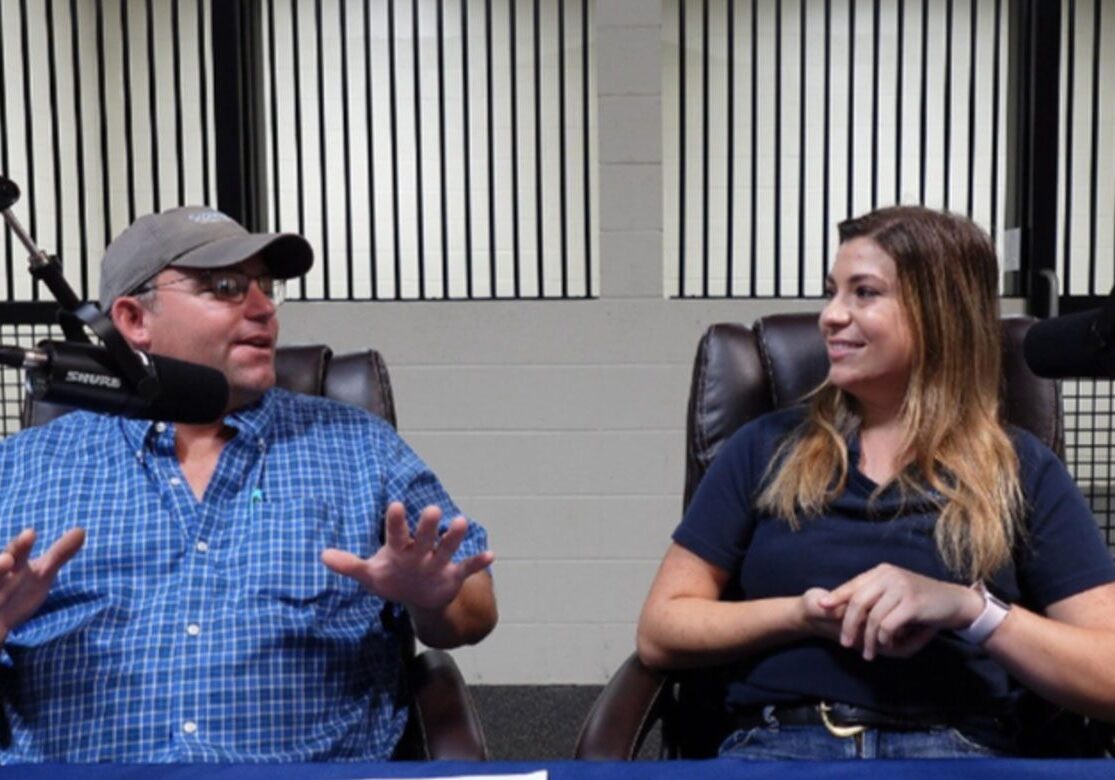
Watch Us on YouTube!
Catch full episodes and exclusive content on our YouTube channel, @countrysidevets2216. Click below to explore our latest videos.