

Ep. 20 – No Hoof, No Horse Podcast
In this episode
In this episode of the Equine Vet Connect Podcast, Dr. Dan Carter sits down with local legend, Kyle Schmidt, a second-generation farrier with a wealth of experience and passion for keeping horses sound and performing at their best. Together, they delve into the art and science of farriery, discussing everything from building hoof depth and mapping the foot to the critical role of proper shoeing in preventing injuries. Kyle shares his journey, philosophies, and tips for helping horses thrive, offering valuable insights for horse owners, trainers, and aspiring farriers alike. Plus, we learn about Kyle’s adrenaline-filled hobby that keeps him grounded— ironically, by jumping out of airplanes!
Episode Transcript
Welcome back to the Equine Vet Connect Podcast.
0:42
I’m Dan Carter.
We’re here in the old studio, old treatment room
One I’ve got Kyle Schmidt with me today.
He’s a local farrier in the area, someone I’ve actually known for a really long time.
We’re not going to go into that because I show my age, but man.
1:02
So Kyle, welcome buddy.
Thanks for having me man, happy to be here.
Man, we’re glad to have you.
So Kyle, so you’ve been a farrier, it’s kind of in your blood though, kind of tell us your story, how you ended up here, OK?
I’m a second generation farrier, so I guess my dad shod for, I don’t know, probably 35 plus years.
1:20
So I kind of grew up in it, you know, I started working on horses when I was 12, something like that.
Started pulling clinching for him and kind of history since then.
So it’s been fun.
I still enjoy it too.
It’s a great career.
1:36
I absolutely love it.
So you know, when you were getting your start, did you go to school or did you apprentice?
How did you, How’d you get to where you’re at?
No, I just, I just rode my dad and you know, a lot of guys like you and you know, I can name 15 other guys around here that all helped me, but just had a lot of experience with him.
1:56
He shod a ton of horses and so I had a lot of experience with him and luckily he had a lot of clients that let me get underneath horses and do a lot with them.
So you know, and like dad was good about getting me in the truck with other guys too.
2:13
So I ended up I learned from tons of people.
So very, very thankful.
You came up under a good man when I, when I first moved to Georgia as a farrier, your dad was actually president of the of the GPFA And, and I can tell you he he put in a lot of hours and a lot of work to really expand the profession and he did know a lot of the right guys and can get you with them.
2:34
And yeah, I came up a similar way, right.
I came up as an apprentice.
I guess you would, you would say no formal training, like we didn’t go to school, but I think there’s nothing wrong with shoeing school.
But I do think apprentice and under someone and then going and working with other people.
2:53
I think that’s, that’s really, I think if you go to school, I think you get out and you’ve got the basics so you can start to learn.
But I think it’s those apprenticeships that I think that’s what makes farriers.
I don’t think you can learn in a few weeks.
3:09
Yeah, I, I agree.
I think that, you know, and saying it from somebody like, like I didn’t go to school, but I think most people that I’ve met that have come out of school are kind of more ready to get in the truck with somebody, right.
You know, get in the truck and Start learning the ins and outs of the actual farrier world.
3:25
And so I gets them a good a good base to start with.
Yeah, I think that’s that.
That’s how I’ve always viewed it.
You get a base and then you’re you’re kind of.
I remember when I landed after my, when I got my pilot’s license, I remember landing and the examiner looks over at me.
3:41
Congratulations, you have a license to go learn.
Yeah, Yeah.
And I feel like that’s where we’re shoeing school.
Which is terrifying.
You know you’re licensed to learn flying a plane.
You know, I had almost 60 hours of training when they gave me that license.
I mean, I felt pretty good.
It’s pretty good.
So.
3:57
Well, 60 hours of flying time.
Yeah.
Yeah.
But still a lot.
So let’s dive into this like I’m, I’m pretty excited.
You’re the second yes, we’ve had on the podcast and this is a topic.
I mean, obviously I love being a farrier.
4:12
I love shoeing horses.
It’s one of my favorite things.
Even though I’m a vet now, I still love shoeing horses.
That’s my first love.
So we’re going to dive into some shoeing and let’s some different.
I kind of want to talk about philosophies here and, and how you shoe horses every day, what you’re doing to help these athletes perform at their best.
4:36
So if you’re going to talk about like what your goals are as a farrier and what you what you try to accomplish every time you pick up that foot, let’s kind of start going down that road.
What do you look at?
What are you?
What’s important to you when you’re in this job?
I think, I think first and foremost is, is this might be a little controversial, but the depth, you know, I, I think, I mean, I, I kind of live by that, do no harm.
5:00
First off, you know, I mean, I think in, in my world, like I’m just trying to help, help the horse do its, do its job better, you know, stay sound, perform as well as it can.
And I think First off, vertical depth is, is your first thing, you know, you’ve got to protect P3.
5:17
And, and that comes to me at like pretty much all costs like that.
That’s number one.
So when you say vertical depth, what you know, we throw that term around a lot, but let’s talk about what is vertical depth?
OK.
I mean, people would call it like sole depth, I would guess, but you know, people do get it confused with toe length versus its vertical depth and that’s very different.
5:36
But what I would call vertical depth and in a whole would be measured if you would measure from like directly straight from the coronary band straight down to the ground, right around center of rotation.
And so I think that that would be my idea, vertical depth and and it’s crucial.
5:51
I mean, you know, if a horse doesn’t have a healthy coffin bone.
They’re not going to be able to get around very well.
You know, one of the things I like to tell people, and this is what I’ve come to after 20 something years of shoeing horses, there’s nothing magic about the equine foot.
6:07
It exists to protect the coffin bone from planet Earth.
That’s that’s really it’s only job.
And our whole goal is to keep as much in between that bone and planet Earth as possible.
That.
That’s how they stay sound.
Yeah, yeah, exactly.
So and and that’s how they stay healthy too.
Like it, you know, in, in my experience, if you know, you find the bottom of the foot or you trim a foot very short, you’re going to pay for that for a while.
6:30
You know that that horse is going to it, even if it’s not lame necessarily, like you’re the growth is going to slow it down.
It’s not going to, it’s not just not going to be a healthy foot.
And so it’s kind of amazing that people and, and as soon as you say, you say, OK, I’m going to leave a little length on a foot or a little bit of depth.
6:47
And people seem to think, oh, it’s it’s toe is just too much toe length and it’s and it’s it’s not that at all.
We’re talking about minimal amounts.
And then even if it is a little long, it yet that foots going to come around a lot, a lot faster.
What you want.
It’s going to have more growth.
Source is going to be happy and sounder and probably going to have a lot less problems down the road.
7:05
I think it one way to simplify it is making the foot taller.
Not necessarily longer, it’s making the foot taller.
Exactly.
And we’re talking, you know, I think the studies talk about they want a centimeter sole depth under some of these thoroughbreds, thoroughbreds a centimeter sole depth.
I’m, I’m shooting for more than that.
7:22
Yeah, yeah.
I think that’s like I’m like, I’m minimal for what I would want on, especially some of these thoroughbreds now because they’re they’re getting so big.
You know, I mean, that’s we have one that’s massive and you know, it’s a lot of weight down on.
The foot I mean I’m shooting and I’m terrible with metrics.
7:40
I want a minimum like half inch or so half to 3/4 of an inch or so.
That’s that’s where I’m happy like as I’ve got I’ve got distance between that bone and planet earth.
I’ve got protection.
I got room for mistakes to happen.
Yes, we can find a rock and it’s not the end of the.
World Exactly.
Yeah, yeah.
7:55
They’re not going to get a stone bruise or anything from walking across gravel one time.
You know, and it’s interesting, you brought up the point about when you get these horses, short growth will slow down.
And I’ve seen that a lot.
So yeah, like when you, when you get these horses that we, we, we use the term they’re bottomed out where you just the sole’s been trimmed or the sole’s been worn down to where you don’t have a lot of depth.
8:19
And we do, we do a lot of venograms.
I’ve done a lot of venograms over the years where we were able to inject the contrast dye into the vessels of the foot.
Take an X-ray of that and we can see all the vascular supply inside that foot.
8:36
One of the things that amazes me is how much vascular supply there is underneath that coffin bone that’s feeding that sole.
And it sort of makes sense what you’re saying.
If you, if you bottom that foot out, if you get that foot short, you’re compressing that vascular supply and the soul is not able to grow.
8:55
Grow because you’ve compressed those blood vessels.
You’re not getting adequate circulation into that foot.
You’re not able to grow and it seems like it takes forever once you get one that’s bottomed out.
So sort of what’s your approach when you’re, when you’re dealing with those feet that they’re, they’re too short either from they’ve been barefoot and worn their foot down or they’ve been overtrammed.
9:18
What’s your take, your approach to get those horses back growing again?
I.
Mean it obviously, as we always say, like every horse is different, but I really like leather pads.
You know, I think that this is pretty simple and just to some sort of nice soft backing underneath it.
9:36
But you know, and, and a lot of times it’s a few cycles in that and they end up coming back out of them and being good.
But you know, just trying to get more depth on and get some protection on them.
You know, ’cause that’s really the only way you’re going to get out of that hole.
And one of the things that you know, often tell people you cannot trim one into depth, no.
9:55
You can’t.
You can’t trim a good foot into one.
So if you’re missing that depth, put your hoof knife down.
Leave.
It in your pocket.
Yes, wire brush that foot.
And, and so when you’re when you’re, when you’re doing that, a lot of times we’ll see these horses that they’re really short.
10:14
I mean, I think one of the things that was taught to me early on is you’re not paid for what you take off the foot, you’re paid for what you leave.
Yes.
So a lot of times, you know, I’ve been out and watched you, you know, a lot of times I see you pulling shoes off.
You’re just, you’re just dressing this foot up and down on the back up.
10:31
Yeah, yeah, that’s, I mean a lot of times and, and you will, you pull the shoe off and there’s just not much depth there.
And, and the foot’s just maybe vibrated forward a little bit and really just need to get the heels back where they’re solid and, and get, you know, get it dressed back.
And usually you’ll come back to a lot better foot and so or maybe a few cycles and then you’ve got tons of depth to work with.
10:51
So, so when you’re talking about that, you, you made the statement just saying bring those heels back to where they should be.
When you’re looking at foot, what, where are you looking at?
Like, as we hear a lot about heel, like we’re trying to leave these heels long and, and, and I disagree with that, you know, I think we won’t put them adequate, but what’s, what’s sort of your marker?
11:08
Where are you trying to get those heels trimmed to?
Usually the, the, what we call like the widest and widest point of the frog.
You know, you want it back where the widest and the weight bearing point of the frog is.
Yeah.
I, I try and explain like the best way I’ve explained it to clients about it because you, when we’ve all heard like don’t touch the heels or leave the heels.
11:26
And, and what I explained to people is I’m like, you know, if you put your, take your tennis shoes on and you don’t put the back of it behind your heel, you just let that, you know, crush down like you’re going to take the garbage out or something.
And how your heels are kind of sitting back there off the back of it.
Now imagine horses got to perform like that because those heels, instead of just being what they say is leave the heels, you’re you’re leaving a heel that’s migrated forward, right?
11:47
And that ends up just crushing the whole of, you know, the whole of back there.
And it’s just what I’m trying to explain to people.
And then a wise man said that they don’t get to take their shoes off at night.
So, you know, they’ve got to live with those crushed heels for however long they have them.
And so it makes it makes it where people understand it a little bit more.
12:05
I think that’s an important thing to think about.
I, I, as farriers,
You’re exactly right.
We go out, we trim these horses, we shoe them.
They got to stand in that shoe.
Yeah, for four to six weeks.
Yeah, yeah, at least sometimes.
12:22
If it’s if it’s ill fitting, they they’re in it, Yeah.
And they’re standing 23 hours out of the day.
Yep, and then, you know, worked in and everything else.
Yeah.
And that’s, that’s the other thing I think about when, when you’re talking about that heel length and those are really high heels.
12:42
I think about my wife, you know, if she’s wearing heels somewhere, the first thing she wants to do is get those heels off.
And yet we’re trying to stack this stuff on.
It’s like, what are, what are we doing?
Like, And I think if I had to, we throw the term and we’re going to get into this more.
12:58
We, I think what we’re talking about here is the term to get thrown a lot.
We want to balance the foot.
And when we talk about balance, I try to remind people balance is a happy median.
You know, balance is not an extreme.
13:15
There’s no extremes when we’re talking balance.
And I think that’s important.
We don’t, we don’t want to take too much heel, but at the same time we don’t we don’t want to leave too much, right?
I think it’s that whole Goldilocks thing.
You want to just right.
Yeah, I think fine, right.
I think finding that especially when we talk about heel length because again like you talked about, you can have these long heels and crush and migrate forward and.
13:39
Then it’s, it’s a whole lot harder to to get back after it’s bad than it is to prevent it from being bad.
I agree.
And you know, and, and it’s, it’s amazing.
Like you, if you consistently are trimming, the heel back and, and you’re, you know, trimming, trimming that foot nice and leaving it nice, then usually that gets less and less and you end up having a nice, you know, nice, but you don’t have to bring the heels back so far.
14:00
You know, it’s not running forward near as much.
It’s a lot healthier, of a hoof capsule.
It’s giving that base of support under the leg.
And I agree with you.
I think it does start with the heels, yeah.
Big function back there.
So, and we often talk about that about when we’re looking at a foot, you always say you start shoeing the horse for you ever pick up the foot.
14:24
And that’s one of the things I’ve watched over the years, you know, watch you when you when you go up to start a horse, I see you always looking at the horse.
What are some of the things that you’re looking for when you’re walking up to that foot for the first time?
What are some of the things you’re looking at?
Posture was a big one.
OK, watch how they’re standing and you know, obvious things.
14:41
If they’re sitting in there pointing any foot or they’re resting a foot consistently, then I’m looking at their shoulders, looking at how they’re built, their confirmation.
And then obviously hoof balance and, and seeing what it looks like.
Seeing if they’re, you know, their feet are underneath their limb or if they’re happy with them.
If they’re not, you know, that’s all just before you get underneath them, but just just looking at the whole horse and seeing if there’s anything that yells at me and says, you know, ow or something’s going on, you know, and I and I like to watch him go too, if we can, because that’s, you know, these horses that we’re working on most of the time are, you know, they’re performing a lot, they’re getting rode a lot and that that’s when you want to see him go and you can make some changes from seeing that, But I just try and keep it keep the whole horse in mind.
15:22
It’s got kind of a turn to get thrown around a little bit, but it really does matter for all of it.
So yeah, that I think, I think there’s a, that was a very important statement you made watching these horses go and watching how they work because we don’t shoe them to stand in cross ties, right?
15:40
We shoot them so they can’t go perform and they can be an athlete.
So I agree 100%.
I think knowing what the horse’s job is and and what they need to do, I think that’s important.
Oh, yeah, yeah.
And you know, in their history, I think the history, as long as you, you know, you have people that you know, have a good idea of what’s going on, but like their history, or at least recent history, you know, because I mean it that you can take that into consideration too, just depending on what they’ve been doing.
16:06
Right.
So we get into, you know, you’ve looked at this foot and, and, and then when you, we look at the foot from, you know, how the horses stand and we look at it resting on the ground, we look at how they’re standing.
And then you’re going to pick the foot up.
And now it’s time to go to work.
What’s, what’s the first thing you do?
16:22
You pick this foot up.
What’s the first thing you want to do?
I mean.
I’m just going to look over the whole thing, right?
Look at it, see if anything yells out at me and then probably going to trim the frog.
Trim the frog.
You know, get it where it needs to be and then you can kind of base everything else off of that.
You know, one of the important things that we learned as farriers, I think sometimes we forget is the frog is the only structure on my foot that doesn’t move right, right.
16:46
It’s always there and it’s always where it’s supposed to be.
And trimming the frog first, because when you made that statement about the highest, widest part of the frog, the highest, widest part of a properly.
Trimmed frog properly trimmed from correct?
Yeah, makes a big difference.
17:01
Yes, and everything bases around that, right?
So whatever your frog is, that’s the one static structure you’ve got.
And so once you’ve got it, then we can kind of move into the rest of that.
Oh yeah, that trim.
So you’ve got your frog prep because again, that’s going to be your, your landmark for everything.
17:17
Yeah.
What’s sort of your next step?
What things are you looking at from there?
What things you’re doing next?
Look at it their.
I guess the proportions around that frog I want to look at, you know, what we would do is call it like mapping the foot and that helps out a lot too.
You can kind of see if that hoof has as you know, any issues going on with it.
17:35
As in if it’s out of balance with that ’cause it gives you lines, you can look at OK, kind of base that off of off of.
That’s not necessarily where it needs to be trimmed, but you can get an idea of what’s going on with it or how you need to shoe it based on that to get everything balanced and underneath their limb.
17:51
So, so when you’re talking about mapping that foot, you get the frog trimmed and we often talk about finding that center of the foot been described as Duckett’s Dot, right, finding the termination of the bars, the bars where they grow up into the sole and then finding that that duckett’s dot point and everything kind of centers around that.
18:12
And I think that’s again, going back to the frog, that’s we’re going to locate that.
Once we find that center with center of articulation, center of mass, whatever you want to call it, it’s that’s going to be our center.
We’re going to sculpt everything around it.
Yep.
Oh yeah, for sure.
So.
What?
18:27
What things are you doing to locate that point?
I mean, trimming that, trimming your frog properly, trimming the bars properly.
And then you, you can usually, at least in my experience, I think Duckett’s dot is about what, 3/8 of an inch or so back from the apex of the frog, right.
And then you can physically draw lines on the foot.
18:45
You know, you can get your grass ruler out and draw the line like horizontally across the foot and then you draw 1 vertically and then you can have like quadrants and you can have a balance because you want a good ratio front to back like you want to have.
If you could have 50/50, obviously that’d be ideal.
19:01
But you get it as best you can and then you shoe it for what it’s not and and try and, you know, get it to where it should be with the shoe if you can’t do it with a trim, right?
So when you talk about those quadrants, we divided that up and we talked about those quadrants.
19:17
This is where to me, this is where probably the most important part of the trim is and the shape in that foot.
So kind of describe once you’ve got those quadrants, what you’re doing next on that foot.
I mean, you’re going to aside from pulling depth off, but you’re you’re going to try and get even quadrants with even with the hoof wall.
19:34
You want nice hoof wall thickness if you can, trying to get that all even.
And then again, like if that’s not possible, you’re going to add a shoe and and try and get it accomplished that way.
But you, you want to have, you know, even quadrants if you can.
But most of it I’m I’m just gathering it up is what we call it.
19:52
But you’re just dressing the walls down and trying to get that all together.
That makes sense.
It does.
So you know you’ve gone in.
You found that you built those quadrants and drawing lines.
I can remember, and I still do this, this day, I mean, thousands of feet later, if I get one that’s a little distorted, I’ll still grab a sharpie.
20:12
I go in, trim a frog, find Duckett’s dot, find the bridge, locate the widest part of my foot where it should be, draw that other line down horizontal.
And I start building those radiuses in into my foot and building, you know, and it should be an equal radius all the way around, right?
20:30
Like the the front radius should match the back radius, right?
And if you’re trimming feet properly, that’s that’s going to happen.
Yeah.
Oh, yeah.
You get those proportions, right.
And and, you know, you especially on a foot that you haven’t been working on, it might be tough to accomplish it first, but then it will end up coming there, you know, and that’s still it.
20:47
And on that one, I think getting those heels back where they’re supposed to be is crucial, right?
I think that plays a big part in it.
I’ll tell you, I think one of the, the biggest changing points in my career was I spent a lot of time at farrier clinics and what you hear constantly is the foot should mirror the coffin bone.
21:08
And I remember sitting in, I was in vet school at the time and we’re looking at a lot of X-rays of these feet.
And I remember coming to conclusion, coffin bones are pretty symmetric and they’re not ugly.
And I started thinking, wait a minute, I’ve got a lot of ugly feet.
21:27
And that was that, that was a realization I had as if there’s not ugly coffin bones, why do I have ugly feet?
And I realized that I need to work on what I was doing.
And that was a, that was a gut check moment because that time, I mean, I’m in vet school, I’m a journeyman farrier.
21:44
And I just came to realization that I don’t quite understand what it is I’m doing.
I think, man, those are some of the best moments to have, you know, and I’ve obviously had some of those too over the.
Years, as you’ve seen, and.
So it’s been that it’s been game changers when you start noting and it it’s, it’s wild when when you start trying to do that and and stop trying to make it what you want it to be, it ends up being a lot better deal for you.
22:10
Because it’s interesting looking at those and also realizing those radiuses are the same going around this foot.
Yeah.
And, and there is a true widest part of the foot.
And then there is a radius that follows that foot.
And it, it’s, you know, I, I call it working with nature, not, not against it.
22:28
And I think once you learn to map those feet, you learn to understand what those radiuses are supposed to do.
I think it’s a big, big change.
I agree.
I agree.
I think that’s, I think it’s crucial to, to get a healthy hoof is is doing that because it’s again, like you’re talking about with blood flow like that, that all gets altered and messed up too.
22:49
If all those radius, you know, radiuses are out of whack or your quadrants are out of whack, you know it plays a role on that too.
It’s going to change the pressure that’s on the coronary band.
Oh yeah, big time.
If you don’t have that, that foot shaped like it should, you’re going to have increased or decreased pressure on the coronary band and it’s going to change how that that blood flow is is circulating through the coronary band, which is going to change your foot growth.
23:12
Right, right.
And then then, you know, it’s kind of that that like revolving deal where it changes your foot growth in the horses posture is going to change and then it’s just going to continue on getting worse and worse and worse.
And so it it kind of can get in a hole pretty quick that way.
I think one of the coolest things is once that foots grown down, we can’t we can’t really affect it as much.
23:33
But I think one of the coolest things is when you get when you get that foot truly balanced, like you, you’ve map that foot, you get those radiuses built into the wall like you should you starting to build that vertical depth.
And all of a sudden you come out four to five weeks later and you look and, and you’ve pushed like, I mean, I’ve seen as much as 1/2 inch of growth out of the coronary band.
23:53
Like there’s a line there and you’ve got this growth coming out and you’re like, wow, I.
Love seeing it.
I love it.
It’s like, it’s, it’s that like, you know, like it just tells you you’re doing it right.
You’re, you’re making progress, you know, and you can look at that and usually see like if you, you know, I’ll get down on the concrete half the time and be like laid out looking at these things.
24:12
But you can look at it and see and, and it’s just looks perfect where it’s going to be.
And just you get to watch it grow down and end up having this nice.
Foot it’s it’s so cool.
I think you know when you when you, I would say we, when you shoe that horse, it’s when you come back next time you find out what kind of job you did.
24:30
Oh, yeah.
And if you come back and all of a sudden this foot is really growing.
Yeah.
That’s a win.
Yep.
That’s a win.
Yep.
You’re doing good.
So, and I think that’s, you know, I love a shoeing contest and and Craig Tanker said one time, you know, we ought to judge a shoeing contest 4 weeks later, yeah, for real.
24:48
That’s what we ought to judge one Oh yeah.
Is that this is do we get this right or not?
And, and I think that’s, that’s the true markers when you, when you’ve got things balanced up and all of a sudden you’re getting that, that depth in the foot in this hoof wall is growing and you’re, you’re making these big nipper passes because you’ve got so much growth.
25:05
That’s that’s pretty awesome.
Yeah, Yeah, It feels good, you know, And that’s usually, I mean, most of the time is accompanied by a sound horse, right, You know, And so you’re getting that too, you know, you’re the trainer’s like, man, he’s moving so good, he’s doing so much better.
And then four weeks later, you’re burying your nippers in them and you’re like, this is great, like, you know, and, and it was all just ’cause you took the time to, to get everything right and, and left a little depth on him too.
25:30
The the, yes, I, I remember there’s a famous trainer around here for years and and I remember Sunny one time said you, you know what kind of horse wins the hack a sound one.
Yeah, I think she had some.
25:47
Good.
Sayings yes that that was one of the wisest thing you ever heard and and and you know you think about you know we talk about people always worried about something being long when you can leave 1 long and they’ll be sound yeah you cut 1A millimeter short and they limp not going to win the hack they’re limping not going to win the hack not getting good scores the bells going to get rung I mean it’s just not a not a good scenario so like said anything we can do to encourage that foot to grow like that’s.
26:13
Yeah, because you know that it’s, it’s rejuvenating itself.
It’s it’s so you know, if it does, you know, something does happen with it or anything.
You’ve got, you know, you’ve got foot coming in to work with, you know, and you’ve got stuff that you can help that horse with one way or another, right.
It’s I just don’t see any other way that it you know, it works better than do it then you know at least facing it from that angle, so.
26:38
On the little thing, I often think about too is, you know, when you’ve got that good growth, it allows you so many more options because if you’re fighting to get a foot to grow, if you need to do something to change that foot, if you don’t have growth, you can’t, you can’t do it.
26:54
And so when you’ve got a foot that’s growing really well, and I look back at my career and I can remember I shot everything at six weeks, everything I was shoeing was at six weeks.
And then I learned to shoe horses.
I learned how to build depth.
I learn how to properly dress a foot.
Cycles got shorter.
27:10
It got real shorter.
We couldn’t go six weeks anymore.
Six weeks is gone.
Yeah, I don’t man, ever.
And it’s probably around the same time as like when I started getting that idea of depth and I don’t have anything that goes six weeks.
No, I mean, it’s, it’s four, maybe 5, right.
27:26
So it’s it.
But they do, they grow foot and you know, and that’s a good problem, you know, because most, I mean, in my mind too, if they’re growing that much foot, then they’re, you know, you’re doing a good job, they’re healthy, they’re probably getting the rode more.
So the horse is probably feeling better.
So everything just works out better that way.
No, it was, it was a big game changer.
27:43
I realized I understood what I understood I was on the right path when I was coming back in six weeks and going.
We need to back this up.
We need to be at like 5 weeks.
I was in five weeks.
Like, no, we need to be closer to four.
And I’m taking the same amount of foot off in four weeks as I was at six.
28:01
Oh yeah.
That’s a win.
Oh yeah, that’s a win all day because we got something we can work with then that’s a healthy foot.
The foot is growing that that’s what we wanted to do.
Oh yeah.
So unfortunately if you got a good farrier, your shooting intervals are going to get yeah, more frequent.
28:16
Cost you a little bit more, but you’re going to save money on, you know, hopefully save money on injections and everything else too, you know?
I tell people this all the time, good farriers are bad for my business, but that that’s what we want though, Like, and that’s that’s a big focus of mine is like, I, I try to prevent things.
28:35
Yeah, I don’t want to, I don’t want to be in.
I feel like if you’re just constantly fixing, you’re in catch up mode.
But if you’re, if you’re working to prevent, the horses are happier.
The, the, the the owners are happier, the trainers are happy.
We can go, we can go be athletes who want to do so.
That’s our whole goal is to produce a sound horse.
28:51
Good farriers, big role in that, not just from the standpoint of they’re not foot sore.
If that limb is properly balanced, they’re moving like they should.
Our risk of injury goes way down, way down, yeah.
I I agree, I think that those meaning I don’t have any studies to prove it in my own business, but the ones that have the nice feet are, you know, nice good feet consistently are the ones that you don’t see near as often.
29:16
I agree so.
And, and the ones that you know, you, you have trouble with or the ones that you’re having trouble with balance, you’re, you’re coming out and injecting their coffin joints all the time, you know, and so you know where they’re having other issues and injuries.
And so it’s crucial and I, I go ahead.
29:32
I’ll say I think 2 is if they’re not loading that foot properly, if that foot’s not balanced, whether they’re not loading to the center of that foot, they’re not loading that foot properly and they’re leaning one way or the other.
This increases our risk, in my opinion, of soft tissue injuries like an injection is one thing.
29:50
If we got to maintain little synovitis in the joint, that’s an easy fix.
You start getting the collateral ligament injuries, suspensory branch injuries, we’re not loading properly.
That’s an issue.
And a lot of times you hear, we hear a lot about protecting the deep flexor tendon.
30:08
And there’s a lot of these different shoeing techniques that are supposed to take strain off the the deep flexor tendon.
It’s.
Just the fancy thing they want to talk about.
Yeah, Looking in my practice, I see very few deep flexor injuries.
What I do see a lot of are suspensories which are load bearing injuries.
I see collateral ligament injuries.
30:25
And I think a lot of those can be, I think we can minimize a lot of that through proper, proper foot balance because we’re going to land even we’re not going to be, you know, if you’re sore on the inside of that foot or the medial side of the foot, you’re going to land heavier to the outside, right.
And if you’re landing heavier to that outside, that’s going to change how we load through there and something’s going to get overloaded, right?
30:46
So again, I don’t want to say it’s all about the foot, but it starts there.
I’d say it starts there.
That’s it, that saying of no foot, no hoof, no horse, no foot, no horse that it’s true, right.
And, and in a lot of ways.
And then like you said there too, I think, you know, balance is obviously defined in different ways for different people, but I, I think you hit it there like if they’re, I think landing flat is a big one, you know, and we achieved that however we can, but I think otherwise soft tissue stuff suffers.
31:16
Well said.
Well said.
And that that kind of leads me to the back feet.
I feel like front feet get all the, everyone wants to look at front feet.
Everybody’s always judging the front feet, back feet.
This is something that you and me have discussed a lot and you kind of share the same passion I do for shoeing the hind feet on these horses.
31:37
How critical do you think it is to have those hind feet where they should be?
Very, very, I, I think, you know, a horse needs purchase.
They, they’ve got to have grip back there.
And I, I’ve there’s obviously the controversial break over and, and all that, but they need grip.
They they, they especially need some sort of toe back.
31:55
There isn’t like a radius that they need to be able to grab the ground and propel themselves, propel themselves forward.
And and I think people just, they don’t think about it like that.
They treat them like their back feet and they, you know, you see a lot of like set back toes and dumped off, you know, feet that, and usually that’s accompanied by a horse that’s sore, right?
32:13
You know, and I think it’s, it’s crucial.
They’ve got to have in depth back there is, is important too.
Like, you know, people think that it’s, it’s not as much of a load bearing back there weight wise, but it’s still, they still need depth, you know, and.
When you bring that up about backing upon feet, we’ve seen this before.
32:31
Like you see these horses have their toes backed up behind and they’re standing really heavy on their heels.
These horses are camped under and you talk about purchase, which is that toe getting into the ground.
When we lack that toe because it’s been backed up and they’re standing heavy on the heel of that foot on the hinds, these horses get camped under.
32:48
And that’s one of the things like when you’re looking at horse for the first time.
I know we’ve talked about this a lot when we’re going around a horse that comes into a barn and you see those toes that are backed up behind, they lack that purchase.
They lack that toe can’t get into the ground and they get very camped under with their back legs, right, right.
33:05
Yeah, I agree.
And it, and especially watching them move, you can see it, you know, and that’s like if we, you pointed out to me too, is like a like those kind of throw those rooster tails up and you’ll see them and they’ll really look kind of Pogo in the back and, and it’s it’s amazing.
Like you give them some purchase back there and it’s a game changer and it helps the front end too.
33:24
And Oh yeah.
And especially it’s nice when you have like a good trainer that has good feeling rides and you change that just even immediately, even if it’s just it’s awesome as you can really see it and then you hear about it.
That that that front end is the dumb end.
And I always like to say, like, it just needs to get up and out of the way.
33:39
Yeah.
It just needs to like tap the ground and do some steering kind of stuff.
But.
Like go look pretty.
Engine.
Yeah, exactly.
And you talked about that throwing those rooster tails and being able to, to grab the ground and propel themselves forward when you’re missing that hind toe, because if you look at those hind coffin bones, you look at those hind feet shapes, it’s like a round pointed shovel.
33:58
It’s it’s kind of diamondy.
And I think that is so they can get into the ground and really push and.
Drive I agree, I agree it I mean it’s just it I think it’s almost black and white to me like it’s just so you can tell the difference so much in them and and I agree.
I think that, you know, especially in the difference and and I mean front coffin bones to me are still way more triangular than I think a lot of people think they are right.
34:21
The hinds especially I agree.
And you know, we want that hoof to mimic the coffin bone.
So I I think it’s crucial.
And what are some things you can do like if you, even if you’ve got the purchase where it needs to be, you’ve got things right behind, but they’re still, you know, some of these horses are just so strong on their hind quarters, they’re still slipping through there.
34:40
If you’re getting that report from somebody like, hey, I still feel like they’re slipping, they’re having to pull with that front end, what are some of the things you start thinking about doing?
Concave.
Concave.
Concave.
I love concave I’m.
Gonna build them some concave hinds and it man, it’s a big, you know, and, and I get people think some people think it’s just too much purchase and stuff, but I, if I experience it most of the time is I think footing obviously plays a big part, you know, and we, we’re at least knowledgeable about what venues that these guys go to and what their footings like.
35:11
And so if it is super sticky, then we would need to change it.
But even, you know, even in some of that, like the newer footing, like up at Tryon and stuff.
I’ll, I’ll leave the concave on him and I’ll just like roll the toe and see and just kind of maybe take a little bit back or like take the toe back, but still let him have the grip.
35:26
And it, I haven’t seen an, an increase in the amount of, you know, maintenance they need in the hind end from having concave on.
And I don’t think you have.
I don’t think you have either.
Absolutely not.
Yeah.
So yeah, I understand the thought process of it being too much grip, but I haven’t seen that.
35:42
You know, and for those of you listening, concave is a type of stock where it’s if you think about the crease where the nails would be, this crease continues from heel to heel, goes all the way through the toes.
So you’ve got that, that open space for grip.
And the other thing I think it’s important is the inside web of that shoe is got a bevel to it.
36:01
And that bevel allows every time that foot moves, all the dirt footing, everything comes out.
And so you have a fresh, unpacked foot hitting the ground and that shoe’s able to do what it’s supposed to do.
Right, right.
You get like that, that’s concave, but you get that concavity and it is like it, it evacuates the dirt every stride.
36:20
And so then they end up they’re able to actually get in the ground and grab and go.
That’s awesome.
It’s and I’ll even you know, in some shoes and stuff if I have one for just different reasons, but I can you can put that interweb into some of them where you can leave the toe, you know, just regular flat stock and you could even you know, have a three quarter fuller, which would be fuller down each branch and then you could cut out that inside right.
36:44
And that could give them a little bit of help too there.
So if they don’t need as much traction and say, a concave, they don’t need that extra rim, Yeah, they just need that inside where it cleans out better.
You’re saying cut that out and build that bevel into that shoe?
Exactly.
That’s a really good, really good point because you know, we talked a little bit about footing.
37:01
I think that’s really important.
You know, what kind of ground, you know, what kind of ground are these horses working in?
And I agree with you hear people talk about too much traction on the back end.
I don’t, I don’t think that exists.
I agree that foot doesn’t slide as much.
We needed to get into the ground.
37:19
We need to be able to push and drive.
That’s how we build that stability and we’re not.
The way I think about it is if you’ve got a sprinter, rather say you’ve got a guy you’re going to steal second base.
If you put cleats on him, he is 100 times faster because every stride grabs the ground and propels him forward.
37:35
There’s no slip backwards.
And I think that’s that’s really critical, especially in these big warmbloods that are so strong behind.
They need to be able to push and they need to be able to drive.
Right, right.
And especially when you’re talking about these upper level stuff, you know, these guys like in their upper level dressage and then these big hunters and big jumpers, like they need to be able to grab the ground back there.
37:56
And, and you know, I think it can even go as far as if if they can’t one, they’re going to have issues, but they can start losing confidence.
They should start, you know, not want to jump, not want to do their work.
I mean, because they they feel slipping behind, they’re not going to feel like they can do their job.
That’s a good point.
That’s a very good point, you know.
38:12
I think it’s crucial in a lot of ways, you know?
So it goes back to watching that horse work, if you can watch them under the saddle if you see those rooster tails coming up from the shoe and you see them slipping.
And one of the things I look at too is if they’re slipping behind, you can watch that wear pattern on the front feet.
38:28
You get that real sharp roll right at the toe.
Not that even wear, you have that real sharp roll.
And that’s a clue to me, like, pain, yeah, we’re having to pull too much with this front end.
Exactly, Yeah.
And, and my thought is they’re not really, you know, they’re not really designed to pull with their front feet.
38:45
It’s not meant to do that.
I mean, maybe some of these drafts and the big pulling stuff, they’ve at least been bred to be able to do that.
But the horses we work on are they’re not meant to grab the ground with their front feet like that.
You’re not going to win the hack if you’re having to pull with the front end.
Grabbing around like a plow horse?
39:01
No.
And dressage is out, like if you’re trying to grab with the front end, you’re not able to function like you should.
Got to be able to push, you got to be able to drive.
I agree.
You got to have that engine where it can do its job and there’s front feet got to be able to get out of the way, right?
39:19
I’ve even seen if I have horses forging, like people say, oh, he’s forging,
You know, everybody’s like, oh, we need to speed the front end up.
And I’m like, no, no, no, we got the traction issue behind because we need more.
Grill Yep, that’s my first thought too, is I’m thinking about, you know, traction behind and then maybe go towards the front.
39:36
But that’s my first thought too.
And in a lot of times that fixes it.
Or even one that’s like tripping.
If you have one that’s kind of getting trippy up front for, you know, a lot of you know, whatever reason, sometimes it’s because they don’t have any grip behind.
Some of the some of those horses that are barefoot behind just shot up front.
39:51
They start getting trippy.
You put back shoes on them and all of a sudden they’re rocking.
That’s awesome.
So you know, and you don’t do anything to the front end.
So, one of the things you said, you’re going to build on some concave.
Yeah.
That mean you’re going to take some bar stock and turn on my shoe?
Yeah.
Yeah, yeah, a lot of the time they do have some machine made shoes that I use now, but it doesn’t be a handmade concave.
40:12
So that’s how crucial, how crucial do you think forging skills are to the farrier world?
Like how?
How?
Because I mean, there’s so many keg shoes on the mark and things like that.
I mean, I’m old school, everybody knows that.
I still love to build a shoe, but how critical do you think that that is?
40:29
I think it’s very critical.
I think it’s people you can get away with doing less of it these days.
And you know, and I’m guilty of it just as anybody.
Like I use some pre clipped shoes and stuff like that.
But I think when it comes down to it, if, if you know, when it really bites, you say you’re, you know, say it’s late one night you got a horse leaving for a show on, you know, Friday morning he is sore or something happens.
40:51
He needs a bar shoe.
You don’t have.
You got to build 1 and being able to build 1 and have it where it fits that foot and go on the horse is happy.
You can’t, you know, can’t always do that.
And, and so I think that’s crucial.
And then just the fact of when you learn to forge, you learn to use your anvil right.
41:08
You learn to see feet better when you you know, at least in mine, especially now if I build a hind for a horse, like I can build a pair of shoes at home for a horse I shoe and most of the time it about drops on the foot.
It’s kind of crazy.
It you just, you can put whatever shape you want into it rather than having to change a keg shoe.
41:25
And I think that having to change the shape of the keg shoe because most of those the machine made shoes don’t come with a it’s not the type of toe that I would put into it.
And so then you’ve got to kind of completely change that thing.
And that’s a lot of work.
You know, a lot of guys don’t want to do that.
And so that’s where I think it gets easier for some just to not fit the foot as well.
41:44
But I think when you learn to forge your, you know, you, you learn to fit feet and you learn where nail placement is crucial.
You, you learn about proportions.
You learn about maybe leave, maybe, you know, offset your center mark a little bit and you know, so I think there’s a lot to learn just in the fact of learning to forge.
42:02
And I remember Jim Poor said this.
Jim Poor’s kind of a legend in the farrier world.
Jim Poor once said, if you can’t build shoes, you can’t know feet.
If you don’t know feet, you can’t build shoes.
And I, I didn’t understand that for probably the first 3 or 4 years.
42:21
And I remember there’s no one was 2:00 in the morning things where you wake up and you’re like, I got it, I got it, I understand it.
So yeah, absolutely forging is.
And like you talked about with the concave, I mean, it’s only been the past few years that we’ve had a pre made concave shoe.
42:36
I mean, we were buying the stuff out of England and six foot sticks and yes, and and you know, you find out somebody’s going to Florida for the winter.
It’s like, Hey, can you bring me back 200 sticks of concave?
And we we cut them and, and I can tell you there’s, to me, there’s nothing cooler than turning.
42:55
I love concave.
Yeah.
Yeah, it’s, it’s so you know, you one thing about concave is it teaches you not to be, not to be slamming on steel real hard too, because, you know, you can mangle up a concave shoe pretty quick and you can over flatten 1 pretty quick and it’s not real forgiving.
43:11
So it does it’s kind of like working aluminum like it, it’s, it’ll tell on you.
But, and so it, I, I like it a lot And then it, it’s quick too, you know, I mean, I know you’re a little better than me, but you know, like 3 heat concave shoes are, are pretty common for some guys and I need a few more heats, but you know.
You know, used to is a three heat shoe for me.
43:27
These days it’s closer to four or five.
I need I need that extra heat in there.
I’m not quite as provision.
Yeah, that’s me.
And it’s funny because you you talk about that forging and keg shoes.
I swear it’s almost easier for me to build a handmade shoe now than it is to to use a a keg shoe because I’m not shoeing as many horses I used to.
43:49
And I forget all the tricks to to take the shape out of the kegs you to make it what I wanted to be.
And it’s almost easier to start with a 5 piece of steel.
Yeah.
Put your toe in how you want right from the start because you’re right.
I mean, a lot of these, especially hind end shoes and they get like, they just have such a, a big wide toe in them.
44:08
And so, and then the quarters are wrong.
And so you got to turn it into like a U bolt your toe, bend back and then get your quarters around.
And, and part of forging is it teaches you how to do that very, you know, easily when you do that, you learn where the spots on the horn of the anvil are so you can get that shoe put where you want it to be.
44:24
Is that that is the issue of most keg shoes?
Is they they don’t look like feet?
No, I don’t get that.
I don’t either.
Like I’m.
Like, man, I just don’t, you know, you get this keg shoe and it’s about a perfect circle and I’m like, I don’t have anything that would fit.
No, I mean, I don’t know that I’ve ever been able to drop a keg shoe on a foot and be like.
44:40
There it is.
I’ve often wondered, like what?
What are the manufacturers trying to do here?
Where’s the?
Model horse yes, like what’s I want to see this thing.
Yeah, I guess it’s the same, same horses that are in my textbook as a vet because I never see those horses either.
44:57
So I guess they’ve got, I guess those horses are somewhere that the textbooks are written on and shoemakers are making keg shoes.
It’s the same horse, yeah.
It has to be.
So, but no, I agree, like it’s getting that fit, right.
It’s so critical.
45:13
So oh, what is if you had one thing you wish more people understood from a shoeing perspective, if you want to leave one message to our listeners out there and we just we just scratched the surface today.
I see a lot more episodes here because we got into like we just scratched the surface you have.
45:30
To have one just on keratomas.
I mean, we could do a whole just on keratomas.
I mean, even something simple as pads.
There’s a whole episode just on pads.
Yes, and.
How to use less of them now?
Yes, crazy.
You suck less, you use less pads.
I agree 100.
Percent it’s amazing when your techniques right you need far less technology it’s.
45:49
Crazy.
That’s like I would, I remember when I got my trailer built and my Stonewall trailer built and I, I was like, and that was years ago, but I was like, I want, you know, 8 pad pad things for pads and all that stuff, man, I don’t use but like three of them now, right.
And.
It’s, it’s crazy, you know, when you start, you know, start treating feet better and you stop having to put so many pads on.
46:11
Yep.
So, so what’s the what’s the one thing, if you, if you could send any message out there to our listeners, what’s the one thing you would tell them from a farriers perspective, what’s, what’s the one thing you’d like?
If they take away anything from this podcast today, what would that be?
Don’t try and well, when they they don’t try and get your farrier to have a bunch of short feet on your horses.
46:33
I think I think that’s one thing.
I think that you know if your farriers talking about wanting, wanting depth and leaving a toe a little long, let them let them do it.
You’ll have a better foot later.
Build depth.
Yeah, build depth, trust them, and you’ll see like it’ll pay back, right?
46:49
You know, don’t.
It’s not all about a short.
Foot well said.
Well said.
So one other cool thing I want to talk about with Kyle.
You got an interesting hobby, don’t you, Kyle?
Oh boy.
What do you like to do on the weekends?
I like to skydive.
That’s what I thought.
47:05
So yeah, I like to fly perfectly good airplanes.
I like to jump out of them.
You got.
To jump out of them what?
I don’t like landing in.
take off and cruise is fine but that landing I don’t want to land I.
Like landing under my parachute.
That’s really cool.
Yeah, that’s really.
Cool.
It’s fun.
It’s fun.
47:21
It’s, you know, you got to start flying and then I’ll, you know, I’ll jump out.
You flying that that, you know, that was my goal when I was learning to fly.
Never.
My dad made a living as a pilot and I never wanted to do that.
But I always thought it’d be really cool to fly the skydive plane cuz the takeoff and Landing is the fun part.
47:36
Yeah.
Oh.
Yeah, and you could do that a lot as a skydive, yeah.
I mean 10 times a day plus and it’s wild cuz like if you’re the last one out of the plane, you, you know, you go out and you’ll see them like that big king here and they just, I mean straight down.
I’ve heard that guy call like I’m in the pattern, you know, I’m coming into the airport, I’m getting close to the pattern.
47:55
And when he calls skydivers away, I know like, hey, hold off because that last guy’s out.
It’s going to be less than a minute and he’s reporting he’s on final.
So don’t get in the pattern, just kind of fly hold, stay away from the pattern.
He’s coming down.
He’s getting back on the ground quick.
48:11
Quick.
I mean, he’s beat me down to the ground several times.
Like it’s, it’s wild.
Yes.
So yeah, well Kyle, thanks for being here today.
We really appreciate it.
I hope you all enjoyed that.
Again, if y’all got questions you want us to answer, if you’ve got more topics you want us to cover and it can be anything but special on the foot, you know, send us a message and e-mail A dm phone call.
48:35
Still waiting on that letter for Doctor Caitlyn so somebody can mail that letter.
That would be awesome.
I still got a bag of swag for you.
So.
So Kyle, thanks for being here.
Oh yeah.
Thanks for having me.
Man, absolutely.
And y’all, we’ll look forward to seeing y’all next time.
Thanks.
Have a Topic in Mind?
We love hearing from our listeners! If there's a topic you're curious about—whether it's equine health, training, industry trends, or beyond—let us know. Your suggestion might just inspire our next episode!
Guest Speakers
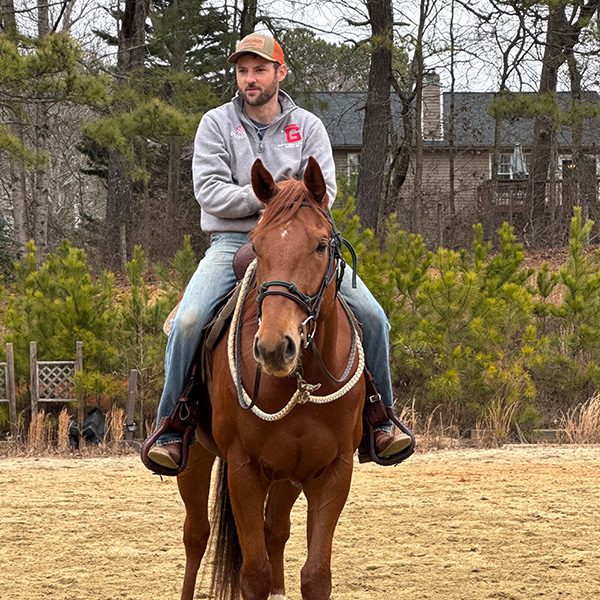
Kyle Schmidt
Kyle Schmidt is a 5th generation horseman and a 2nd generation farrier. He grew up riding and competing cutting horses as well as breaking and training young horses. Kyle first started shoeing under his father Steve Schmidt at the age of 12. At 14, he began taking his first trimming clients and competing in shoeing competitions. After a brief stint with Ford Racing in Detroit, Michigan, horses called to him again and he returned his successful farriery career. Kyle currently shoes almost exclusively performance and sport horses, and his specialty is working with vets and other equine professionals to find the right solutions for a wide range of equine athletes. When he isn’t shoeing, he enjoys sky diving and spending time with his family: his wife Jordan and his children Dixie and Lawson.
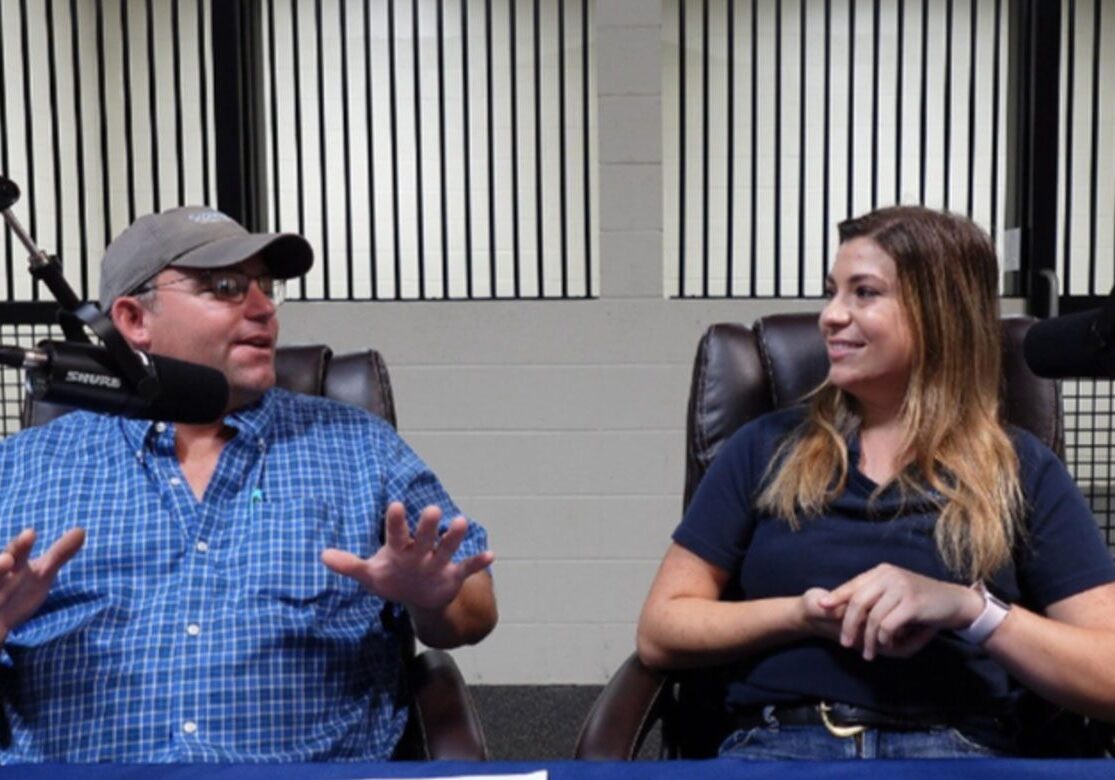
Watch Us on YouTube!
Catch full episodes and exclusive content on our YouTube channel, @countrysidevets2216. Click below to explore our latest videos.