
Ep. 54 – The Truth About Saddle Fit Podcast
In this episode
Is your saddle helping your horse—or holding them back?
In this episode of The Equine Vet Connect Podcast, Dr. Dan sits down with independent saddle fitter Lacey Halstead of Whole Horse Saddle Fit to uncover why saddle fit is one of the most overlooked yet critical aspects of equine health and performance.
We dive into how improper saddle fit can cause:
- Back pain and sore toplines
- Muscle atrophy and uneven development
- Gait issues, reluctance to go forward, and training “problems”
- Long-term soundness concerns like hock soreness and kissing spine
You’ll learn:
- The anatomy of a saddle and what each part does
- Red flags every rider should look for when evaluating saddle fit
- Why today’s sport horses need different saddle designs than 10 years ago
- The difference between wool vs. foam panels—and when to use each
- How saddle fit can dramatically improve comfort, soundness, and performance
Episode Transcript
Welcome back to The Equine Vet Connect Podcast, here at Countryside Equine.
We’re in the studio, treatment room one.
You know, if we ever do get an actual studio, April, I don’t know what I’m gonna do.
Like, I think it, it just won’t be the same, you know?
You’d throw your rhythm off.
It would, it would, you know?
Like, this is my, like, happy place, this is where I’m comfortable.
I think it was a real studio, I don’t know if I could do this, so.
We got a really cool episode today.
I’ve got Lacey Halstead here with us, with Whole Horse Saddle Fit.
You’re based out of Alpharetta?
Alpharetta, Canton area, yep.
So, this is a really cool topic because, Lacey, I’m going to tell you, you know, we’ve talked about this before.
I got into Vet Med, there was all this talk about saddle fit, there’s a talk about saddles, so I was like, this is a thing.
I’ll be straight up with you.
I thought it was the biggest bunch of BS I’ve heard in my life.
How is this thing that weighs a whopping like six pounds?
You know, it’s the size of a postage stamp on their back.
How in the world is this little tiny thing in effect performance?
And I’ll never forget the day that I saw it.
And as soon as I saw what was going on and understood it and it got explained to me, you can’t unsee it.
So this is something I’m really excited to talk about because I do think it’s an area that we as veterinarians, we don’t, I’ll be real honest, we don’t pay attention to it.
And now that I’ve seen it, it’s something I really do evaluate.
So let’s come and dig into this.
Let’s start off who you are and how you got into fitting saddles.
Sure.
So, I’m a career horse person.
I actually got interested in saddle fit when I was a barn manager.
And I was working at a facility where a lot of my clients were in and out, so I would be the one riding for the fitting appointments.
And our fitter ran the school that I eventually trained at.
And kind of like your experience, I got on these horses and rode them for them, and then he adjusted their saddles, and I got on again and rode them, and they were completely different animals.
You know, and we’d have training, training.
So we thought training issues, training problems that I’d been dealing with, and he adjusted and fixed the saddle, and sometimes my training problem would go away.
You know, like, oh my gosh, you can pick up the right lead canner.
Oh my goodness, you can bring your shoulder out.
You are soft in the bridle.
You’re not gnashing at the bit anymore.
Your mouth is quiet.
What, how did that happen?
And so that really turned me on to saddle fit and opened my eyes to how important it can be and how transformative it can be.
And I knew I had been a barn manager for a long time.
And I knew that most people don’t retire from barn management.
They burn out or they age out.
So I decided, hey, I’m gonna go get training and become a saddle fitter.
And then, you know, when I’m ready to stop doing the barn management thing, I’ve got my third career.
I’ve got my place to go.
And that’s what I ended up doing.
And I was saddle fitting for a while in Texas, part time, trying, you know, trying to move out of barn management and into saddle fit full time.
And it’s just a very big state.
It’s hard to make a living because you’re driving all the time.
I mean, Dallas to Austin is not exactly next door.
Exactly, exactly.
And a former client of mine had moved to the Alpharetta area and encouraged me to come here.
She said, we don’t have a lot of independent fitters.
No.
And she encouraged me to come look at it as an opportunity.
And I did.
And here I am.
So now this is my home and this is where I’m based.
And I can tell you, that’s one of the things that I really like, having worked with you in barns.
You’re an independent fitter.
You’re not tied to a brand.
And I’m not saying that fitters that work for a brand are bad.
I’m not saying that they’re good.
But I do like the fact that you’re independent.
I think that it’s good because you look at all makes, all models.
You’re going to work with what we’ve got.
You’re going to look at it through a different set of eyes.
So that’s one of the things I’ve really come to appreciate about what you do.
So let’s dig into a little bit of Saddle Fit because, you know, me as a veterinarian, when I first saw it, I was dealing with horses that were having issues that I couldn’t fix.
And I mean, the first one I saw, and so we kind of started to dig into this a little bit, was a horse that, you know, when the rider was on, they’re like, he just won’t go forward.
He just won’t go forward.
He can’t reach, he just won’t go forward.
And, you know, of course, I go out there, do what any good veterinarian would do, jog them, flex them, lunge them.
Looks great.
Owner and trainer standing there.
Yeah, he actually looks really great.
I was like, maybe it was a bad day.
So then we all go about our day, we go about our business.
A few days later, like, Dan it’s back again.
It’s terrible.
I was like, okay, I’ll get back out there.
I’ll look at it.
Well, this time I watch him ride.
And so I watch him ride and I was like, I see what you’re saying.
Yeah.
Completely different horse.
Yeah.
And I said, you know, maybe there’s something wrong with the saddle fit.
And I’ll be honest, I was just like throwing it out there.
Right.
And so sure enough, I’m there the next week, the saddle fitter is there and we’re trying saddles.
And of course, I’m curious.
I start watching and all of a sudden the right one hits.
Whole different horse.
So I’d like to talk a little bit about that.
Like, what goes into getting that better movement up front?
What are the things that you’re looking at?
What are the components of a saddle that can really affect that?
Sure.
So we’re talking English saddles now.
I fit Western too, but we’re talking English.
So jump saddles, dressage saddles, right?
Because the trees are different, Western to English.
In your English tree, you have basically, it’s like a tongue depressor.
The tree point that we always talk about, that’s behind the horse’s shoulder, imagine it like a tongue depressor.
It’s a little bit broader and it’s a little bit shorter, but it’s that idea, right?
And it sits behind the shoulder, and it has to sit at the right width, but also at the right angle.
It’s got to match the angle of the horse’s back correctly on the sides, and it also has to sit at the right angle.
If you’re looking at the horse from the side, if that tree point faces too much into his shoulder, he can get blocked, too far back and you can have issues on certain makes.
So is the tree point correct?
Right width, right angle.
And then as you go back, that tree then makes a loop around the back that becomes your seat, right?
So as that tree goes back, is the angle of the tree there?
And your English trees are made traditionally of wood, reinforced with metal.
Sometimes now you see, they call it composite.
I mean, it’s plastic, good plastic, but it’s plastic.
Right.
But does that layer that is relatively inflexible, does it match the angle of the horse’s back as you go back around?
Is the channel wide enough?
All of these pieces of the saddle are sitting right on the muscles that you need to make sure can engage, can contract, can get bigger, can come up.
And if the angle of your tree is off, there’s only so much you can do with the panels to try to help that.
So that’s number one, is looking at the tree.
So to kind of back up, and maybe we should have started here talking about, let’s call it the anatomy of the saddle.
Yeah.
So we’re going to start with that tree point.
You’ve got the two angles that we need to get correct, and then you called it the seat.
The seat.
The technical name of the rest of that saddle that’s running down the length of the horse’s back is the rails.
So yeah, the angle of the rail has to be correct, because you’ve got an inflexible piece of wood or plastic, and if it’s not right, then you’re jamming that into the horse’s back.
It’d be like taking a backpack and filling it with a bunch of books, all crooked and saying, okay, now go.
Go to school.
We’re going to throw a new challenge in.
I’m going to say this.
Hey, Kasey, let’s put a picture of that right up here, and see if she can actually get it there in the podcast.
We’ll get a picture of that up there, so that we’ve got a reference.
We’ve got the frame of the saddle.
Your tree is your frame.
That makes sense if those angles aren’t right up front, it doesn’t matter what you do with the panel.
Yeah.
You can block it.
You can try to spread it.
You can do whatever you want.
You’re not changing the bones of the saddle.
Yeah, exactly.
You’re not changing the bones.
You can make it better, and sometimes you can have a small mismatch, and you can fix that.
If it’s a foam saddle, you use your half pads.
If it’s wool, you can change that wool stuffing, that wool flocking.
Sometimes you can fix a small mismatch.
Often you can, but a big mismatch?
No.
Then you need a different saddle.
Yeah, because if you were to go from, let’s say you had a thoroughbred, you were riding a thoroughbred, and you go out and buy a warm blood, don’t even, they will probably not even be in the same ballpark.
Probably not.
Yeah.
Yeah.
Just because of the saddle point, it’s not where it needs to be.
Uh-huh.
All right.
It makes sense.
So then let’s keep going down that route.
We’ve got a horse’s block.
We’re going to check, you’re going to look at those things when you’re working on, that’s going to be like your step one.
We need to look at that.
Right.
Step one is the frame of the saddle.
The part that you can’t change, is that an appropriate match for this horse’s back.
And so what I’m doing is, one, I can look at the saddle.
I can flip the saddle upside down and get an idea.
Even if I don’t, a lot of saddles, I know what tree is in it.
I know kind of the shape of it.
But if I don’t, I can flip the saddle upside down, kind of get an idea.
Look at, and you’re mirror imaging it.
The horse is back to your saddle, right?
Makes sense.
Then put the saddle on the horse and start feeling underneath, feeling that junction to see, do we have a mirror image and shape?
Do we have pressure points?
You can, you know, you can feel those underneath.
And I should back up a little bit.
First, what I do when I get to a saddle fit appointment is I look at the horse.
You can tell sometimes where you might have a saddle fit problem by looking at the horse.
For instance, you know, the classic shark finned thoroughbred, right?
That thin withered thoroughbred.
If they’re at a decent weight, that’s not usually natural.
If I see a horse with atrophy on the sides of the withers, I want to go see if that saddle is not pressing there, if that’s not restricting him, you know.
A lack of muscle development in certain places on the back can tell you that you have an imbalance, right?
Sometimes you’ll see horses with their low back is not well-muscled.
I want to go see.
I bet you that saddle sitting pommel high, rear low, and all the weights go into the back and the horse can’t engage his low back muscles.
It’s really interesting you say that, because a lot of times when I’m looking at those horses that they’re describing as being blocked to me, I swear if you look at them, you can see where the panels on the saddle sit.
Yes, you can.
Because that part of the muscle is completely atrophy.
Yes.
And I’ve learned to pick that up over the years.
It’s like, well, I don’t know why it doesn’t fit, but I think we need to go look here.
Yeah.
Before we go diving down a rabbit trail, this needs to get looked at.
Yeah, exactly.
So yeah, you can start picking up a lot of warning signs just by looking at the horse, if you know what the musculature should look like.
So, you know, I start there, then put the saddle on, start feeling things.
And from that, you know, first you start with a static assessment, and you can make your first pass at, okay, here’s what I think we might need to do to tweak the fit, you know.
This is a decent saddle, but we’ve got to make some little adjustments.
If it’s foam, you don’t adjust the saddle, you know, you use a half pad, shimmable half pad, something like that, try to rebalance some things.
If it’s wool, you can go in there and manipulate the wool to rebalance things.
And then you got to go out and watch the horse and rider work together.
They have to see how they move.
One, test what the horse thinks about it, what the rider thinks about it, but then, just like you as a vet, you can look at the horse in the barn and you make a guess about why he might be lame, but you got to go see him actually move to see what’s happening in action.
And the saddle has to work dynamically.
And if the horse has a gait asymmetry, or the rider is crooked, or the rider is unbalanced, there’s so many things that play in together, you want to go see the whole picture in motion to make sure that you made the right assessment and see if you need to make some more tweaks.
And often, about 50% of the time, you have to come back with a second pass of, okay, we got to make this little adjustment here or there to make the horse happy.
Now, I’ve definitely seen that at play with, some of these horses have a gait asymmetry secondary to a high low foot.
And we’ll go in and, as a farrier, we’ll do different things to the feet.
We’re not gonna make the feet the same, but we can make the gait symmetric.
But when you look at those horses, you’ve got one shoulder that’s atrophied, and one shoulder that’s almost overdeveloped.
And it’s interesting when you talk to those people, they’re, the side that’s underdeveloped, they always feel like they’re just kind of diving down on that side, they’re falling in.
And once we get that gait symmetric, one of the things I will tell them is like, hey, we need to get with a saddle fitter, because you’re gonna need to change that saddle, because we need to stop you from going that way.
Build it up so that shoulder can develop like it should.
And then as it develops, we have to stay with a fitter to keep adjusting that saddle to open it up, or we’re gonna run into an issue.
Yeah, I know you’re absolutely right.
I have, and anybody who works with me will be like, yeah, she told me to shim the right side.
90% of the time, it’s behind the right shoulder where they’re not as developed, right?
95% of the time.
That’s usually where the high foot is too.
And that’s exactly what we do.
And I talk to people about, okay, here’s where you’re going to go with the shims, and here’s what you’re going to check each month in your saddle balance, and change that shim out.
And if you’re ever not sure, is it time for me to pull a shim or not?
Call me, let’s do another saddle fitting.
Because, yeah, if that horse keeps dumping the saddle over here, that right muscle is not ever going to work as much as it needs to to have any hope of getting even.
Right.
Because I’ll see those horses underdeveloped on that left side or on the, where the high foot is, say on the right side.
And then the left shoulder is very much overdeveloped.
Yeah.
But then you also start looking back in the lumbar spine.
Yes.
And you’ll see a big difference in that muscle.
Those muscles back there, the whole, the whole right side will be underdeveloped because they’re just falling that way.
So it’s, yeah, that’s really interesting.
So these horses, we kind of got off track there, but I always love rabbit trails.
That’s what I love about this podcast is we just kind of do things our way.
Yeah.
You know, we’re talking about those horses that are blocked, you know, went into the tree.
But what are some of the other things that you’re looking for in that?
In that.
So I find the ones that are blocked and sticky and can’t move.
There can be a lot of different reasons, but two of the most common causes are they’re getting jammed somewhere at the back of the scapula or at the trapezius, on the sides of the withers, trapezius spinalis.
So I start looking at, do we have a panel issue?
Do we have a tree point issue?
And can we solve that?
Sometimes it’s at asymmetry even, like the horse I did today that we were talking about.
She’s a little less developed on the right.
She was really sticky, almost panicky to go into the right lead canner.
We shimmed up that right side, and she went, oh, sure.
Ba-da-boom, ba-da-boom, ba-da-boom.
So I’m watching, there’s some tell-tale ways that a horse will move or things that they’ll do that tell you, okay, that’s where my problem is.
It’s in the middle of the scapula, part way down, or oh no, it’s right at the top of the scapula.
Or it’s on the sides, it’s in the spinalis trapezius, the sides of the withers.
He can’t pick his back up, because he’s stuck there, so we need to give him more space there.
Really starting to learn, looking at the anatomy of the horse, knowing what your saddle is, because you’ve done the inspection beforehand.
When I’m working with a saddle, I’ll often be like, okay, here’s the problem areas.
We’re going to try to fix that, and I know what movement patterns I’m looking for, and if I don’t get improvement in that movement pattern, then I know we still have work to do.
That’s really cool.
I’m guessing that’s an experience thing.
That’s from doing this.
From doing it a lot.
Yeah.
Yeah, once or twice.
Well, and it’s, my years as a barn manager really help, because who does the trainer call when they think the horse is a little bit lame, that come watch this one under saddle.
Who’s always there when the vet shows up to watch the horse trot?
Yeah, just that years of watching horses move, and just being a horse junkie, anytime I can watch somebody ride, I watch somebody ride, that really does help me, and you get some of that in your training, but a lot of that is personal experience.
Yeah, because that was one of the things I found interesting watching these horses that were blocked.
The first freeze that I worked with, the answer was always a water gullet, you’d open things up.
And then all of a sudden there was one like, yeah, we put a shim on it and did much better.
And I was like, whoa, whoa, whoa, wait a minute.
You got to make it wider.
And then now we’re adding a shim and we’re not, now that’s fixing it.
And that’s been the, I guess that’s where I am so, I have such little knowledge in this area.
And every day I feel like I know less and less.
Right.
You know what I mean?
I feel like I’ve hit that point with this where I just know less and less every day.
And I remember when that first came up, I was like, wait a minute, we added a shim and that’s what did it?
A quarter of an inch of felt, what?
Right.
Quarter inch of felt.
But then I think about, I can change, I can put a quarter inch of pad on a horse’s foot and completely change the gait.
And so when I equated the two, I was like, well, that makes sense.
These little changes that make big differences.
Yeah.
So, that’s really, really interesting.
So, the other thing we get a lot, and this is a rabbit hole I’ve been going down a lot.
We start talking axial skeletons.
Round.
Okay.
You know, horse should be round.
Just that round body type?
Well, you know, just they should be round.
They should come round.
Yeah.
Where, you know, the neck is over in a proper frame of collection, we’re lifting through the shoulders, the pelvis is coming under, the back is lifting, we’re not getting hollow.
And one of the things I’ve seen is a saddle can play a big role in a horse’s ability.
And this is one of the other places where I had an aha moment, because it was explained to me, Dan, you’re thinking about a rider pushing down on the back.
But what about the back that’s lifting into the saddle?
And that little thing, even as dumb as it may sound to a lot of people listening, that was a big moment.
Because I never thought about it that way.
It was lifting into a saddle.
Exactly.
And that’s where I see all these painful backs.
You’ve got block, but now we’re getting to where saddle fit can cause quite a bit of pain.
And so I’d like to go into that a little bit, and the things that you’re looking for there, and what you’ve seen in that area.
So I see a lot of different things that can prevent a horse from lifting his back, and even worse, make him sink his back, try to drop away from the pressure.
And that leads to all kinds of problems that then you get called out for, right?
Oh, we need hock injections.
Oh, we have an SI problem.
Our stifles, kissing spine.
And I’m chasing my tail, because I feel like all I’m doing is fixing one thing after another, after another, after another.
And then saddle fit’s helped me actually put a lot of that together.
I may not know what’s wrong, but like this something ain’t right here.
This may be part of it.
Yeah.
So, you know, there’s a number of different things that can prevent the horse from picking his back up.
One of the most common is just that you have a saddle that, the shape of it doesn’t match the horse’s back, and you’re getting pressure right behind the shoulder and at the rear and not distributing the pressure across the entire panel from front to back.
And that’s going to make a horse hollow, right?
Because he’s got, as I kill myself, right behind the shoulder, he’s got a pressure point, at the right near his lumbar, he’s got a pressure point, and so he’s going to sink to try to get away from it.
He’s going to lift his head up, he’s going to get tight at the base of the neck, he’s just going to kind of do this.
You do that for a long time, all of a sudden, oh look, we have no top line, we have sore hocks, we have a sore SI.
Cervical low ache, a lot of lower cervical pain in those horses.
Because I’ll be called out to look at the neck, and because they’re very painful there.
And that’s when I really started looking, that’s where I first noticed like, oh I can see your saddle and the muscle in your back.
This is secondary.
Yeah, wow, that makes sense.
That cervical pain, because like you’re talking about, that braced, with their braced up, they’re kind of sucked back, they’re hollowing out, and this is locked like a board.
And then you’re going over a jump, especially in the jumpers, you’re going over with everything locked up, and it’s just that thoracic sling’s pushing up, and every time you hit the ground, it’s…
Yeah, and those are the severe cases, but step that back down a little bit, and you still have it, then you have a horse who’s maybe not terribly uncomfortable, but he sure isn’t performing his best.
Absolutely not.
Right.
Yeah, so that’s one of the most common problems that I see.
And there can be different reasons that you have that pressure front and back, but that can be one major issue.
People are starting to get more savvy about the channel width down the spine.
That was a bigger problem a few years ago, but the saddle makers have figured that out.
You know, and some of it was, we just needed to educate ourselves better about it, but the other part is warmbloods are increasingly popular for all of these English sports.
The spine gets wider, they’re thicker across there.
You know, our warmbloods and our Quarter Horses versus a Thoroughbred need more space.
Well, if you go look at the Hanoverian of the last 15 years, I mean, used to have a Hanoverian of like 15.3h.
I mean, that was fairly good size Hanoverian, more of a compact type warmblood.
Now, fast forward 15 years, the Hanoverians I’m working on today, Beasts, I mean, not even in the same, I actually saw a more traditional Hanoverian on Tuesday.
And I just sat there, just kind of, I won’t say the way you’d look at a classic car.
Yeah, yeah.
Like that was the feeling I had when you watch it, when you watch somebody looking at like an old 57 Bel Air, and they’re just like nostalgic and they’re just loving what they see.
And I see this 15.3h Hannevarian come out, and I’m like, big nose, long back.
Yes.
I’m like, this is the one.
Right, right.
I’m like, it’s a gelding.
Dang it.
But it’s just, you know, cause I’ve got, I got a Hannevarian I’ve worked on for four different owners in two countries, and it’s that classic 15.3h.
She’s a mare.
I keep hoping every day the foal hits the ground out of her because she is that classic.
Nice.
It was like if she ever started making the Bel Air again, it was beautiful.
But sorry, that was a little sidetracked.
Yeah.
Yeah.
I happen to like old school Hannevarians too.
Oh, I love them.
I love them.
But you’re absolutely right.
If you look at the backs on these horses, it’s night and day different.
It’s different.
Yeah.
And that’s, you know, and that’s something that if you’re, if you’re buying used saddles, I deal with a lot of used saddles.
Like you’ve got to understand the evolution of saddles over time and make sure that the generation of saddles you’re getting is appropriate for the body you have, you know, the horse body that you’ve got.
But yeah, so channel width, I don’t see as much of a problem anymore until I go somewhere where people are riding in really old saddles.
And then sometimes that can be an issue.
And that’s something the manufacturers change as far as how they’re building the saddles.
Yeah, yeah.
You know, some of it is we just know more.
We know that even thoroughbreds needed more space than we were, you know, those old Collegiates and Crosby’s, you can barely fit two fingers down the channel.
We just know better than that now.
Right.
But…
Well, if you look at the thoroughbreds of today versus again, go back.
That too.
You know, with that one, they’re actually scaling those back down again.
Thank goodness.
But yeah, I’m sorry.
Yeah.
No, you know, it’s like I get this question all the time from my clients about, especially my Dressage clients, you know, all these big blocks these days, we never rode in big blocks when I was growing up.
We didn’t have, I said, yeah, because we rode 15 hand little moving thoroughbreds.
You know, they trotted like this.
The horse, the warmbloods that you’re riding now in all the sports, wabum, wabum, the suspension and the body size.
So yeah, so the saddles have to change to accommodate that.
I think it would be really interesting to go back 20 years and watch an extended trot at the Olympics.
I’ve done it.
And put it back side by side with the extended trot now.
Nothing.
Not even the same sport.
Yeah, nothing the same.
I mean, it is completely different.
So you have bigger moving horses.
Bigger moving, yeah.
And so the tack has to accommodate that.
And I think there too, that’s also where I think people are starting to realize more that saddle fit is important because these horses and even in the hunter world, they’re riding pretty fancy warmbloods.
They’re getting bigger movement out of these horses and bigger suspension.
And all of these animals have more potential than we used to have.
So that quest for that potential, people are starting to see more, wow, I can really make a difference with this saddle fit.
I can really make it better or worse.
Well, and that’s one of the points I bring up a lot talking to people.
If you go back, let’s say you go back 15, 20 years, the horse that was winning everything, you’re not hauling it today.
That horse that was winning everything.
It’s not going to the show right now.
If it was in your barn now, you’re going to be like, no, you’re not going to the A show.
Not enough, just not there.
These horses have advanced so much.
With that, the expectation has advanced so much.
And the quality, I think the quality of the horse and I think the quality of the rider.
But all of this, and so now, a lot of these little things are really making the difference between are you on the podium or not.
Yes, for sure.
Yeah, you’re right.
It’s just all gotten so much more competitive.
I don’t know about more serious, it’s probably always too serious, but we still, it’s women and horses, we’re too serious.
I mean, they’re not type A at all.
We’re not going to go out there and lay it all out to get our blue ribbon, you know?
Yeah, no.
Just one, it’s got a ribbon.
It was worth it.
But I get it because I kind of want to see the ribbon.
Yeah, yeah.
But yeah, so again, going back to these horses experiencing a lot of that pain, the back pain, we’ve worked on the channels.
What else are you seeing with those?
So, one of the things that I’m seeing a lot of right now, so you’ve got, let’s talk foam saddles versus wool saddles, right?
Let’s dive into this.
This is really good.
And I am not biased towards one or another.
But I will say there are certain, there’s limitations to both, there’s certain situations where I would really kind of suggest to a client, you might really prefer a wool saddle in this case, or foam is just fine for you.
The other thing, I think the makers of the wool saddles have been a little quicker to understand the changes in body types of horses that we’re getting now.
The foam saddles, and I don’t want to lump them all as French saddles, but the majority of what you see out there are French.
They’re not all, right?
The French saddle companies, they’re getting it now, but they’ve been a little slower to adapt to the modern sport horse body type.
And a couple of the main areas have been, you know, the French saddles were made for thoroughbreds that were built kind of like this.
The modern sport horses is a warmblood and need to be built like this.
Well, that means a different gullet shape.
That means a different tree shape in the front, right?
And it means maybe a different place where you attach the panels.
That old close contact style that all the riders want, because it feels like the narrow twist and all of that.
Those panels were attached high up on an A-frame tree.
That’s been really difficult to get these big thick horses comfortable in.
And again, they’re getting it better now.
A lot of them are kind of experimenting with, instead of changing the tree, changing the panel, picking the whole thing up higher.
And that’s a cheat that we use with half pads to try to get a better fit.
Sometimes that works, sometimes it doesn’t.
But I’m kind of digressing a little.
No, that’s our podcast.
We get to do that.
We start and end up wherever we want to go.
That’s the beauty of it.
But that’s, you know, so as the horses get rounder and rounder in their frame and in their bodies, and the shoulders get higher.
You know, we want all this expressive movement in these warm bloods.
The shoulders now go clear up to the withers on these guys, right?
And that means, that’s a very different, where it rotates back into the panel and into the tree now is a very different position.
And that’s one of the biggest things that I’ve seen make or break saddle fit for these modern sport horses.
And in particular with the French saddles, because they, again, now they’re getting it.
Now they’re modifying their designs and they’re much better.
But you take a modern sport horse and put him in a French saddle that’s 5, 10 years old, you might not be able to make it work because of that shoulder, because of how high that shoulder is now.
That actually makes a lot of sense, because when I look at, when I first started looking at this, it was about 3 to 4 years ago.
And what I was seeing was a lot of these saddles that were in that 5 to 8 year old range, it felt like, which makes a lot of sense because we were looking at an old design saddle on a new design sport horse.
Yeah, exactly.
And so that explains a lot actually.
And the clients don’t realize that, because the top of the saddle looks the same.
The part they ride on looks the same.
Exactly.
And it feels great.
Yeah, it feels good to them.
Yeah, so you go in and show them that.
And yeah, the shorter backs and the higher shoulders, that’s been the major change in, you know, Dressage Horses and the Hunter Jumpers.
They’re both going that way, the body type that you’re seeing.
That’s a really great point, because I didn’t realize till right now, that’s a lot of what I’ve been seeing, is those shoulders are sitting much higher on the withers.
And that’s, which is what they need to get those bigger, more expressive movements.
It gives them a lot more freedom, a lot more range through the shoulders.
Right.
I call it the totalless effect.
Oh, wow.
You’re going to, you’re going to.
I know.
But, but.
You’re going to get me started on that?
I’m not going to.
Like them, like them or don’t.
But after he came on the scene, everybody was like, I want that.
I’ve always said, if you had to point to the one thing that changed the sport of your size, it was when totalist hit.
And I think that effect actually went into the hunter jumper world is where I think it went all throughout English riding.
And like totalist, I really think he’s like pre-totalist and after totalist.
Yes.
And a lot of people don’t want to admit that, but again, the expressiveness that he had, everybody goes, oh.
Right.
I mean.
Don’t we all?
Yeah, forget the, can that stay sound, right?
And forget, is that what it should be?
Is that what it should be?
We’ll forget all that.
Right.
But it has, it’s exactly what, you’re exactly right, and I see it more and more every day.
That that’s the body type, that shoulder is the body type that is being bred for both those disciplines.
Yeah.
Great.
Great point there.
So, you know, the other thing I see is you see a lot more of this, but the rocker trees.
You see a lot of the rocker panels that are real rounded out.
And those thoughts, I’m going to start there, how does all that play in?
Well, the horse that needs that sure needs that.
Right.
So my classic example is your lesson pony.
Okay, I’ll buy that.
Right?
Your little lesson horse, he’s in his teens.
He’s been ridden by little kids his whole life above the bit, kind of whatever, however he wanted to go, and he back looked like this now.
It maybe always looked like that a little bit, but now he back to really look like this.
Well, you take a straight tree and try to put it on that.
And like we were talking about, you can only do so much with pads and flocking and all of that.
So I have no problem with a round tree or a curved tree, and I need a curved tree for a horse that has a curved back.
So like my favorite little lesson horse saddle is the Dover Circuit.
Curvy.
Just what they need.
Yeah.
And you can do a little bit of a curve sometimes on a straighter back.
But yeah, I mean, the shape has to match the back.
So we were talking about me being an independent fitter.
What’s my favorite saddle?
The one that fits.
Absolutely.
So those saddles, when you need them, they’re a godsend.
And there aren’t that many brands out there that make a curvy tree.
So the few that you get.
Yeah, that makes, I had a lot of those showing up for a while.
And it was usually my lower level hunters.
And I can tell you, you put one of those on a flat back.
It is…
It’s not good.
I have never seen any, I’ve never seen a horse that upset.
Yeah.
It takes about a week to two weeks.
Yeah.
And that’s what, that was a, I guess the reason I always sticks in my mind is that was again a place where, that’s where a connection was made, that the horse is lifting up.
And then I realized like it’s trying to lift up and the point of contact on this is not much bigger than a dollar bill.
Yeah, exactly.
So the entire weight of this rider is sitting on two spots of the size of a dollar bill.
Right, right.
And it…
And then it’s unstable.
So you get that and that pisses them off after a little while.
So what are some things that…
You know, I guess it’s become a little bit easier, but this has been years and years and I felt like I was, you know, I’d meet people like you I could talk to, I’d meet other…
I learned from some trainers and I picked the brains of a lot of riders to try to understand more and more about what looked good, what felt good, what was working, what wasn’t, trying to get a better knowledge of this.
But, you know, you don’t know you have a problem unless you know you have a problem.
Right.
And so I guess my question is when people out there are looking, they’re riding, they’re experiencing difficulty, what things should be, should pop up in their mind like, hey, I need to give Lacey a call.
I need to get a saddle fitter a call.
Like, this is something I need to get checked.
What are things that you see?
Like, these red flags, we need to be out there.
What are those things?
So there’s a couple.
One of the first ones I would say is, look at your horse’s back.
Look at his body and look at the saddle weight-bearing area.
Is he really well-muscled, except for there, right?
And it doesn’t even have to be like to the point of atrophied spots, but does he have a really strong butt and really strong shoulders, but just the top line is kind of hmmm?
Maybe you have an issue.
If the butt’s round and the back’s-
And you can see the spine, you know, and the back looks like this?
That’s a clue.
Then that’s a clue.
Then you may have an issue.
Undersaddle.
If you feel like he’s just, takes so much leg, he takes a long time to warm up.
He’s just really reluctant to go at first until you really get him into it.
Maybe you need to check your saddle.
If you’re jumping and he’s not snappy over the jumps, he’s not, he’s hanging his knees over the jumps or on landing, he’s grumpy, the ears go back, bucks, God forbid if you buck, call me.
Yeah.
Well, that’s where I was going with rocker trees.
Yeah.
I’d see those on flat back horses.
And they hit the ground and they go, oh.
Yeah, they buck.
A lot.
A lot.
Yeah.
Yeah.
He, if he’s bucking, but even, you know, like rushing at the jump and then pinning his ears when he hits the ground, you know, a lot of horses, they know it’s going to hurt when they land.
And they’re like, Oh God.
And they run and then on landing.
Problems in canter transitions, the upward transition, especially, right?
Because if the saddle is unbalanced and putting too much weight on the low back, can’t get his hind end under himself to canter.
So, tense transitions, sloppy transitions into the up, upward into the canter can be a sign.
And just that inability to lift the back, which can be, sometimes you feel it as a rider, like, okay, he’s not lifting.
Sometimes you feel it in your hands.
You feel, or tight in the bit, or I put my leg on to bend and he goes, in the neck against me instead of, yeah, sure.
So, what are you feeling in your hands?
What are you feeling in the lower part of your horse’s neck and in his jaw when you’re asking him to do things?
And if the feelings aren’t good, then maybe have your saddle fit checked.
One of the things I love to look at is, again, those situations, I’m out there and I’m watching him in hand and things look great.
And then I watch him, you know, we watch him lunge, everything looks great.
We put a saddle on, things get bad.
We put a rider on top of the saddle and they start getting worse.
Yeah.
That’s my clue.
Yeah, for sure.
That’s one of the big things I’ve seen.
There may be some other things, because it’s interesting.
A lot of the things you’re describing are where I start looking for lower cervical pain.
Trouble with the base of the jump, trouble on the backside of the jump when they land, and difficult to collections, transitions, and a lot of that’s related to that cervical pain.
But when you think about it, the saddle could be what’s driving that cervical pain.
And I think that’s where, the more I look at this and the longer I’ve, because I was a farrier before I was a vet, and the more I’ve been involved in having two different sides of this coin, it’s truly about a team.
Yes, it is.
And because I can do everything perfect as a vet, but if we don’t address this saddle, I’m just going to be back here again or you’re going to be like, oh man, you did a terrible job, Dan.
He’s still lame.
You did all this work on my horse’s neck and he still can’t change the lead.
He still can’t get a canter transition.
And so I think that’s why I started really looking into these saddles, because I was like, wait a minute, it’s looking like I failed.
I feel like I’ve done my job, like it’s there, but what am I missing?
Well, this was the piece I was missing.
That was the part, yeah.
And vice versa.
I had a client call me the other day and we had fitted her horse.
He’s in transition, he’s building muscle and all that, but we had fit her horse not that long before and she’s, hey, I need you to come back.
I said, well, what else is going on with him?
Well, we think maybe he’s going to need hock injections and his shoeing hasn’t been great, and so we’re changing the angles.
I was like, you know what, don’t call me yet.
Do those things first, and then I bet that’s going to resolve your saddle fit issue.
You got to work with the owner and work with the team, even though it may be in phase, not directly.
But I do a lot of times work with vets who say, yeah, we’re doing this for your horse, but also call a saddle fitter.
Get them involved.
We’re going to do the kissing spine therapy, but also call a saddle fitter.
You got to tackle all the pieces.
That’s one of the things I try to tell people is like, when I’m involved, I don’t look at myself as just the vet, but I also kind of want to be the quarterback here.
I say, all right, let’s get the saddle fitter, but I need to know what they said.
I want to see the before and after.
All right, let’s get the farrier.
Let’s get this team together.
We need to think tank here.
We’re here, we got to get here.
And it’s going to take those, because one of the points you just brought up, I think, is a huge thing is people will buy horses or acquire horses that, let’s say, haven’t been fed the best.
And they may have plenty of body condition, but I always say there’s body condition and then there’s muscle.
They’re two different things, two different sets of nutrients and two different things build them.
Standing around doing nothing, you can get fat.
Yes.
But working’s where you build muscle.
And so that’s one of the things that I’d like to touch on a little bit is when you have one of these horses, either a young growing horse or a horse that’s been out of work for a while, that’s coming back into shape, they’re going to see you a lot.
Yeah.
They’re going to need the saddle fitter a lot because I watch these horses go from one style of back to we’re six months down the road and it’s not about adjusting the saddle anymore.
We got to get another one.
So let’s talk a little bit about that too because that’s one of the other places.
I see the saddle fitter in my day-to-day work as well.
Yeah, for sure.
I work with a lot of people who are rehabbing horses or bringing them back from something or trying to make major changes.
That’s a lot of times where the vet will say, hey, call Lacey.
In those cases, I try to set them up with a plan of, okay, here’s where we are now.
We’re going to do this with your saddle, with this half pad, with these shims.
Every month, you’re going to check, do X, Y, Z, and we write it down.
Check the balance, check the fit here.
This is when you’re going to pull out one set of front shims.
This is when you’re going to pull out one set of back shims.
In a couple of months, do this again.
And then we come up with a plan for, and when are you going to call me back?
Or what are you going to see that triggers you to call me back?
Because you can’t always just set it up and say, let’s do it in three months.
Well, maybe it will be three, six, two, but to try to make a plan, and that’s where knowing, having worked with horses for a long time and knowing a little bit about how fast could we expect something to change, and who’s your vet and what do you work with, who’s your trainer?
If I have some people, depending on what your program is, your rate of change may be faster or slower.
But yeah, you want to set that client and the horse up with here are the steps that we’re gonna take, and I’m part of your team, and here’s when you call me back, or under what conditions you know that maybe you need to give me a shout and let’s see if we want to revisit.
Now, that’s a great thing you bring to the table, is having been on the other side as a rider, as a barn manager training horses, you have an idea like, all right, this stage of the game, you’re going like this, it’s probably about a three to four months.
You’ve got a better idea than I think a lot would have.
Yeah, I appreciate that.
Yeah, because that’s one of the things I’ve gone through rehab on some of these horses.
I have let’s say a bad suspensory injury and that’s coming along nicely.
But all of a sudden, they’re like, it just feels terrible.
I’m doing the rehab work, but it doesn’t feel good.
And it’s like, all right, well, we sat around the stall for 60 days before we did any rehab.
That muscle you did build, well, it’s gone.
Yeah.
Now it’s coming back.
Nothing’s fitting anymore.
Yeah.
So that’s one thing.
Maybe we get that checked.
Yeah.
Make that part of the whole protocol.
I see it a lot, especially with the thoroughbreds I’m rehabbing.
They seem to have the biggest fluctuations in the musculature of that back.
So those are where I see a lot of big changes because it’s almost like when we start rehab, we got to refit the saddle in the midway through, and then back to where we were.
Yeah.
Yeah.
I agree.
Nothing can change every night like a thoroughbred.
No.
They can drop it add it.
They can turn it into a different horse.
It’s like their brains.
Their brain moves around constantly.
Hey, now, I like thoroughbreds.
I love my thoroughbreds.
I’m just calling a spade a spade.
I’m not talking bad about them because this is what it is.
I love my thoroughbreds.
I’m trying to find a breed I don’t like, but I kind of like them all for what they’re…
For what they are.
For what they are and for what they’re supposed to do.
You know, and I just, I think that’s why I love this business.
I love seeing all the, like, what this horse is capable of doing.
I love this job.
So, all right, well, we’re…
Yeah, I really want to thank you for being here.
One of the things that I always ask people listening to the podcast, if you could give them three things to take away, or it could be more.
What key takeaways do you hope listeners get from the podcast?
I would think that the three things, one, saddle fit, and we didn’t talk as much about this, but it’s so true.
Saddle fit can affect the long-term soundness of your horse.
We should have talked more.
You know, we’re going to do a round two.
All right.
We’ll do a round two.
We’ll do another one.
I feel like we just scratched the surface here.
Yeah.
Saddle fit can affect the long-term soundness of your horse, so pay attention to it.
Yes.
Saddle fit can so affect and improve the performance of your horse.
Oh, yeah.
So if you want maximum performance, pay attention to saddle fit.
And then saddle fit can make your ride better and your training easier, and your relationship with your horse just a little bit more collaborative.
So pay attention.
When you think about it, without the saddle, there would be no performance horse.
Yeah.
Because we just feel they’re bareback, and if somebody can do a canter pirouette bareback, godspeed.
I’d say jump, but I have watched some kids jump some stuff bareback.
Yeah.
I was like, only if you’re under 16 could you pull that off.
Flash forward 20 years, you’re going to be like, mm-mm.
No.
But no, that’s fantastic.
Lacey, I really thank you that you could be here.
If you’re having some saddle fit issues, reach out to Lacey, like I said, Whole Horse Saddle Fit, give her a call.
I’ve learned a lot from her just working in barns next to you.
This is a fantastic podcast.
If listeners got half as much as I did out of it, then it’s going to be a great day.
Because I love having these conversations.
So thanks to all the listeners for tuning in.
We really appreciate it.
April, thanks for making all this possible.
Kasey, thanks for all the editing.
And thanks for the team here at Countryside for all they do.
We look forward to seeing y’all next trip.
Thanks.
Bye.
Have a Topic in Mind?
We love hearing from our listeners! If there's a topic you're curious about—whether it's equine health, training, industry trends, or beyond—let us know. Your suggestion might just inspire our next episode!
Guest Speakers
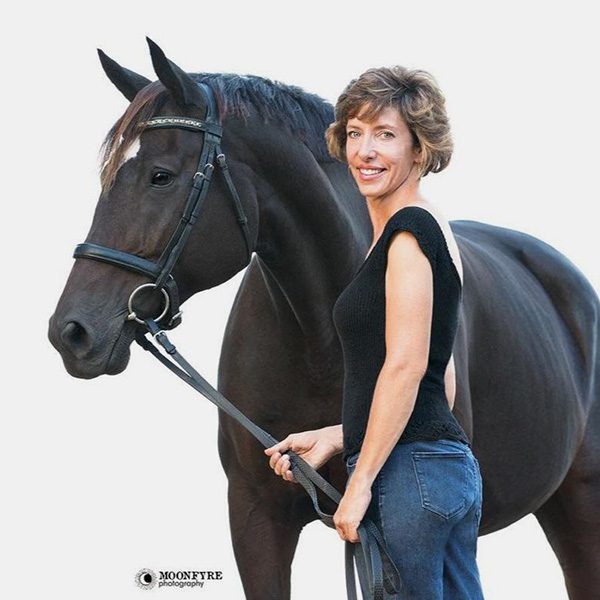
Lacey Halstead
I am a certified saddle fitter* with first-hand experience in a variety of English and western disciplines, and with many different breeds. Additionally, I am a horse professional with over 20 years’ experience in riding instruction, training, and stable management. This background contributes to my “whole horse” approach to saddle fitting. I understand and fit English and western saddles.
While my job is to concentrate on creating a good saddle fit for your horse, I look at more than just the junction of back and saddle. I understand horse and rider biomechanics, and how horses and riders change as they progress in their training. I can assess and work with the physical constraints imposed by conformation and past injuries. Also, I am able to work within your trainer’s program as part of the team that helps your horse realize his highest potential.
I started riding hunt seat as a child in the Virginia horse country and gravitated toward dressage in high school. While obtaining a B.S. in Animal Science at the University of Massachusetts, I was exposed to eventing. I taught and rode western pleasure when I returned to Texas in the 1990s. Dressage has remained my equestrian focus as an adult. My diverse riding background, combined with many years of horse husbandry experience, has given me a holistic understanding of the way that a horse’s conformation, training program, athletic history, and overall health contribute to the whole saddle fit picture–both what he needs today and what he may need going forward.
Watch Us on YouTube!
Catch full episodes and exclusive content on our YouTube channel, @countrysidevets2216. Click below to explore our latest videos.