

Ep. 58 – Navicular Syndrome Podcast
In this episode
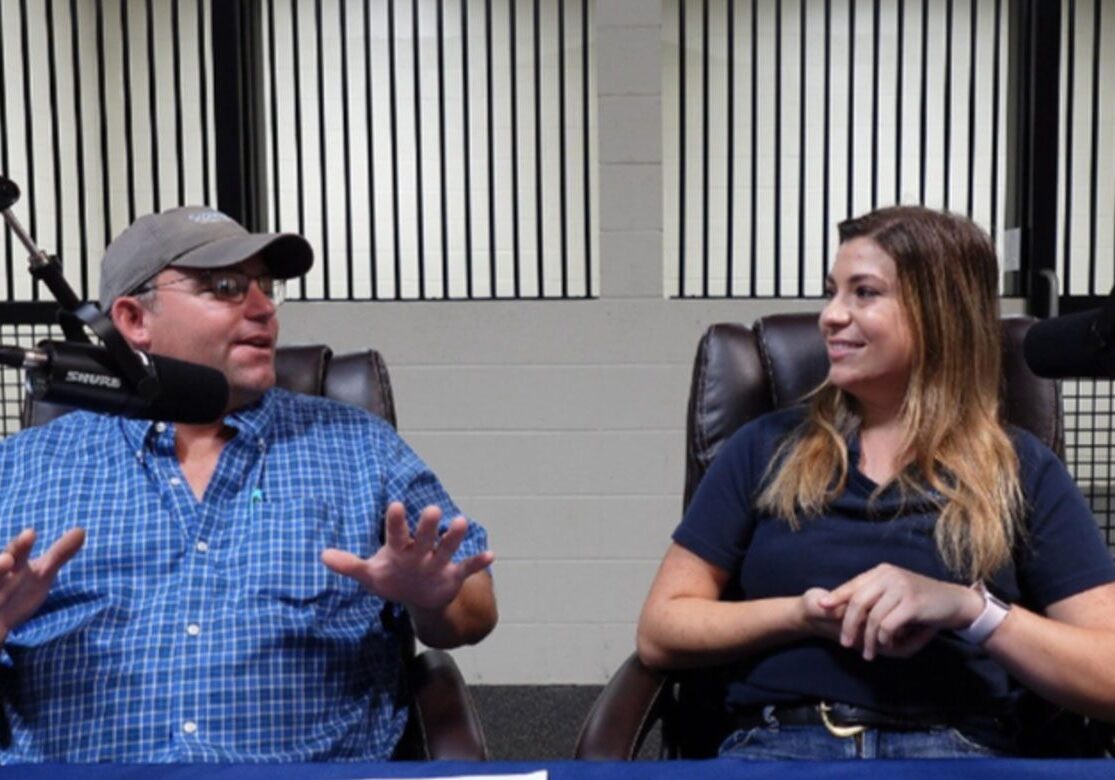
Navicular disease, navicular syndrome, caudal heel pain—whatever you call it, this complex equine condition is one of the most misunderstood sources of lameness in performance horses. In this episode of The Equine Vet Connect, Dr. Dan Carter (veterinarian and farrier) and Dr. Tori Martin break down what navicular really means, how modern imaging like MRI and ultrasound has transformed diagnosis, and why accurate evaluation of soft tissue and bone pathology is essential for effective treatment.
From nerve blocks and radiographs to regenerative therapies, shoeing strategies, and surgical options like bursoscopy, this episode explores the latest advancements in diagnosing and managing navicular in horses. Whether you’re an equine vet, farrier, trainer, or horse owner, you’ll gain valuable insights into one of the most common and challenging causes of equine lameness.
Episode Transcript
Welcome back to The Equine Vet Connect Podcast here at Countryside Equine Hospital.
We’re in the old studio again this morning.
Treatment Room 1.
Got Dr.
Tori Martin with me here today.
You know, I think this is going to be an interesting episode.
It’s something that if you’ve been here very long, you’ll see me,
I get a little fired up when we use non-descriptive terms that in my mind have no meaning.
Right or wrong.
I don’t know why this one.
I guess it’s my farrier background.
But we’re going to talk about navicular.
Navicular, yes.
And I want to start off.
Navicular is not navicular.
If you say this horse has navicular, that is not a diagnosis.
Right.
I guess that’s where I get a little fired up.
Navicular means nothing.
Navicular is a syndrome that has a bunch of different things that we can talk about within it.
Yes, like I can remember.
I’ve watched over the 20-something years I’ve been involved with the horse’s foot.
It has gone through, I remember at first, it was navicular disease.
It was navicular syndrome.
It was caudal heel pain.
Caudal heel pain, yeah.
It was podotrochlear syndrome.
Yep.
That was my favorite.
I was like, I feel like we’re trying to overnerd this.
I mean, podo, fair.
I mean, I get it.
But it’s not really isolating it to anything.
Yeah, failure of the podotrochlear apparatus.
Oh, okay.
I haven’t heard that one.
Very shortly used, because it’s a lot of words.
It wasn’t used for very long.
It’s probably too hard to remember.
Yes.
So, it’s got a lot of different names.
And, you know, I think forever, we did call it navicular because this was, we didn’t know.
Right.
And I think this is where technology has rapidly changed what we know about a condition, and that technology is an MRI.
Right.
Once MRI became mainstream, it completely changed what we thought about this issue.
So, we’re going to take that deep dive into it today.
Well, I say deep dive.
We’re going to skim the surface.
We can call this navicular stage or navicular one.
Yeah.
I don’t think we’re going to be able to get through all of it today.
No, because we’re going to get some of these topics.
And I mean, you can run down.
I mean, we can go into details on these things and have entire episodes.
So I look forward to actually doing that.
So let’s kind of hit the surface here.
Let’s start our initial dive in the navicular and then we’ll move on from there.
Yeah.
So I think one thing, if we’re going to talk about navicular, we’ve got to talk about the anatomy.
I think the anatomy is the most important place to start.
So for sure.
Let’s run through that anatomy of the navicular.
We’re going to call the region.
How about that?
I’m going to go with the region.
Yeah.
So we think about our navicular bone as our distal sesamoid bone.
And distal means low.
Sesamoid is a type of bone.
And so this bone then has to essentially be fixed in place behind that coffin joint.
So we have collateral sesamoid ligaments that connect our navicular bone to our P2 or second bone from the ground in the leg.
And then we have what we call the distal sesamoid impar ligament, which is going to then attach us to the most, the bone closest to the ground or our coffin bone on the back of that.
Our deep digital flexor is going to run behind this bone.
And then we’re going to have our bursa that sits right between that deep digital flexor and the bone itself.
Yeah.
And for those of you wondering why is it called a navicular bone, I think it goes back to the ancient Greeks.
They said it looked like a boat.
Yes.
Yes.
Boat shaped bone.
Yeah.
And I haven’t owned a lot of boats, been in a lot of boats.
I don’t know what kind of boat this was, but it’s not a boat I’m getting in.
Like it’s just, doesn’t look like a boat to me, but we’re going to go with it.
I guess the Greeks had a type of boat this looks like.
So yeah.
So we start breaking these down.
Let me talk about that anatomy and the function.
The bone functions as a fulcrum.
And so that when the deep, the deep flexure glides over that navicular bone, and it allows the deep flexure to pull on the coffin bone in order to propel the horse forward.
Right.
And it’s essentially like a fulcrum or a pulley.
It’s really more like having a pulley.
If you had a rope going up to the ceiling and going down, that pulley would basically be like a navicular bone because it’s changing the direction of force.
Right.
It basically allows that deep to have a constant angle of insertion on that coffin bone because if we didn’t have it there, then our attachment would not be at the same angle and it wouldn’t be able to function appropriately.
Right.
So think of it like a pulley.
That’s the easiest way I know to think of it.
So there’s a lot of force in that region and changes in directions of force.
Right.
So I think that’s why we have a lot of issues with this.
You know, once you understand the anatomy, it’s like, how do you arrive at, we need to investigate this area.
And one of the things we look at is it’s not something that you just watch a horse jog or watch a horse run, it’s like, oh, he’s got a navicular.
Not how this works.
Yeah, there are some what people call characteristic gait and things, but it doesn’t always fit the rule book, so we can’t just assume that because a horse walks stiff up front, or because they tend to want to be more on their toes, that automatically means that they have a navicular.
Right.
So, you know, to arrive at the diagnosis, you’ve got to do a lameness exam.
Your hoof tester is going to be important.
I always say these are trends.
I won’t say they’re not guaranteed.
They’re not, yeah, I got it.
I always say there’s not really rules.
They’re guidelines.
Yeah.
To borrow some parts of the Caribbean.
These are guidelines here.
It’s like parlay.
Hoof testers.
Generally, these horses are sore across the frog.
Absolutely.
Sore on frog pressure.
When you squeeze the heels together, often those are sore.
That’s kind of clue number one.
Sure.
For me, the biggest thing is when we do a nerve block.
And they block to a PD.
Block to a PD.
That’s a Palmar Digital nerve block.
That’s the lowest block we do, and it’s under right down by the heel bulbs.
And we’re injecting a local anesthetic in that area, and essentially numbing that region of the foot.
Those horses block like, all right, let’s get to investigating.
Just because they block to a PD does not mean it is navicular.
It just tells you you might want to go looking for it.
Correct.
It is on the list.
Coffin joints can block to a PD.
I wish, you know, one of the things that I have definitely learned too, nerve blocks are guidelines.
You’ve got to look above and below.
Right.
I’ve definitely had horses block into a PD and found lesions up into the pastern.
Okay.
Above where they should, quote, where it should, quote, unquote, block.
So that’s when the imaging hunt begins.
Right.
So a few imaging modalities that we like to use figuring this out.
I mean, in the field, we start with our radiographs and there are radiographic signs that we can see.
But again, to your point, just because the radiographic signs aren’t there doesn’t mean we don’t have something going on in that region.
So from our standpoint out in the field, that’s usually where we begin.
And if we do see some bony changes in that navicular bone, then we have an inkling that that’s more so where our problem is coming from.
But then a lot of these horses, we find out a lot more information and we can confirm our thoughts through an MRI.
But nuclear scintigraphy has also been used to light up this bone as well.
Nuclear scintigraphy for actual bone pathology.
Right.
Because when we went through the anatomy, there’s not just bone pathology, there’s also a lot of soft tissue pathology.
Oh yeah.
And this is where I think breeds differentiate.
Other than a fractured navicular bone, to me, when you move out of the quarter horse spectrum, you’re most likely dealing with some type of a soft tissue injury in that area.
Either that impar ligament, the collateral says, moiety in ligament.
You’re deep.
Deep digital flexure, very common, sometimes a navicular bursitis, which is inflammation of that bursa.
But really, that’s where we look at the breeds.
Quarter Horses, the bones on the table.
Warmbloods, Thoroughbreds, not as much bone pathology in those horses as what we’ve learned from MRI.
Right.
So I think it’s a multimodal approach as far as getting this diagnosed with your imaging, and definitely starting with the radiographs.
Well, and in theory, the most accurate imaging in a lot of cases is actually going into that bursa arthroscopically and evaluating with your camera.
Right.
Because there are things that we’ll miss on MRIs.
It won’t pop up on an MRI.
We’ll go in there, try to clean up the things we did find, and we’ll find four other things.
Right.
And that’s, I’ve actually got a surgeon I want to get on and we’ll talk about navicular baroscopy because it is, that’s a really, it’s a newer, newer surgical technique that’s showing a lot of promise in cases that we didn’t, we didn’t used to have promise with.
So we’ll get into that later.
Right.
For sure.
But yeah, and I think too, we forget about the value of an ultrasound.
Yeah.
I mean, you can see a lot with an ultrasound.
Right.
You know, typically, I’m ultrasounding horses.
I’m actually looking at the burst itself.
And I am looking at parts of that deep digital flux or tendon that I can see.
As far down as you can go.
Correct.
Do you ultrasound through the frog?
I don’t.
I have not.
I have just heard that people do try to do that in some cases.
You know, I have definitely tried a lot.
There’s a lot of prep work that goes into it.
And it’s kind of hit or miss if you’re going to pull an image.
And then the quality of the image.
You’ve got to have, I mean, I hate to say it, but you’ve got to have almost this perfect frog in order to get this.
If you’ve got thrush, you’re going to have a hard time getting that image.
If you’ve got really hard feet, you’re going to have a hard time getting that image.
And I don’t, in my hands, it has not been reliable enough.
Well, and you know, if we’re using our client’s money, we’d rather use it towards the MRI that’s going to give us the answer if we can’t get a quality image out of it.
Right.
I just, I’ve not had great success with that technique.
That’s fair.
And maybe I’m doing it wrong, but I’ve talked to some other colleagues in the field, and we’ve all kind of struggled with that technique.
There’s some people that say it’s great, they have no issues, can find everything, and I think the majority of us are somewhat on the fence, how viable it is.
A lot of what I read, just looking into, looking at the ultrasounding of the frog for these kinds of conditions, is you really, from what at least is reported, you really can’t reliably get past that bursa.
So evaluating that bursa, sure, but in terms of actually getting under it, it may not be as reliable.
Usually what I’m looking at is I’m scanning just above, so when you’re ultrasounding those, you can see the top of the navicular bone, you can see the bursa, and you can pick up that deep where it’s coming off of that navicular bone.
Right.
And a lot of the, and this is where when MRI first can hit mainstream, there was a group of us that would get these horses post MRI, sit down with MRI imaging and sit down with our ultrasound.
Go back and ultrasound after you had that, yeah.
Right, and compare.
Because the other thing you run into with that through the frog ultrasound is, you have a change in the anatomy, the structural anatomy of that deep flexor tendon.
If you look, if you’re proximal or you’re above that navicular bone, this is very much a normal tendon-like tissue.
When you start to get down to that navicular bone, it’s going to turn into what we call a fibrocartilaginous scutum.
And this is a completely different tissue architecture than we typically see in the rest of the deep flexor.
And so, to me, that also makes it a little more difficult to accurately image through the frog and look at that deep flexor tendon.
Because our tissue architecture is completely different.
It’s not the normal type fiber pattern we would see.
So I guess that’s also been one of my holdups.
And it kind of, to me, also explains why, if we look at these deep digital flexor lesions, most of them are above that navicular bone.
But that’s also the junction of that normal type 1 collagen that makes up our tendon.
It’s kind of the junction between it and that fibrocartilaginous scutum.
Which kind of makes sense of why we’re seeing stuff there.
That’s my thought.
Now again, I’ve got nothing to prove that, but you have two different tissue types.
And it makes sense that at that junction, you’re going to be more likely.
Because the report always reads, the tear extends super sesamoidian and it begins super sesamoidian, which means above that navicular bone.
And I think that’s why we typically see those there, is we have a change in that tissue architecture.
So that’s theory according to Dan.
It’s really pretty useless.
I think Dan knows a few things.
I mean, it’s probably worth nothing, but that’s my theory.
But that is a good thing is because we can see that region with an ultrasound, a lot of these we can pick up and it’s taken comparing the images on the MRI back to an ultrasound to figure out what those look like.
But it’s also great when you get those MRIs back.
You can go in if they are in an area that you can get to with an ultrasound, it allows you to then go find maybe that subtle lesion you missed the first time through.
Identify that and now you have something to monitor as you go through and treat.
Right.
Like I’m, I’d probably say 99 percent of the ones that I treat, if I’ll always go back in and find that lesion on ultrasound.
So, okay, now I’ve got something I can monitor.
I’ve got something I can look at.
Right.
Until how we’re doing.
So.
Yeah, no, I would agree with that.
If you have a way to not need to go into an MRI to check on things, it better to have a way to check on it a little, a little easier.
It’s kind of hard for me to look at somebody like, hey, about every 60 days, we’re gonna put your horse in an MRI.
I’ve seen people do that in some places though.
I have been there.
But if I can find another way to do it, that’s what I’m going to try to do.
Yeah, for sure.
So little less anesthesia, little less out of your pocket.
Yeah, it’s a little more feasible.
Yes.
So and to me, it’s common sense.
If we monitor it with an ultrasound, let’s go that way.
We should monitor it with an ultrasound, yeah.
So, and that’s where things have really changed from an MRI perspective because we always blamed the bone itself.
And then we found all the soft tissue.
And guess what?
It gets damaged a lot.
But let’s talk a little bit about bone pathology.
Let’s switch over to quarter horses.
This does seem to be the most prevalent breed for this.
And there’s several different kinds of bone pathology we’re looking at.
Yeah.
So we can see anything from cystic-like lesions to sclerotic type lesions.
So kind of on both ends of the spectrum.
I’d say characteristically, we’re seeing sclerosis on that kind of distal border, and we’re seeing increased synovial invaginations, which is where our blood flow is going through that bone.
That’s going to be your most characteristic, typical, wow, that looks like we’re dealing with some navicular change.
But we can see anything from large cysts in the bone to a completely sclerotic medullary cavity as well.
So we’re talking about that.
When we’re talking about the sclerosis, that’s where it’s over calcified.
A lot of bright white.
So when we look at it, navicular bones should have a white outer rim on the radiograph, a darker center, and kind of the opposite of an Oreo when you think about it.
But it should have that darker center.
But when you see that center getting more and more white radiographically, that’s when we’re about sclerosis.
Sclerosis is a bone’s response to stress.
The bone is getting uneven stress, and bone can only do two things, right?
It can add bone or take it away.
They can’t do anything else.
And so sometimes, when we chronically stress bone, bone’s like, all right, we’ll just make more of it.
And that’s where that sclerosis comes from.
The cystic lesions, those are, in my opinion, those are no different than any other cysts.
They start to form in utero.
They’re born with these.
And you’ll see this bright white rim with the black mist center in the middle of this radiograph.
And sometimes, they communicate with the bursa,
Sometimes, they don’t.
Right.
It’s better if they don’t.
Yeah.
But sometimes, they do.
Right.
And we identify those.
And that does, those can be quite problematic.
Right.
Good news, there are some groups that are working on a new surgical procedure.
They’re actually drilling those cysts out no different than how we treat a stifle cyst.
Okay.
There’s a group out in Texas that has been working on this and being quite successful.
So, there is hope.
Yeah, just like when you think about a stifle, I think about putting a screw across it.
And I can’t imagine putting a screw across a navicular, but the drilling of it though, I can see that having.
If you think about what they think on the screw is, when they put the screw through that stifle cyst, they’re destroying the lining of that cyst, and that’s what’s actually healing it.
Right, and promoting it to lay down bone in that area.
And they’ve actually questioned, could you just put the screw through there and just take the screw out?
Yeah.
Do we actually need the screw?
That’s been questioned.
Well, and some people have put the screw in, and then they take it out at a certain time to re-stimulate the bone.
But I don’t know how that would go in a navicular bone.
Probably, the bone is probably too small to…
Right.
And that’s where they’re using small drills and actually going in.
Which makes more sense.
Drilling those cysts.
And it’s a really cool procedure.
Like I said, I’ve been following a guy that’s been doing quite a bit of these, and it’s interesting to see how…
I’m curious on how the technique will progress.
Because it’s a real problem in quarter horses.
In our Western disciplines, this is a big issue.
Oh, yeah.
So, those cystic lesions, they can be quite frustrating.
Now, what we typically think of is that classic navicular is the degenerate navicular bone.
These are frustrating.
Yes.
As are most degenerative conditions, frustrating.
And we’re still working on the pathophysiology, like how this occurs.
There’s suspect, that’s what we call an avascular necrosis, where we don’t have the appropriate blood flow to the navicular bone.
And that’s what’s setting up for this.
But like you were doing a deep dive last night, did you find anything that new on this?
Everything that I go through, it says, well, we have multiple theories, and these are the theories.
And to your point, the avascular necrosis, and the way the deep runs and pressure.
Now, if you actually look at how the navicular bone forms, which I found out is completely formed by day 325 of gestation.
Interesting.
The trabecular pattern in the bone, if you go back to Wolf’s Law, suggests that the pressure of the deep digital flexor is the direction in which the bone grows.
So the bone is growing essentially from coffin joint to deep digital based on the way the pattern of the bone lays.
So to make the argument for the pressure of the deep digital flexor tendon potentially leading to an avascular necrosis makes sense if we’re seeing that to be one of the larger forces in the actual formation of that bone and which way the bone lays down in its calcification process.
I’ve always been interested to know because some of the, you know, quarter horses are known to be fairly fast growing.
And I’ve often, and they can get some contractures of the limb.
And I feel like I see more limb contractures in quarter horses than I do other breeds.
I’ve often wondered, does that contracture when they’re young?
Because that navicular bone in a foal is very, very soft.
Right.
Does that contracture later lead to these degenerative conditions?
I mean, I think that’s a fair consideration because that would change the pressure of the deep on that bone.
That’s my thought.
The problem is the deep’s too tight.
Well, the navicular region isn’t immune to that.
Right.
Again, this is just thoughts according to Dan.
It has no value whatsoever, but.
Not yet.
Somebody looks into it.
Maybe it could.
Yeah, we need a nerd somewhere.
Like, it’d be interesting to do a case study to look at horses that later had degenerative navicular bones.
And how many of them were contracted?
How many were contracted?
If it was documented that they were contracted.
If it was documented.
Because, I mean, we treat these things all the time.
Oh, yeah.
And we think, I mean, Lord, I’ve treated a ton of them.
But I’ve often and often I don’t get to follow these horses to see if that later develops.
Well, and you think about the level of contracture.
Are we actually having to go in and do surgery on these things?
Or are we able to, you know, medically manage in their early first few days of life, and they do just fine?
And in those cases, I mean, if you’re doing any treatment, there’s probably a medical record somewhere, but if people actually carry that into when the horse is four, five, six years old and remember doing it, when maybe they didn’t raise the baby.
Or we’ve been through three owners by the time, you know, three to four owners by the time when this is diagnosed, it’s kind of difficult to go back in.
Usually if they’ve had a surgery, people are aware of it.
Right.
But if it didn’t have to have surgery, then a lot of times I feel like people are not.
So yeah.
Some nerd somewhere, hope maybe does a dive into this.
Another cool thing that I see in these navicular bones, have you ever seen a bipartite navicular bone?
No.
So a lot of people don’t realize this, but a navicular bone is actually two pieces.
Like when they’re developing in utero, it’s two pieces that later fuse in the middle.
And so you can x-ray some of these and you will see a line down the middle.
I thought it had one center of ossification though.
Well, it does.
But when it’s first forming in utero, it is two separate.
So they combine and then it ossifies as one.
Yes.
Okay.
Yes.
I have to do a deeper dive into that.
Do a deeper dive because it’s called a bipartite navicular bone.
Okay.
But every once in a while, you’ll x-ray one of these horses, and there is a perfect line right through the middle of that navicular bone.
A true separation or just a…
It’s a fibrocartilaginous union that’s used in a union that did not ossify completely.
Okay.
It is really cool and doesn’t cause any pathology.
Horses are completely fine.
That…
Oh, it’s weird.
That’s a little mind-blowing.
When it pops up on an x-ray, you’re like, what the heck?
And then you dig into it and it’s a bipartite navicular bone.
So, are we thinking that a bipartite navicular bone is then beneficial because…
No.
Okay.
Well, you said they don’t usually cause a problem.
Maybe if they’re bipartite, they…
I’m saying the line through the middle, like what you want to call a fracture.
Yeah.
And that’s one of the things, like the first one I saw, I remember I was an intern up at Rood & Riddle, and the first one I saw, I was like, holy crap, your fracture is an avicular bone.
And Raul was like, no, man, that’s a bipartite and avicular bone.
And he showed me the differences.
No big deal.
Yeah.
He showed me the differences because it’s, you know, fractures are very subtle, and very clean and straight.
Right.
These are very clean, straight, like you literally went in and just took a saw and cut the bone in half.
And they form back with fibrous union, or they form and they have a strong enough fibrous union.
And it’s not really an issue.
So.
Learn something new every day.
It’s kind of cool.
It is cool.
I’ve only seen like two or three, and we’re talking about thousands of foot x-rays.
Yeah.
I’ve seen like two or three.
But they’re pretty cool when you see them.
That’s neat.
And another thing we run into is fractured navicular bones.
Yeah.
I don’t see a ton of them.
Not as commonly, but they do happen.
Yes.
And those…
Those are tough.
Yeah.
I haven’t seen enough, long enough to have a huge medical opinion, but…
Getting the bone to heal is actually quite easy.
Yeah.
The bone will heal.
The problem is, now the gliding surface of that deep flexor tendon is uneven.
Yeah.
It’s the secondary pathology that gets us, usually.
Because if you think about it, a foot’s a natural cast.
Right.
There’s little movements.
That bone’s basically in a cast.
Right.
It’s secondary.
And you don’t see, because the deep does kind of glide over that, you don’t see that disrupting.
No, that’s exactly what you see.
But the healing process, like slowing the healing process of the bone.
Not really.
Because of any kind of motion or anything.
No, your biggest thing that slows healing is, you’ve got a bursa on one side and a coffin joint on the other.
And for whatever reason, synovial fluid, not great for healing fractures.
Which has always been weird to me, but it doesn’t help fractures heal.
It actually can make it a little difficult.
That’s why fractures through the joint are more difficult to deal with than those that are not through the joint.
Right.
So, oh, we think the synovial fluid plays a role in that.
Sure.
But yeah, fractured navicular bones, those are, luckily we don’t see a ton of those.
Again, I’ve had like three or four, and I’m a foot guy, so I see a ton of foot problems.
Right.
Don’t see many, thankfully.
And also, just a thought, like if I try to think about how a horse would fracture its navicular bone, it’s not really a bone that you would expect to see a fracture in.
Like, they’d have to do something pretty unique, I feel like, to…
You think.
Unless it’s pathologic, secondary to…
Interesting enough, the ones that I have not seen it yet in a quarter horse.
Huh, okay.
Which I would think that, you know, with the degenerative process and the bone pathology that is present in the quarter horse breed, you would think you would see it more there.
Right.
But…
Yeah, that was my thought, is maybe a pathologic fracture.
I’ve seen it on the back leg of a horse, back leg of a thoroughbred, bilaterally up front in a…
In an Arab actually fracture of the left, healed up, went back to work.
A year and a half later, fractured the other one.
It’s weird.
Was the thoroughbred a racehorse?
No, the thoroughbred was a…
At that time, was an eventer.
We think that one may have been traumatic, like you kicked the stall or something, is what we think, because it was a back leg.
The Arab, we’re not sure why.
Right.
Why that happened, because it was just a ring horse, wasn’t…
Wasn’t doing anything crazy, wasn’t out there doing 100 mile endurance rides.
I mean, it was working on prepared ground.
No issue.
So it’s kind of an interesting one.
That’s for sure.
So that’s kind of the bulk of the pathologies I can think.
Well, inflamed navicular bursa, we didn’t really talk about it.
Yeah, bursitis.
It can get inflamed like any other joint.
I think it gets overlooked a lot.
Oh, this is one I go back and forth on.
Yes, it does, but typically, if I scan one and I see a really inflamed bursa, my next question, you know, I say this on every joint.
Why are you inflamed?
Yeah.
So you’re looking at the deep at that point?
Yes.
Yeah, that’s fair.
I’m looking at the deep, and then the other thing is the surface of that navicular bone.
Do we have a cartilage issue?
Right.
Because they can get thinning, they can get cartilage erosions, they can get thinning of cartilage.
There’s a lot of things they can get.
Right.
Have you ever done a bursagram?
A bursagram?
Or heard of a bursagram.
I can put together what a bursagram would be, but I have not done one, no.
So this is back when there was like three MRIs on the East Coast.
Yeah.
So it was not, I always say, I came along in a really cool time in veterinary medicine because the technology was emerging.
But we were having to find ways.
It wasn’t accessible.
It wasn’t accessible.
Yeah.
So we were still looking for other ways to diagnose these things.
And one of them was a bursagram.
So it actually put contrast dye into the navicular bursa.
Yeah.
And then we’d radiograph it.
And it was quite interesting because we could identify these cartilage erosions.
Because you would look at the contrast and you could see these defects in the cartilage.
You know, I think I have done one.
But it was from a nail through the foot kind of wound and communicated.
But we did do one time and we did it with a CT.
Yep.
This one, real simple technique.
You just inject the bursa with contrast.
You take your radiographic series and you use the dye to kind of show you.
I mean, I found lesions in the deep digital flexor tendon.
And later confirmed by MRI.
Just because of the way the contrast went into it.
It would actually go into that tendon.
You would see it tracking up the tendon.
Okay.
So you’d see it outside of the bursa.
And that would tell you that it infiltrated that tendon.
Right.
You’d see it going up the tendon, down the tendon.
And you’re like, oh, that’s…
And that was really cool because I was able to get some of these horses that actually did these bursagrams into an MRI.
And it was really cool to see how close they could correlate.
Right.
Found adhesions, cartilage erosions.
Like I said, damage to that deep flexor tendon.
It was a really cool technique.
Now that I got an MRI in the backyard, it doesn’t really…
I don’t use it as much.
Well, yeah, your MRI is going to give you your 3D picture and from a standpoint of getting in there anytime we enter a structure, there’s always risks involved.
And there’s risks with anesthesia, but at least if you put them in an MRI, you’re getting a 3D picture and all the info.
Yeah, MRI is still the gold standard.
I mean, that is by far…
Your risk or reward in an MRI is probably a little bit higher.
But, you know, it’s a fairly safe procedure to do a bursogram.
Yeah, for sure.
And if really…
We used to do a lot of…
Between x-rays, ultrasounds, and bursagrams, we were getting like 90% of these horses diagnosed.
That’s awesome.
So it was a pretty cool technique we did.
Need to bring that back.
Well, and I mean, you know, just sitting here, we’ve been here for about a half hour talking about navicular, and we’ve touched on bone a couple of times, but majority of what we’ve been talking about has not been bone, which is a good just recognition here for how complex this syndrome really is.
There’s a lot going on down there.
And like I said, other than cystic lesions, fractures, and degenerate navicular bones, the bone is not the issue.
Right.
The bone is not the issue.
And we’ve always focused our treatments on the bone.
And what we’re finding is the bone, and at least, now, this is in the demographic of horses that I work on.
You can get confirmation bias.
Like that’s, you know, people say, do you see this a lot?
And, you know, they’ll be talking about some condition.
Like, do you see this a lot?
And I’ll say, yes.
Well, that’s because I watch horses limp all day, every day.
So I feel like it’s a lot.
Right.
But how often does it occur?
And I look at a very, you know, most of my horses are performance horses.
And so what I think is very common is going to be different than somebody that’s looking at a different type of horse.
Right.
So I guess that you get some confirmation bias.
Oh, for sure.
But yeah, like I would say, I would venture to say 90 to 95 percent of the pathology I see in that region is soft tissue in nature.
I think that’s fair.
You know, now you go out to Texas where we got a lot of cutters, a lot of reiners.
They’re going to have a different opinion, I think.
I mean, I spent a year out there and we saw a lot of bony change, but we also we did bursoscopies probably on a weekly basis.
Right.
So we were seeing a lot of both.
Right.
The brosco-
Now that’s young to tune in for that episode because that is an episode unto itself.
It is a deep dive.
It is one of the coolest new techniques.
They’re pretty fun.
So, you know, we get into treatments.
We’re going to touch on this.
We’ll do a whole episode on treating navicular or podo – navicular syndrome.
I don’t even know what to call it anymore.
But this is a true multimodal approach.
Like it takes a lot.
You get to hit on both sides of it as well.
Yeah, it’s kind of fun.
This is your disease or your syndrome or your condition.
You know, I tell everyone when I do farrier clinics, people want to talk about laminitis.
I’m like, no, let’s don’t talk about laminitis.
Let’s talk about shoeing these horses with issues in the navicular region.
Because for every one laminitic horse a failure has, they’ve got 10 that have this issue.
Well, and if you actually look at what a lot of people say on our side of things, there’s a lot of clients at times that think, oh, this shoe worked for my friend’s horse that has navicular, but it’s not working for mine, and they get upset.
Well, with it being a syndrome and it being so complex, not every, there’s no, we just shoe it like this and it’s good.
Right.
So it really is that kind of multimodal approach of, you know, a combination of not just shoeing changes, but shoeing changes that are then fine-tuned to that horse along with medical treatment as well.
And sometimes surgery, and going into the bursoscopies.
I think that statement is big because the type of, the issue that your friend’s horse had and the issue you have may be two completely different issues.
And so this is going into digging into the details and knowing exactly what we’re dealing with.
I feel like I say this on every podcast, but that really accurate diagnosis is everything for determining any success.
And it’s even, and especially from a shoeing program, because a horse with a degenerative navicular bone, we’re going to shoe that horse completely different than the one with the deep digital flexor lesion.
And then where that deep digital flexor lesion is in that deep digital flexor also changes how we’re going to shoe.
You also have to consider the condition of the foot itself.
Because if you’ve got your heels all run under, then you’re going to be needing to address that, along with addressing what’s going on in that navicular region.
So it’s not a one size fits all kind of shoe.
And I can tell you too that I have gone in and been like, okay, we have this lesion on the deep.
We have this bony pathology.
This is the shoe we need.
We put that on.
Absolutely doesn’t work.
We go back to the drawing board, and we eventually find out what that particular horse needs.
But it’s not a recipe book.
I mean, it is, I would say this is where the art comes into farrier work.
There’s some science.
Yeah, there’s some science, but there’s some art to this.
It’s going to take once or twice.
Takes us a minute to get this right.
Well, and you need to, it’s not a one and done.
Right.
This is something that, especially when we talk about a degenerative process, like we’re not going to reverse what’s happened in that.
No.
So you take the, okay, now we know it’s there.
Now we’re making shoeing adjustments along with whatever medical treatment we’ve decided is needed in that case.
And that horse is going to need to be managed and maintained.
And as that condition progresses, hopefully at a slower rate, if we’re on top of it and being able to do things medically, we still need to be making changes along the way as the condition progresses.
Because it’s not something that we can reverse and say, okay, well, let’s get them through the next six months and change this and change that.
And we’ll have a horse better, if you will.
We’ll have a horse performing better, that feels better.
But from a condition standpoint, we’re not reversing the damage that’s there.
No, when you’re dealing with those degenerate bones, it’s…
those are the most difficult ones.
Like, it’s degenerate.
It’s not getting better.
Like you said, not getting better is going to be eventually where we cannot maintain this.
And so those are things we have to talk about.
Absolutely.
Some of the soft tissue pathologies, regenerative medicine has really changed how we treat those.
I use a lot of baroscopy.
I use a lot of the surgery combined with regenerative medicine.
One or the other isn’t near as successful as the two together.
Before we had bursoscopy, I treated with a lot with just regenerative medicine, and I hadn’t had so-so success.
With the bursoscopy, I have really increased the success of the treatment with regenerative techniques, depending on the case.
This is where the details matter.
Right, right, right.
So, yeah, treatment-wise, the regenerative therapies, therapeutic shoeings, even some of the hydrogels showing a lot of success in that region, Arthramid and Noltrex.
Noltrex, yeah.
So, but knowing what you’re treating is really important to understand which one of these therapies you need to grab.
Yeah, and there’s also a place for just your good old corticosteroids and getting that inflammation down as well.
Nothing wrong with the corticosteroid.
No.
It always gets forgotten, but I’m like, hold up, guys, this is…
Well, in our proximity of our coffin joint.
Right.
Like, we can treat that coffin joint in a lot of cases as a first line and reduce some of that inflammation in that area because of its communication.
Right.
Which, getting into a coffin is a little bit more straightforward than getting into a bursa.
You go through less structures.
But, we’ve got a lot of different approaches that we can take in trying to get these horses feeling more comfortable.
And another one that comes up a lot, because there’s a label for it, is looking at some of the bisphosphonates.
We used to have Tildren and Osphos.
Tildren, I think, is off the market, but Osphos.
I think zoledronic acid is being used a lot like Tildren.
Yes.
I’ve been using it as a regional limb quite a bit in these horses.
This is where if I have a degenerate navicular bone, I have pathology in the bone itself.
This is when I will reach for bisphosphonate.
Sure.
Everybody that knows me knows I’m not the biggest fan of bisphosphonates.
Yeah.
But we have a pathologic condition such as degenerate.
Because I mean, that’s similar to an osteoporosis.
It’s not the same pathology as osteoporosis in women, but that’s what the bisphosphonates were developed for.
Right.
And when you have that degenerate process, that is the time to reach for one of these bisphosphonates, Osphos or Reclast is the zoledronic acid.
Yeah.
I use both of those.
But I need to know how that actual disease process.
Right.
And we have to understand when we use products like that, what they’re actually doing, which there could be a whole talk on how those work.
But you’re essentially altering the way that bone, the normal bone process and bone healing process even is functioning.
And when you do that, you have to consider like whole horse.
Like we don’t just give Osphos to a navicular bone.
We give Osphos to a horse.
Right.
So we have to keep that in mind when we use those types of therapies as well.
I always say you got to weigh the risk and the rewards.
Any therapy, I don’t even care if it’s a regenerative therapy, it has a risk.
Right.
And so you always have to look at that risk versus reward.
And so I think if I don’t have bone pathology, I’m not reaching for a bisphosphonate, it doesn’t make sense.
Yeah.
If I’ve got bone pathology, I’m looking at bisphosphonates.
Right.
But I think you have to, again, it goes back to as accurate of a diagnosis as you can get.
Right.
Get that accurate diagnosis.
Know what you’re dealing with.
So when you do choose that therapy, you’re choosing correctly.
Right.
It’s not a spray-and-pray approach.
No.
We just start throwing stuff at it and hope something works.
That’s not the way we need to practice medicine.
No.
We need to know what we’re looking at.
Right.
And even when you look at it from a cost perspective, like if we send you for an MRI, yeah, that may be, depending on where you go, can be anywhere from $2,000 to $4,000.
Sure.
Yes, that sounds like a lot.
But if you come back in four times and you get four different treatments, as we’re guessing our way through it, we have way outspent that $2,000 to $4,000.
And so you’re actually going to be financially, you’ll be money ahead to get that answer.
Yes, it’s a lot to bite off all at once.
Get that diagnosis, we’re going to save you in the long run.
Well, and if you think about it, if let’s say you do have some bony change, but you take the bony change and you just run with it.
And the horse has something going on in one of these other soft tissue structures that we’ve talked about.
Going to that MRI, getting the bursoscopy, if it’s warranted based on the MRI, and then treating, you’re again going to be saving not only money, even though MRI and surgery are major expenses, but you’re saving time on getting that horse better and reducing risk for whatever’s going on in the soft tissue to exacerbate.
Because if we say, oh, there’s some bony change, and we just treat that, and we’ve got a soft tissue injury as well, then that’s just time that we make that horse feel a little bit better.
They work a little bit harder, and that soft tissue injury could get worse.
Absolutely.
So I think that there’s very much a warrant for going the distance up front.
I always say you can always get money back.
You can’t get time back.
Once time is gone, it’s gone.
You can’t always get damage back.
Yes.
And so getting accurate, because I can tell you that’s always frustrating when I get horses that, I hate to say have gone too long, but they’ve seen multiple different, or they’ve been, they’ve tried multiple different things, and nobody dug down, and we get the MRI, and it’s like, ugh.
I wish we had gotten this sooner.
And so getting those MRIs, knowing what you’re treating, getting that accurate diagnosis so you can make progress sooner is really important.
You also get more information about your bone on an MRI as well.
Yeah, way more.
It’s safe.
So, both sides of it.
So, all right, well I think, I mean, I hate it.
We kind of, I feel like we just skimmed over navicular.
We’ll do some deeper dives into some of these individual therapies.
We’ll do some deeper dives into some more of this pathology.
Maybe that’ll kind of be our next ones we’ll do together.
Sounds good.
We’ll continue to take this dive into navicular.
Navicular series.
Yes, navicular series.
So, we’re going to continue to do that, but we want to kind of hit the big overview.
So, everybody, thanks for tuning in and listening.
You’re probably sitting here thinking, I’m more confused now than when we started, but join the club.
I feel like every day, we’re learning something different about this region of the foot, and that’s sometimes, I think, we’re more confused when we learn something than…
There’s so much going on in there.
Oh, there’s a lot going on for a little bit despite.
So, well, thank y’all for listening.
We appreciate your time and tuning in.
Dr. Tori, thanks for being here today.
April, thanks for recording all this.
Kasey, thanks for doing all the editing.
From all of us here at Countryside Equine Hospital, y’all be safe and take care.,
Have a Topic in Mind?
We love hearing from our listeners! If there's a topic you're curious about—whether it's equine health, training, industry trends, or beyond—let us know. Your suggestion might just inspire our next episode!
Watch Us on YouTube!
Catch full episodes and exclusive content on our YouTube channel, @countrysidevets2216. Click below to explore our latest videos.